Tag: Horror

  • From Darkness to Promote Me

    From Darkness to Promote Me

    The following chronicle was cobbled together from a patchwork of archival documentation, medical records, and letters related to the life of the once-celebrated Commander Jean-Jacques Auguste. I would like to thank Monsieur Auguste’s estate for graciously providing access to the late Commander’s private journal.

    I will reluctantly admit that I cannot provide any comments as to whether the events recounted here are credible or not. History, mendacity, and superstition shape this epistolary puzzle: I leave it to my trusty readers to be judges, juries, and (dare I say it?) executioners of time’s sordid legacy. But enough from me-—it is time for the living to hold their tongues, and for the dead to speak.

    Report drafted by Garrison Commander Jean-Jacques Auguste, Second Franco-Mexican War, 2nd of August 1865.

    “Frightful business with a spot of local unrest. Juárez loyalists took up arms to storm the munitions arsenal. Attack was quickly thwarted. Minimal French casualties sustained. Loyalists apprehended.

    One civilian death reported, a young native girl. Unable to properly ascertain the culprit. Most likely an accident.

    Family has been duly compensated for the cost of the burial. Men are in high spirits after the victory. There seems to be no indication of further violence.

    Glory to the Emperor and may God have mercy on our souls.”

    Private correspondence of Garrison Commander Jean-Jacques Auguste to Madame Madelaine Auguste, 3rd of August 1865.

    “They hanged the brigands today in the courtyard, as the sun was setting. Oh, my dove, what a beastly hour to take the life of a man! A condemned man should be permitted to leave this earth beneath a clear sky. Instead, they shuffled onto the gallows, stained blood-red by the dying light of the evening. They cast great shadows for men so small.

    I hope these words I write are not too displeasing. I appreciate your desire to be informed of my doings overseas, but I can make no promises as to the content of these letters. The work of a soldier is grim business, and our duties here in Mexico are a far cry from the parades in honour of the emperor back home. I still remember the blush on your cheeks as I strutted in that silly dress uniform. Good heavens, I looked like a wedding cake! I would rather you hold onto on to that image of this proud fool who loves you too much for his own good, than that of the battered, tired man who writes this now.

    The crowd did not cheer when the brigands swung. I am not sure if it would have been better if they did.

    I simply wish for this confounded war to end. One can only hope that braggart Juárez sees sense and forfeits the debt these Mexicans refuse to pay to the Crown! My palate is more refined for our evening treats at the Boulangerie Viennoise than these base offerings of blood from a gaggle of Cains.

    Oh darling, that I could once more see fields of dew-slick grass, feel the grey mist of an evening rain! I struggle to put it into words, but this country’s soil does not agree with me.”

    Excerpt from the personal journal of Garrison Commander Jean-Jacques Auguste, 3rd of August 1865.

    “I watched as they buried the young girl, though I knew I was not welcome. Nevertheless, I felt compelled to see it with my own eyes, as they lowered the coffin into the red clay. I think I buried the family dog in a similar fashion, stuffed inside a crate once used for storing milk.

    I could not tell Madelaine. I fear I have already upset her with my grisly talk of executions. Besides, women take the sufferance of children quite poorly. I cannot help but wonder whether they are more sensible for this. It is difficult not to ponder how I would have felt, had it been a daughter of my own sepulchered beneath the dirt. Try as I might, I could not coax out any tears.

    The natives said nothing of our presence there, but I feel that for the first time since our arrival we are seen. Before they simply stared, but did not look, those vacant, simple black eyes flitting over uniforms and flags, like a gentleman sighting a vagrant begging for alms on the side of the road. Acknowledging that he is there (as a stone in your path is) but not recognizing him as a thing that lives. I fear the natives see us clearly now, and anything that lives, one knows, must also bleed.

    The searing winds have picked up, and they unearth a putrid smell. My only hope is that any threat of further violence is buried quietly alongside the coffin. It would be a terrible thing indeed for them to lose more daughters, now that they have no fathers left to raise them.

    The native girl’s mother did not weep at all throughout the burial. Instead, she simply stared mutely at the earth.

    Before I departed, she moved to toss a final clod of parched mud onto the mound, my shadow spreading out to mingle with hers. Native and Frenchman, intertwined by an umbilical stretch of darkness, knotted over the remains of a murdered girl.”

    Private correspondence of Garrison Commander Jean-Jacques Auguste to Madame Madelaine Auguste, 9th of August 1865.

    “…. a most unusual occurrence was bought to my attention this morning, my darling. It appears that one of the men, Maxime Dupont, refuses to participate in drills as expected of him.

    I investigated further myself, as the lad in question has always been a most noble, patriotic, and proud fellow. I am sure that if you think back hard enough, you will remember Monsieur Dupont, darling, for he was present at on our wedding day. A rather tall, brown-haired chap with crooked teeth, very polite. I recall you remarking that his manners quite impressed you, so you will also share my puzzlement.

    Upon being questioned as to the nature of this bizarre attitude, Monsieur Dupont refused to explain himself properly. He appeared to be melancholic and convinced that he was under severe risk of being harmed. Monsieur Dupont’s condition was serious enough that he has been temporarily placed under the care of our physician.

    Most likely, this is the consequence of too much time spent underneath the sun. That, or there may be some thuggish behaviour carried out underneath my nose by scoundrels harassing Monsieur Dupont. Regretfully, it would not be the first time this has happened within the army, though I pray such shameful deeds are not the cause of his distress.

    I do hope you are taking care of yourself, my dove. The French heat is often as merciless as the brands of Mexico. It heartens me that you took my last letter so well, though I feel I must apologize for indulging in gory details. Do try out the new hat I have sent if it has arrived already. I am certain it will be the envy of all your reading society.

    I tried to look over the Baudelaire you enclosed for me, but I confess I do not really understand it. It will fall to you to help me through it when we are in each other’s arms once more.

    Your love, and faithful servant, Jean-Jacques.”

    Report drafted by Garrison Commander Jean-Jacques Auguste, Second Franco-Mexican War, 11th  of August 1865.

    “……. Dupont’s case continues to worsen. Has been isolated away from the rest of the

    men for his own safety, and theirs. Have ordered him to be physically restrained. He insists on incurring grievous wounds upon his own person. Ordered his quarters to be lit constantly.

    He is at his most demented in the presence of darkness. No certain diagnosis as of yet. Cause of madness is still unexplained. Private Dupont is physically in perfect health and has yet to see battle.

    Have instructed for the old well to be inspected, and a new well to be dug. Contamination in the water may explain Dupont’s behaviour. Have also issued an investigation following frequent reports of whoring and men soliciting the services of native girls. I would not be surprised to discover that the diseased patient is hiding the initial symptoms of syphilis.

    This unfortunate circumstance has taken a toll on morale. However, I am confident order will be reinstated soon. Have personally attempted to interview Dupont, but there is nothing of value to report in his testimony.”

    Entry from the personal journal of Garrison Commander Jean-Jacques Auguste, 14th of August 1865.

    “Monsieur Dupont passed away this evening. The poor man resorted to chewing out his own tongue to end his life. There is little in this world more pitiful than suicide, but even this defies belief. The physician found him drowned in his own blood, the pink stump of flesh a bulging mass inside his throat. It was wedged so firmly in the poor devil’s gullet that they had to slit it open for removal.

    This is not the handiwork of a syphilitic lunatic, and I confess, to my great disgrace, I have not been entirely honest in my reports of Dupont’s behaviour. Yet, in my defense, there are certain happenings so outlandish that to relay them to my superiors would, at best, question my authority and, at worst, my own sanity.

    The day before he bit out his own tongue, Monsieur Dupont fainted, screaming in fear of a little girl.

    A widespread search was conducted as to whether any of the native population had managed to infiltrate the barracks. No foreign presence, never mind a little girl, was located. I would be remiss not to mark the unsettling echoes of the Mexican child buried two weeks ago, but it would be preposterous to fall into the waiting jaws of superstition. It is a ravenous beast that gluts itself on paranoid delusions and self-fulfilling prophecies.

    That being said, I find it hard not to attach any importance to Dupont’s words the night before he expired. All the while, he shrieked the same three words repeatedly. Even when fatigue overcame him, he moaned them out in a stupor: Solid. Dark. Shadow. Solid. Dark. Shadow.

    The bizarre nature of this…incantation has kept me from further reporting the event. After all, the words make so little sense.”
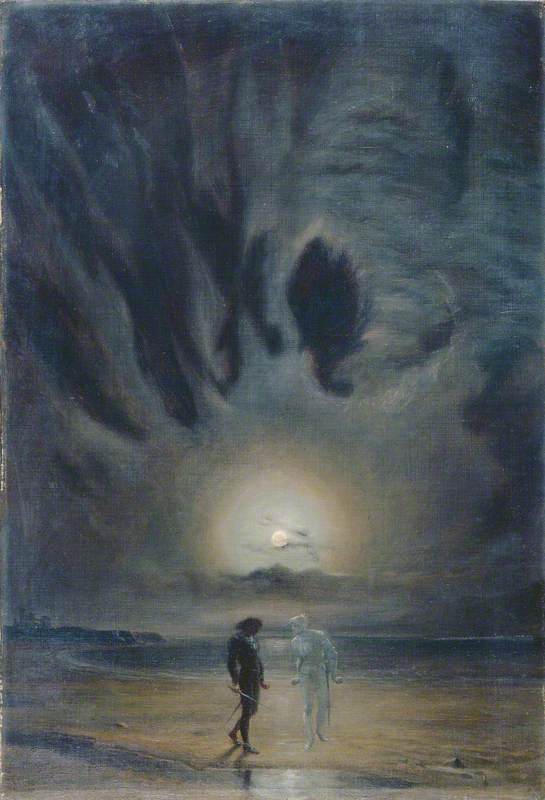
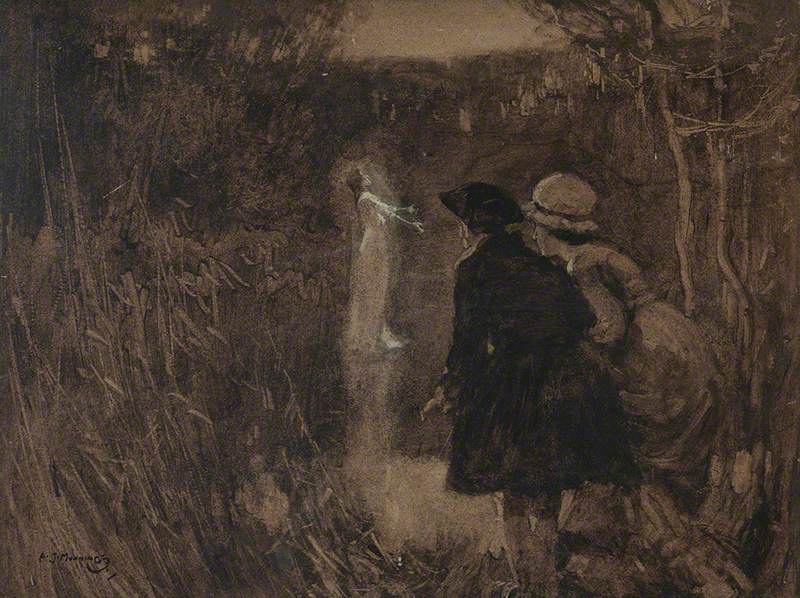
    Shields, Frederick James; Hamlet and the Ghost; Manchester Art Gallery.

    Emergency message delivered to Garrison Commander Jean-Jacques Auguste by Chasseur Hugo Verne, 17th of August of 1865.

    “…whilst on sentry duty this evening, me and Garnier and I spotted movement from up on the garrison. The watchword was asked for. No answer was given. No reply or any more movement was noted.

    Later, around midnight, movement again. Garnier and I observed a solid, dark shadow on the Eastern wall. I note solid, Commander Auguste, begging your pardon, as this wasn’t a trick, and Garnier can back up my statement.

    Lost sight of the intruder before we could get any closer. No evidence of the stranger’s presence could be found, no footprints or anything of the kind.

    I believe it is for the best, if you don’t mind my speaking out of turn, Commander Auguste, to consider more security along the walls. The ease with which this intruder fooled both me and Garnier is……. troubling, as on my honour as a Christian, neither of us were neglecting our post or sneaking a drink that night and were both on the highest of alerts.”

    From the personal journal of Garrison Commander Jean-Jacques Auguste, 17th of August 1865.

    “I do not know what to make of Monsieur Verne’s report. Recent circumstances leave me shaken to my core. I have prayed to God for assistance in this matter and asked Him to dissuade these fancies that threaten to plunge me into the raving world of witches and lunatics. He remains silent as the crowd that saw those brigands hang, a mute disgust watching me with sable eyes. Quietly measuring out a noose to circle my neck.

    It was those words again, in Monsieur Verne’s tale. Words said in sequence, that he could not have possibly heard from the departed Monsieur Dupont, who howled them out only to a physician and to me.

    Solid. Dark. Shadow. Solid. Dark. Shadow. What on earth does it mean? Is this a code or cipher, a motto whose significance I am simply too slow to understand? Yet there again it appears, creeping through the flow of his speech like mold, slowly spreading from beneath its dank abode, solid, dark shadow, solid, dark, shadow, a redundancy made manifest. Nevertheless, I find myself repeating it as I would my nightly prayers.

    How can I not peer into the folds of night and imagine, hidden in them, a shape, biding its time, observing me in silence, waiting for my back to be completely turned to lunge at me in fury?

    The longer that I squint into the shadows, the more they seem like slippery coils of matter coalescing and drifting apart-but no, no, they do not yet appear dark, or solid, though shadows they may well be. The candlelight strikes at their questing tendrils and whips them back. What fear is there for a soldier of the Empire that quelled this dry and savage land when faced with goblins, ghouls, and childish inventions?

    Ours is an age of reason, and to reason I must pledge myself as servant and crusader.”

    Private correspondence of Garrison Commander Jean-Jacques Auguste to Madame Madelaine Auguste, 24th of August 1865.

    “Though it pains me to admit it, Madelaine, I exhumed the child’s corpse yesterday, alone, under the cover of darkness. Of late these days, I have been more than a little dishonest both to you and to my superiors. I understand this must confuse you, but all I ask of you is to try and to understand.

    It was my bullet that ended the poor thing’s life, a terrible accident. I would never have committed such an atrocity in good conscience-you know how much I love children, oh Madelaine, how can I make you see it? The smoke, the shouts, the haze of gunpowder…. a stray bullet, but nevertheless, one from my own gun. It was dismissed as a tragedy, a slip-up. You are the only soul that knows this, the only soul that I can trust to lead me with your perfumed hand through this field of thorns.

    Please, if the holy bonds that join us as man and wife could ever be called upon for a matter such as this, let me call upon them now.

    Should I have come clean, admitted the murder to be my fault? Would my superiors have cared? We all knew the bullet that the physician removed from her heart was of French make. Yet no uproar was raised, no guilt doled out-we all witnessed it, but only I saw. Madelaine, my love, the world will never know it was my rifle, the. The world does not want to know, but I will always bear that memory upon my shoulders, splinters, and all.

    And now all this talk of specters and shapes and death, it is choking me, Madelaine. Even now I question the decision, but it is for the best neither the Mexicans nor my men know of my momentary lapse of good conscience. I had to know, had to ensure that shame and rumour did not run amok any longer through my garrison. The chaos would be unimaginable. I rest easy with mud beneath my fingertips rather than innocent French blood staining my palms. Some doubts are best put to rest expeditiously and without fanfare.

    The fire that burnt what remained of the native girl left nothing solid indeed. Though try as I might, no matter how high I fanned the flames, I could not quite dispel those infernal shadows.”
    Report taken from the medical journal of Garrison physician Jean-Baptiste Rochefort, 26th of August 1865.

    “Deceased have been identified as Chasseurs Hugo Verne and Charles Garnier. Monsieur Verne’s wounds point to a shattered skull and broken neck. Body was found at the bottom of the stairs leading to the watchtower.

    Little blood found on the stairs themselves, indicating Monsieur Verne threw himself, or was thrown, impacting beside the final steps with tremendous force. Vertebrae in the neck completely pulverized. Serious lacerations observed on Verne’s hands, torso, and feet. Bite-marks and scratches from a human hand, some deeper injuries, from a blade of some kind. Unable to accurately identify marks as those of an attacker or self-inflicted.

    Monsieur Garnier found impaled through the jaw on the bayonet of his service-issued rifle. Blade lodged firmly in the top of the cranium. Gunpowder burns on Garnier’s hands and face are evidence of an attempt at discharging his weapon. Angle of entry of the blade proves Monsieur Garnier was aided by gravity. Monsieur Garnier’s torso and extremities bear signs of grievous corporal punishment.

    Presence of unusual blemishes in the eyes of both deceased. Cloudy bruises on the surface of the pupil are reminiscent of a solid, dark shadow.”

    Private correspondence of Garrison Commander Jean-Jacques Auguste to Madame Madelaine Auguste, 5th of September 1865.

    “This will be the last letter I send to Paris, my darling, not because my love for you has dimmed in any way, but because I believe it is best you separate yourself from a wretch such as I before it is too late. You may weep when you read these words, you may call me cruel, but it is the necessary cruelty of the monk who shreds his back to ribbons in the pursuit of salvation.

    As it is, I have resigned myself to the knowledge that even in death, we will not be reunited. I will still remember you fondly, though my eyes be blinded with hot blood from the boiling lakes of Hell. I sleep next to the fire now, for its blazing light is infinitely preferred to the cold, the teeming, wet womb of shadows that slide themselves over my skin, seeking to pour into my ear, thrice blasted and thrice infected for the purpose of my ruin.

    Yet I confess myself a coward, for still I wince and turn away when the edges of the fire’s tongues lick at my cheeks and fingers. If I cannot even stomach these flames, what will I endure in the dungeons of Tartarus?

    I did not mean to kill that little girl. It was an accident; I could not have seen her!

    But…I saw her the other night, in the hallway outside my quarters. Scoff at my words, denounce them as the fevered delirium of a madman driven insane by guilt. She-she? No, it was just… standing stood there, the silver mist of moonlight hovering like a miasma behind it.

    Before I had dismissed the reports of my men of the “solid, dark shadow” but now I know what they meant. That slight figure did not move, but even surrounded as it was by its brethren, the shadow of the girl hung in space, a rip in the fabric of the world.

    Perhaps the worst thing about it was its weight. The thick, heavy feel of its shape that belied it as something tangible, something set in its place and its purpose. Not an airy, specter that could be passed through, but a creature whose hands could touch andg rasp and feel and hurt and choke and scratch………its footsteps leaden thuds advancing onwards at the call of twilight, fingers smudging their blackened grime on doorknobs forced open, sabers shattered, rifles broken.

    Even then I understood that though it could be touched, it could not be killed. Any round discharged at that chest would be devoured by the hungering dark. Within the shape of that thing there dwelled the entrails of midnight, a corruption that had leeched its shadows from our hearts and minds and gorged itself, waiting to multiply.

    Had it been lying in wait, spreading like gangrenous rot ever since the winds blew that rancid stench from within the murdered girl’s coffin? Or maybe, like a seed, like grain, it was we who had carried it. Packed it in straw, sealed in crates, stuffed tight alongside the cannon, the rifles, the swords, the mortars, the grapeshot, and gunpowder sent over in droves on the emperor’s boats to germinate in this world of unspoken, bloodied truths.

    I had stared at similar shadows on the prow of my ship as it crossed the Atlantic, dripping from the folds of the tricolore, I had glimpsed it crawling inside shell-casings and lurking behind my shaving-mirror, wearing my face as a carnival mask. It must have helped me dig up the girl. The task had seemed faster that night, as if some being was scrabbling at the wood of the coffin from below, eager to be free.

    I ran. Why bother denying it? I ran, tearing down the corridor, bolting back towards the fire, towards the light that could beat back the shadows. It did me little good. It never will. This terror that stalks us all is not a foe to be vanquished by any means of reason, for we have always been endarkened.

    I can feel it within me now, from where it peeled off and slipped into my own shade. The filth is a second skin, sewn onto my back. It hovers over my head, stretching and dancing on the walls as it catches the light, doubling my every move like a mime, an ape with a thousand forms. How could I possibly return to France, nestling this parasite in my bosom, a prodigal son of lies returned to the place of its birth? It would flit from host to host, trailing the blossoms of its tarnish in its wake, curdling the souls that already hide the kernels of that self-same seed.

    I will not be the father to a legacy of shadows.

    I love you Madelaine, though you wish I never had. Remember the gilded uniform, remember the walks by the Seine, the pastries shared by lamp light. Please remember my face, one last time, before its features run melt into a pall.”

    Excerpt from medical records obtained from Charenton Asylum, Charenton-Saint-Maurice, 28th of October 1865.

    “Monsieur Auguste’s mental state has not shown any significant indications of improvement. Almost a month has passed since his internment and transportation from Mexico, and he continues to be stricken with active and severe attacks of melancholia.

    Recently discharged from the infirmary after a case of self-mutilation, Monsieur Auguste flayed chunks of his own feet with a stolen kitchen knife. Claims it was to cut away his shadow.

    Fear of the night has repeatedly been observed being his most obvious and frantic concern. Monsieur Auguste has been moved into solitary quarters for his own safety.

    Admittance today of a new lunatic. Assaulted several prostitutes due to bouts of psychosis likely triggered by a prolonged abuse of absinthe. Request for further medical examinations for possible venereal diseases carried by the patient: his body is covered in unusual blemishes, like solid, dark shadows.”
  • The Actaeon Solution

    The Actaeon Solution

    Felix Lazar wiped his mouth with the back of one pale hand and threw up. There wasn’t much left to puke: a thin film of bile peeled from his lips, a trembling spider web. He swallowed hot phlegm, getting to his feet shakily, steadying himself against the edge of the table as he rose. Stubby, well-manicured fingers scrabbled to find the bottle, pawing at the ridged plastic child-proof cap. One pill, then two, no, fuck it, three. The chalky texture of the medication dissolved in Felix’s throat; the chunky aftertaste of vomit mixing with the bitter paste of drugs. The room swooned, and he was down on his knees again, forcing yellow slime from an empty stomach. The pills gleamed at the bottom of the basket like discarded change.

    Moaning softly to himself, a keen whimper that trailed off into a sob, Felix made himself stand up. He caught a glimpse of himself in the mirror and nearly broke it then and there. His skin was fungal grey with shock, deep chunks of puffy blue-black flesh boring into the space beneath his eyes. The silk shirt his viewers loved was stained with filth, and his tie hung around his neck like the rotting trophy of a savage in an adventure movie. White flecks peeked industriously from behind the black gunk Felix smeared on his hair every morning. This only served to complete the portrait of a man whose dignity had been forced out of him and into the rubbish along with his lunch.

    Blearily, his eyes landed on the enormous, framed portrait near his desk. The old Felix Lazar beamed a toothy grin back. Too pristine to be fully natural, the kind of work discreetly done in an expensive LA dentist’s chair. Everything about the figure in the photograph suggested someone who had slowly and methodically erased any identifiers of age. Next to Felix stood a shabby little man in a lab-coat that would have been put to shame by a Halloween costume. The scientist was a foot shorter than Lazar; his blonde hair combed torturously over the wide dome of his head. Nevertheless, his smile was completely genuine, threatening to devour the photographer in one bite.

    His name was Doctor Paul Nassar. Of course, the bastard was happy. He had saved the world.

    Not that Felix was in a congratulatory mood at the moment. In fact, it took all his strength not to throw a paperweight and shatter Paul fucking Nassar’s smug face.

    Felix resigned himself to collapsing into his chair. Pinching the bridge of his nose was enough to stem the flow of tears, but only just. More than anything, he tried not to look at the surface of his desk where the thing was waiting, squatting by his laptop like a dormant snake. It sat primly within a lilac-envelope, as innocent as a Christmas card from his grandparents, the type he’d rip apart, pretending to read the trite message within as he counted the money inside. Felix had been in no rush to open this envelope. Surely no one ever was.

    Deep down, Felix had always known that one day it would happen. There were only so many people on this earth (less now, not like before, not like the bad times with their swarms of refugees, immigrants, tramps, looters, criminals….) so it was natural the lot would fall on Felix sometime. He knew it better than anyone, had spent the greater part of thirty years endorsing Nassar’s revolutionary procedure on his program, eagerly cashing in the state subsidies crammed weekly into his mailbox.

    Felix had dedicated almost every waking moment to pushing Nassar’s population-control operation to be implemented worldwide. As far back as the early days, when the smug, brilliant little geek’s experiments had been pilloried and lambasted by the scientific community and the horrified public. That was when people could afford to sniff down their noses, before even the most self-righteous had been forced to kill and eat their high horses to survive. Nassar had been able to secure the last laugh, then the Nobel Prize, and then the position as the leading medical expert in the entire country. Not to mention unlimited protection as the head of the Commission for World Health and Sanitized Depopulation. Felix hadn’t just sat idly by-ever since his first tentative foray into show business, he had been pulled along by the nose, bestowed with a prodigious gift for sniffing out the nearest windfall. He’d crammed the procedure down the throats of the masses until their teeth cracked. It was exceedingly easy, standing in the sterile light of his studio set, reeking of cologne, plastering on that piranha grin. People were tired, broke, rabid, desperate. More than that. They were hungry, and Felix had been the first to point them in the direction of a land of milk and honey.

    So, yeah, there would have to be some sacrifices and? You had to give up a few souls here and there for salvation. It was in the Bible or something.

    At first, when The Lazarus Pit had hit the air, he had been attacked for it. Not just the usual keyboard crusaders raking him along the coals on online forums and in hysterical video rants. That was part and parcel with the territory, especially in a program Felix had meticulously designed to thrive off controversy. As if controversy had ever been in short supply. Even back in the days when there were no breadlines outside supermarkets and the middle class that had followed the dinosaur and the dodo bird still remained, terminally online losers could always be trusted to find something to whine about. He hadn’t been deterred by the dog-turds rammed underneath his door, the bricks through the window of his old house, the flat tires in his car and the crudely drafted death threats rife with spelling errors and red crayon. What had been a real shock was the wave of support he had quickly received, the hashtags and the online trends backing the procedure.

    After all, Sanitized Depopulation on the scale Nassar had theorized was a pretty stark novelty. It was euthanasia, plain and simple, no use beating around the bush. Lazar never used that term on air. Too many associations with fascist-eugenics-Hitler-Nazi crap.

    Yet the arguments in favour were irrefutable, or so his allies pointed out. Sanitized Depopulation would reduce waste, break down the monopolies on food and resources cultivated by the greedy. In the hands of a single, efficient state, food would become what it always should have been: plentiful. Anyway, everyone knew that those who attacked the procedure were just insane radicals who cared more about themselves than helping other people. It was outstanding how quickly people’s indignation vanished when they were able to relax by themselves in their own flat, no longer shared with thirty other stinking, crying, coughing strangers. No longer reduced to counting ration coupons with trembling, hoarder’s fingers, and look how fast complaints dried up, when people could sit down to a steak dinner!

    All you had to do was try not to think too hard of where it came from.

    For thirty years Felix had hoped he was exempt from the Depopulation draft. Dimly, Felix registered that perhaps he had only survived for three decades because of his unflinching, rabid defence of the entire damn process. Now, it seemed The Powers That Be had decided to reward him for his keenness.

    In bold, simple type, the envelope proclaimed cheerily:

    CONGRATULATIONS CITIZEN! YOU HAVE BEEN SELECTED TO TAKE PART IN THE ACTAEON SOLUTION.

    There were no two doubts about it. His full name, occupation, address, civil status-they were all printed in neat little rows along the top of the envelope. As was usual for a medical record, the document had helpfully noted down his blood type (B-), which no-one ever really bothered remembering.

    “Maybe it’s good to know,” he muttered to himself. “Maybe it improves the flavour.” Then he laughed hysterically. He howled at the absurdity of it all, at the sheer, cosmic indignity. At some point, he started crying. Then he threw up again.

    Congra-tu-fucking-lations alright. Felix didn’t have to open the envelope to find out what was in it. He had examined maybe a thousand of them live on air, calmly talking his audience through the process, wisecracking and winking at the camera to ease the tension. A ghastly image assailed Felix, of a pudgy man with dyed hair and a silk shirt, quipping and teasing, his face a jack-o-lantern of pooling shadow and Botox corpse paint in the glare of the set-lights.

    I guess you really are what you eat! -cue tinny, canned laughter- It could be worse, it could be Arby’s!”-more robotic screeches of mirth- I wish Congress was still around, I’ve never tried jackass! –renewed howls from the speakers, yuck, yuck, yuck.

    Every shitty joke he had ever made was penned by scriptwriters. It was easier that way. It made it feel less genuine after every episode wrapped and the lights dimmed, Felix the showman fading into the darkness, save for that neon-white smile, we’re all mad here, yes sir, you can say that again. Staring at the hateful little package helped ground Felix in the present. He knew what would happen next: the envelope would contain a date, a time, a place. A picture of an animal. And a bland message of thanks.

    Thanks! For the first time in his life the sheer audacity of it hit Felix with the force of a freight train. As if this was just a one-time favour. As if you had a choice! Though, oddly, some people did volunteer, displaying a suicidal eagerness to hasten what they thought was their own martyrdom. They loved posting about their appointment dates online, spending hours shaming others to follow in their benevolent footsteps. At the height of The Lazarus Pit, they had been the suckers Felix loved to have on his program. Their manic cheerfulness was disturbingly infectious, the perfect poster-boys for normalizing San-Depop and stamping down on the dwindling spoilsports that continued to insist on stirring up controversy around the Solution.

    Felix remembered something his father had told him, about the days when the slaughterhouses were still running. How the workers led the animals to their deaths with the help of one goat, who would herd them to their demise. The beast, however, would be spared. It was the easiest way of doing it. His father had called it “the Judas Goat.”  Slowly, Felix reached into the drawer of his desk, grabbing the state-issued cheque that had arrived a week before. It was a very large number. There were many zeroes. Quite a bit more than thirty pieces of silver.

    He’d once been granted the privilege (what a privilege!) to see the procedure carried out in person. It was meant to be an event; the public was never shown any footage or photographs of the process. Ignorance is bliss. It was one of his show’s most repeated slogans. Felix had lifted this pearl of wisdom from The Matrix. But building up hype was easy: The Actaeon Solution, the miracle of modern science that had kept food on the tables of the world, that had rescued mankind from the jaws of destruction when the granaries ran dry!

    All you needed was a person. A person strapped to a steel table.

    Not sedated of course: drugs spoil the taste.

    The machines would do the rest. It was hard not to watch when they started, whirring and buzzing, screeching and glinting. Long, spindly arms quivering, all hooks and claws and knives and drills and peelers, saws and scalpels and hammers. They could take a person apart with the efficiency of a school bully on the playground. Nassar had told Felix not to worry: the sound he thought was screaming coming from the lucky citizen was just air and gases escaping his body. The whole process was totally painless, that was what was crucial for the public to remember. After enough minutes, guided by steady beams of radiation and injections of mutagenic sludge, the person would be stretched, pinched, stamped, sliced and carved into something, well, different, something useful. Disinfectant fog and sprinklers would wash the blood splattered walls clean, and the machines would have gunk wiped off their tools.

    The citizen would be…. changed. Not to the extent San-Depop or Felix had led everyone to believe. Turning people into actual living, breathing animals was far-fetched even for Nassar, not to mention wildly inefficient. There was more to eat on some 169-pound lardass than on a pig or sheep. Instead, the machine settled for warping human tissue into an imitation carcass, an exact replica of animal meat. Absolutely indistinguishable from the real deal all the way down to the texture, structure, and most importantly, the taste.

    Still, it was a necessary white lie for the masses. Easier to chow down on a burger if it was something inhuman, it’s not like it’s cannibalism, hell no! Plus, there was a weird poetic flair to it that people seemed to like: mommy got to be a bunny rabbit, look, Uncle Joe’s going to be a crab! Felix had never understood it, but he had been more than content to let folks concoct whatever cooky, little stories they needed to stop from going insane. Whatever helps you sleep at night, right? Everyone with sense swore by the quality of the meat: it was healthier, had no added preservatives or hormones, it was more humane and didn’t crowd poor animals into filthy pens. Of course, it was very good for the environment. Obviously, it turned Nassar an enormous profit.

    Excess mass was easier to dispose of. Felix knew on good authority that there was a roaring trade in the less appetizing organs (what does a spleen do, anyway?) to hospitals and Universities across the country. As for everything else… well, bones become glue, fat was processed into soap bars, skin cured for shoes and belts. Hair was perfect for designer wigs; teeth were handy accessories and made excellent cufflinks. Felix’s own waistcoat had cost him five hundred dollars and was studded with buttons melted down from the gold molars of an old man he had seen turned into a ‘mallard.’

    Felix could not resist the urge to look in the envelope. Sooner or later, he would have to. The personal details printed on it weren’t just for the benefit of the post office. It was a simple, crude reminder: we know where you live. We know where to find you.

    For an instant, Felix considered packing a suitcase and bolting out into the night. The ridiculousness of the idea crushed him moments later. He was one of the most well-known men in the country, no, the world. His hoarded millions were worthless for escaping: any cheque he tried to cash would immediately be picked up by the appropriate San-Depop authorities. Not to mention his legions of fans would be quick to string him up for his his selfishness. Had he not been the first to point the finger at those who tried to dodge the procedure, raving at their cowardice? His viewers had lapped it up, locating and destroying every persona non grata with a speed worthy of a swarm of locusts.

    Felix started to hyperventilate. His face bulged with the bug-eyed shock of a man who has spent his entire life pulling on a dog’s only for it to dive at his throat the second he lets go of the leash.

    The envelope rasped as he ripped it open. Felix Lazar drew the paper out gingerly, painfully, like a child slowly peeling off a scab on his knee. He ignored the address, the date (two days, Jesus fucking Christ, Mother Mary and Joseph, only two days) and saw only the cute, brightly coloured animal next to his name.

    A deer, prancing on the page with saccharine glee.

    Felix Lazar could not think of deer. Instead, he remembered the whirr of machines, the crimson mist from the operating table. Screams. Just…gas, air escaping from the body, it was painless, you didn’t suffer, that was what he’d always told the public, just a few quick seconds, well…. more like minutes….some pretty long minutes-there sure was a lot of air in a person, huh-the shrieking sound that wasn’t screams, just gas-it sure didn’t let up did it-he wasn’t a scientists what did he know? Maybe it didn’t hurt, it probably didn’t, only two days until he found out, fancy that, no way it hurt, Nassar wouldn’t lie, he’d told everyone it was painless.

    The next thing Felix Lazar saw was the bottle of pills still open at his desk.

    Doctor Paul Nassar sat at his desk, bathed in the blue glow of his laptop. He finished drafting his report and sent it, smiling wanly as he heard the computer whoosh. He’d be rewarded handsomely for this; there was probably another Nobel Prize on the horizon. Gosh, he’d have to start using them as doorstoppers at this rate.

    Nassar rang his butler, ordered dinner, and waited for his meal, checking his phone as he did, busy, busy, busy. He saw that the host of The Lazarus Pit had passed away, and that the program would be replacing him soon. Paul could vaguely remember meeting Francis or Frank Lazar, whatever his name was. An OK guy, a bit full of himself. Kind of smarmy, nothing worth writing home about. If he spent every waking moment reminiscing about every media personality that he’d ever meet, then he’d be at his desk until the cows came home. Any important messages from the more powerful ministries were handled with quiet efficiency, and he left the remaining interview requests, business meetings and university conference bookings for his secretary to wade through.

    There were big changes on the horizon. His breakthrough (tentatively branded Cadmus) had been so obvious, he had no idea how it hadn’t occurred to him before. The first machine he’d designed only worked on living tissue–what a waste! All the dead, the suicides trying to escape the draft, the buried millions just rotting away into mulch-talk about a waste of resources! The machines had been readjusted, an expensive undertaking, but the payoff was immense. Now necrotic tissue could also undergo the transformation process.

    It wasn’t perfect, unfortunately. Corpses from the terminally ill or the long-deceased were useless, no good at all for the quality of the meat. San-Depop would continue to run its lottery on living subjects until the kinks were worked out, though Nassar wasn’t quite sure they ever would be. The modifications would ideally pick up the slack and meet the livestock demands, but boy, despite everything, people were still out there, going at it like rabbits. Population growth was nowhere near as before, but darn it, things weren’t exactly peachy. Paul Nassar exhaled through his nose and rubbed his eyes. Some days it seemed like all his hard work was for nothing.

    Still, this was a step forward. Paul had always fancied himself a glass-half-full kind of guy. There was definitely a Nobel Prize to look forward to, a medal maybe. Perhaps they would give him another island in the Caribbean. Martha had been bothering him about a second honeymoon for years. Paul Nassar hummed the chorus of an Elton John song under his breath as his meal arrived. Venison stew with thyme, butter, garlic, red jelly, mashed potatoes and a glass of wine to help. Still singing under his breath, Paul Nassar tucked into his dinner, thinking of Martha, the new report, which interns he’d sign off on tomorrow at the lab, what movie to watch tonight (a toss-up between Age of Innocence or Evita) and a spy-thriller he was looking forward to buying. He thought of all the files left to sort through, of ice cream for dessert and whether or not it would rain tomorrow.

    Paul Nassar thought about all these things, but never about the food. He just chewed and swallowed, pink juices running down his chin.

  • Claylickers

    Claylickers

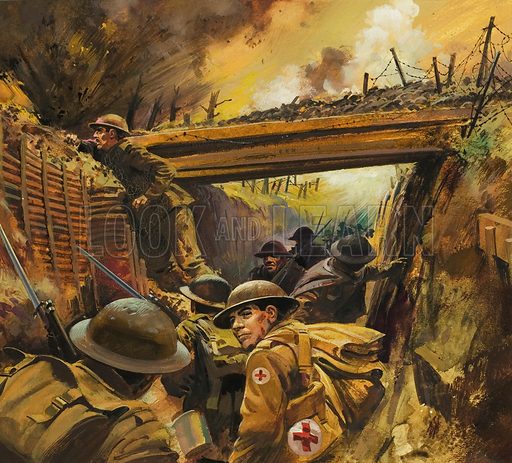
    Beneath the earth they dug, shovels scraping away at the loam. Above them, the war raged on, a staccato heartbeat of artillery shells that rattled the filth packed tight against their heads.

    They did not care about the noise. It had become a creature comfort for them, a tether to a new normalcy drilled into their minds by the white-hot brand of tracer-fire and machine gun rounds. All they had to do was dig. So, they did, their faces corpse-masks sculpted from muck, hovering in the dark. Yellow streaks of lamplight cast a jaundiced sheen on bloodshot eyes that skittered as they moved forwards. Where their shadows merged, their silhouettes became monstrous moles. Bestial, blind, scrabbling with calloused hands towards the depths.                                        

    Cadan Hughes tried to avoid looking at his surroundings as he worked. Instead, he focused on the bite of his pick as he swung it. He braced against the tremors that ran eagerly up his arm. Better to fixate on the little things; the way the damp leg of his trousers rubbed up against his ankles like the family cat begging for treats back home, the way Broderick always coughed three times before he sniffed, or how, without noticing and without fail, Aidan’s shovel dug in time to the phantom tune of “Sosban Fach.”                                                                                   

    Cadan furrowed his brow and struck the wall. Maybe it wasn’t good to remember home. It conjured images of a warm pub keeping out the fog that hovered over the mountains, of drinking games they played, before marching off to the blasted heaths of Belgium. Away from all that was good or green. As he jostled against his fellow miners, their sweat ran and streaked together. He stepped aside to let Gruffydd lurch past with a bucket.  They weren’t strangers to mining. Cadan’s mighty arms had garnered him something of a notoriety in the coalmines back home, and the feel of a spade in his hands had been familiar to him even before the rattle. At least that was his father’s joke.

    This was different. The coalmines were hot, rough work, but softened by jokes and gossip (miners gossiped more than housewives, broken up by breaks taken in clouds of obsidian dust that settled on their brown paper bags as they compared packed lunches and drank cold, sweet tea from metal flasks. After each day, there was always the prospect of coming home and soaking in a hot tin bath then heading down to the pub to play cards and sing and dance.                   

    Cadan could not remember the last time any of them had sung.

    The thought of it was lunacy. You did not sing in the tunnels. You did not talk in the tunnels. Because the enemy also knew how to dig, and they were forever stalking through the soil. Prowling in searching for sappers, to break their bones and split their skulls and leave their corpses sepulchered by the blood-stuffed loam of no-man’s-land.

    Occasionally they would stop, drawing in tight, quick breaths. The muggy air would grow thin, cracking from the strain as their ears perked up, searching for the tell-tale thuds of the enemy as they mined. In those moments, the roots oozing from the sludgy roof became fingers poking through the walls in search of victims, and the trickles of dirt slithering around their boots whispered, anticipating screaming hordes erupting from the walls. Cadan had never killed a man. None of the team had, but every one of them knew their luck could only last for so long. At any moment the tools of their trade could become instruments of butchery.

    Cadan would not have ordinarily said he was afraid of dying, but the prospect of meeting his end in the tunnels was a different story. It was every miner’s greatest fear: to be claimed by the earth they had ravaged, to be buried yet forgotten. The pressure of the earth trapping the soul for eternity where it would harden, crumble, blacken until it was just another lump of coal. As he shuffled forward, sloughing through the sod, Caden looked from man to man.                                          

    Cold grey water wept in streams of pus from the puckered earth. In the half-light a dozen pair of eyes burned with gold to pay the ferryman.                                                                            

    Rhys, in the lead, raised a hand, calling for silence. The miners froze. It was only until several seconds had passed that it began to dawn on them that there was nothing to listen for. Worse still, all the rats had gone.  

    They always took the rats for granted. The war-machines of monkeys never deterred them. Their fat, mangy bodies were a common sight, paddling through the tunnels, chittering, black fur glittering with blood. Red-eyed gargoyles perched on the wooden support beams and laughing scornfully at the slaves that toiled below their kingdom, the trench rats were fearless beings. No matter how many of their brethren were impaled, crushed or dashed into pieces, still they returned, their pink, puppet hands grasping at any scrap of waylaid food they could pilfer. What could cause the vermin to flee?

    Cadan had never even considered there could be something worse down here with them. The realization was an icy jolt to everyone present, the creeping anxiety of returning home only to realize that all the furniture had been moved out of place. This was the silence of the womb; a wet, dull cocoon that signaled the beginning and the end of all things.

    The quake of the guns had ceased. Cadan pressed himself against the nearest man, digging his shoulder-blades into his back. The tunnel had become impossibly small, it was too small, the walls flexing, pulsing, closing in, a mouth ready to chew them up and spit out their bones.    

    At his side, Gruffydd let out a yell. Something had moved up ahead.     

    All they could see for now were its movements, but that was enough to understand that whatever had shifted in the gloom was not human. It was a sudden, primitive understanding relayed instantly to all present. Now the lamplight was the weak, crackling flame of the campfire, and the hunched and ragged men were once again cavemen huddled together against the terrors of the night.           

     A shape was approaching from within the scummy water-no, it was the water. It defied any attempt at categorization, any clumsy desire to label or confirm. It rushed toward them with the implacable tread of shadows emerging from beneath a child’s bed. All the miners could do was stumble backwards, battering uselessly at the dark.

    From the ground a being surged, growing before their eyes, blossoming like cancer. Grey, viscous liquid churned. Within it floated the ravaged corpses of rat and man alike, splinters of yellow bones and leathery flesh mixing, merging, separating. The organism’s body towered above them, its recesses throbbing with a million nameless dead. In the seething recesses of the beast Cadan could see the broken names from grimy labels, trailing broken stitches from where they had been peeled off jackets and trousers, the tattered shreds of handkerchiefs, photographs, rusted lockets and amulets, smothered together into a mess of death. Remains trawled from the filth, animated by a consciousness that smoldered with the pain of dying stars.  

    None of them could move.                                                                                  

    Cadan felt his knees knock together, clattering like dice on the stones of the schoolyard. Around him he heard the moans of his fellow men strike up in chorus. The stink of fear was worse than the sweat. Cadan tried to look at the thing, but something inside his brain resisted.                                   

    To understand it was futile. What remained was a weight, crushing down on them, driving them into a hapless quiver, the grindstone of despair. It stared down at its prey with hard, black withered eyeballs and spread tendrils of dented bullets, pockmarked teeth and rusted bayonet shards towards the nearest man.

    Then it was the man, it was on Rhys, seizing him by the waist and tearing away his side. Rhys didn’t even scream.  Undulating fingers, tipped with shattered dog tags and bent crucifixes pierced through the helpless victim’s jaw and stabbed into the back of his head. It pulled him upwards, the corpse’s feet trailing in the air like a hanged man. Butchered on the altar to the damp and the dark.            

    The beast held the dead man before the miners, and those stubs that might have been hands began to move his jaw up and down. Rhys wept blood in black rivers, and then the body spoke in a voice that was both its own but also something else. Brittle diamonds, an order filtered through the apish sludge of the human mind. The beast sounded out the commandment, ripping through the quiet and forcing its glass-tipped speech from the throat of the murdered man:

    Know Me.

    The command was everything. It bellowed its way inside every man, rushing like filth erupting from sewer-grates. It surged, crawling into their ears, forcings itself down their gullets, burbling past chapped lips. Worming between the moist cracks of tear ducts and quivering nostrils, it gouged and grubbed, spreading its barbed roots into the crevices of their mind until only it remained

    One by one, the being moved from man to man. Bowing over them, drinking from the froth of madness that spilled from their lips. Supping on the blood that ran from their wounds as they tore at each other’s faces, ramming shovels and pickaxes into their skulls to beat out the voice that squirmed within them.

    And Cadan understood. As the creature loomed before him Cadan learned of the solitude of obliterated galaxies. Ruined worlds, consumed by the frosted crystals of space, leaving behind a whirling, shrieking mind screaming for the answer to its existence. Begging for a response to a call that would let its name live just a few years more. Acknowledged by nothing. Collapsing onto a distant ball of earth, immured beneath the clay. Fossilized, disturbed, awoken, reduced to a relic of a savagery thought forgotten, cobbling together the rotting remains of a legacy from discarded trash, even as it crumbled into the muck.

    The other miners were on their hands and knees, retching, gibbering, bawling. They groveled in the mud, choking on the earthen clumps, gargling the stagnant water in supplication, bone-white faces peeking from where the hot tears they wept swept away the grime. A chorus of Gaelic, English, Latin warbled out. In the snatches of words, God and Mother and Home ran together like ink and blood.

    The beast ebbed and flowed from miner to miner, snatches of a face or the shape of a body visible for mere seconds. Its eyes whirled, burning wheels, fallen comets. Now a cry filled the recesses of the tunnel It was the drawn-out scream of throats raised in symphony with this thing. Yells, welcoming the unknown as the wetness crawled over their bodies, sucking them in. Faces within, stretched with howls of glee. Theatre masks, rolling their eyes in milk-white circles, champing and screaming. For a moment, the beast was whole, but then the connection was severed, and Cadan was a monkey again, except seconds ago he had been a God, and he thrashed, coughing hot blood. He wept in the agony of remembrance of what it had been to feast on quasars and couple with stardust. He hugged himself tightly, hating the thick, hairy arms that hung by his side, retching at the stubby fingers. The unbearable stink of his humanity was too much. The thing bore down on Cadan and his first impulse was to let it take him, but no, he would mingle his foul corruption with it, make it lesser, he would join it but not remember it, it would not be fair.

    He ran, the lantern crashing against the floor. Darkness rushed after him, like hunting-dogs scrambling along the length of the tunnel. The thing was moving behind him, but Cadan tore down the path, splashing through the muck, laughing and screaming as he went. He was in the stomach of some great, hungry worm. Its walls shivered at his touch as he stumbled blindly down their length.

    Up ahead-a noise. Cadan threw himself against the source. He had no shovel, he had forgotten his shovel, but he could still dig, he needed to dig.                                                                                    

    In the dark his arms and hands bent, twisting into paws.                                

    It was a German team that found Cadan Hughes, staggering in one of their tunnels, buried in dirt, stumbling towards them. The captain of the team ordered his men to stay back, hefting the sharpened edge of a trench-spade in one hand.   

    The approaching figure seemed like a shell-shocked soul, until it collapsed into the light, and they saw his eyes. The eyes of a blind man, clogged with mist. The figure reached out towards the captain, and where his fingers should have been there were only torn and savaged stumps, caked in gory muck. Shards of bone scraped feeble lines into the air.

    In the distance, one could hear the slow rush of water, and the silence of the rats. The apparition gurgled. Know Me.

    The captain drove the shovel into its head, and the madman died. The Germans moved on, walking over the corpse. Already, the mud was seeping over it, drawing it further and further downwards. Thick boots stamped the figure into the slime.

    The mining team disappeared into the recesses of the tunnel. Overhead, the guns began to boom once more. A dull gleam from the broken figure stamped into the clay may have been a dog-tag.

    Blanketed by ooze, the name etched into it had disappeared.

  • Can’t You Hear Me Knocking?

    Can’t You Hear Me Knocking?

    The vans travelled alone, materializing in back alleys and underneath streetlamps as if they had always been there. Gliding with lupine grace and singular purpose, they had acquired a bizarre invisibility, erased from the memories of those who stumbled across them. Some might recognize these vans or guess their purpose. Perhaps there are some, unlike me, fortunate enough not to, a mass of blissfully content idiots alien to the instruments of tyranny. Mobile charcoal coffins, they made themselves known suddenly but surely, like a rag pressed on the mouth of a sleeping victim. Their arrival seemed to herald some terrible calamity, one that had nevertheless been quietly accepted as part of the natural order, the iron tang of ozone before a thunderstorm.                                                                                         

    It was six in the morning, in a place whose name does not bear mentioning, and one I would have rather not remembered, though my duty to record the slain forces my hand. It happened on a day like this, with the birds still waiting to strike up in song and the dew spreading a slick sheen on the blades of neatly cut grass quivering with each gust of wind.                                                                                    

    One such van was parked beside the curb. It had been sitting there for quite some time and would wait for more still. It was a singularly ugly thing, wretched in its blunt simplicity. The vehicle bore no markings of any kind, clad in a coat of sable paint.  Tinted windows of smoky obsidian gave the van the appearance of an enormous bug, squatting in wait, ready to leap at any moment with foaming mandibles and chitinous claws. Framed against the backdrop of white-picket fences, lace curtains and brass doorknockers that adorned the surrounding houses, it was an aberration. An intrusion on the isolation afforded only by a Party membership card.                                                                   

    It could have occurred at any time. It had before, in different scenes, been denied the pleasure of being lit by the light of the approaching dawn. In ramshackle Joint Habitation Apartments bursting at the seams with wailing children, their faces yellow under the cheap, flickering lamps that lined their walls. At Centrally-Approved celebrations thick with the miasma of bitter state-provided liquor and the leaden gloom of fun carried out under the prerequisite of compliance. Usually, the stage was set by some regional village out of my reach; its air punctured by the lowing of the few healthy cows still available for distribution and the shriek of the rickety junkyard scraps that passed for Ministry-Sanctioned machinery. The setting was incidental. The result, seldom different.                                        

    Inside the van, the first man stretched awkwardly, shifting in his seat, his jaw popping as he let out a death-rattle yawn. His name was not important and could never be. Another line of type out of millions, locked away in confidential archives in a government basement. Suffice to say he was a faceless blur devoid of colour, endowed with the same agency as an axe or a hammer.  Rubbing his poorly shaven jaw with one hand, he blinked, eyes crusted from a lack of sleep, focusing his bleary sights on the house visible alongside the window. Looking, no doubt, for a sudden twitch of a curtain, or the tell-tale lights revealing someone was awake far before the beginning of the dictated productivity timetable. Finding nothing, he let out a breathy sigh and leaned back as far as his chair would let him.                                

    His face, as reflected with a slight distortion in the rear-view mirror, was hardly striking. It was neither excessively ugly nor handsome, nor was it the portrait of demonic evil many would expect. Instead, it spoke of a more petty malice, not one born of scheming or savagery, but the simple, unrefined cruelty of the everyday. In his pebble-grey eyes was the look of someone who had pulled the legs from beetles just because it was easy and stamped on the shiny new toys of his childhood neighbour for being nicer than his.                                                   

    The legions of passengers in the black vans that traversed the country were formed of such men. Men unaware of any meaningful change that could be achieved without a rifle or a pistol, eager to dish out punishment to those they thought deserved it and content to view themselves as excepted.  His partner was asleep behind the wheel, the dull red light of the dashboard casting his features in a cherry sheen. The scarlet dagger insignia embroidered on the lapel of his jacket glistened. The collar was turned up, jutting upwards from his neck, whilst the state-issued peaked cap that came with their uniform was pulled down far over his eyes. Fitful snores could be heard from beneath the shield of clothing.                                        

    Drumming his fingers on the edge of his armrest, the first man fished inside his jacket pocket for a crumpled packet of cigarettes. Its wrinkled packaging was the trademark of a shoddy underground import, covered with angular foreign characters in a language he could not understand and would not have been allowed to learn. The tin lighter in his hand flared for a second in the semi-darkness of the van. He cranked the window open a sliver to let the smoke worm its way out. I wonder if the illegality of his actions enriched the sensation. Not that it really mattered: the crimson dagger on his uniform absolved him from upholding most common state-ordered restrictions. Those with no knives, symbolic or otherwise, were in no place to object.                                                                       

    The inside of the van was now thick with light blue fog. It looked like the inside of an aquarium. Mumbling, the first man turned the radio on, turned down as low as possible, and began humming along under his breath whilst his partner slept. The station he had tuned into was also banned (the concept of multiple radio stations seems laughable in the wake of the ‘Entertainment and Togetherness’ Campaign and the creation of the Smiling Faces Broadcasting Group). It played something that the presenter, most certainly speaking from a dingy offshore fishing boat fitted with a battered antenna, called ‘rock and roll’ music. The man had certainly only ever heard of it in classrooms during his academy training.                                                                                      

    It was one of the innumerable offences he and his partner would have been made to memorize: in this case, Section 457, which penalized the distribution, ownership or performance of any music that threatened to destabilize unity, goodwill and cause disturbance. If the C.D wasn’t stamped with the cherubic grin of the Smiling Faces label of approval, if the band did not present a permit of Centrally-Approved entertainment, then in brief a black van would appear one day, and that would be all. He could never have guessed the name of the song, though if pressed to try he may have hazarded Rolling Stones based on what the radio presenter had whispered before the music started. It was very good, much better than the trite sludge pumped out through the speakers in community productivity centers. It had a dirty, punchy rhythm to it, rough around the edges, sweating sex and aggression.

     The man tutted to himself. Small wonder it had been banned. His foot, however, still moved to the beat as he took another drag on his cigarette. As he listened, perhaps he wondered what the inhabitants of the house could have done, trawling through endless memorized pages of felonies and anti-productivity offences. If he did, he surely gave up once boredom set back in. There wasn’t much of a point. They had an address and an order, and nothing much aside from that was needed. If the address had been pinned up on the corkboard in his cubicle, then whoever it belonged to must have done something to deserve it, even if they themselves were not aware of it. And it they weren’t, well, wasn’t that their fault? It must have seemed quite self-explanatory to the man, as he sprinkled ash onto the side of the road. If only guilty people had their address placed on the board, then if they hadn’t done anything wrong, they wouldn’t have ended up there. It didn’t get any easier than that.

    Right now, what surely weighed most heavily on his mind was the thought of being able to punch out of his shift soon, have a hot meal rather than grainy nutrition bars and lukewarm coffee. The chance to shower, even if hot water was now a thing of the past, wash away the stench of sweat, tobacco, grime, and stuffy air that had clung to him like a second skin begging to be peeled off. Could he imagine what it must be like to live inside one of those houses cradled within the suburbs? I doubt he was capable of picturing anything of substance. Men like him cannot begin to fathom an interior or exterior life outside of the van. They are reduced to visualizing vague shapes, more the ideas of things than the things themselves: happy, family, together, peace, rest……it was territory too alien for a mind stripped down and engineered into uniform boxes, stacked together to serve one purpose, and do so unflinchingly.

     Suddenly, outside-movement. The door had been opened slightly, from behind which emerged a banded tabby ca. The first man watched it, a collar with a tiny bell hung around its neck. He must have been more than a little impressed: outside of the suburbs no living person had seen a live cat in years. Its existence would prove maddeningly puzzling, almost frustrating as it sashayed through the open air. The cat could leave whenever it wanted. What compelled it to stay? Was it the safety of four walls, the promise of treats passed under the table that made it give in to those benign overlords that stuck tracking chips beneath its flesh and castrated it? Did their promise of security suffice, for it to suffer being stamped with a foreign name and wear it on a plate around its throat?                       

    For a second, did he see himself reflected in those slitted, feline eyes?                                                  

    He was thankfully snapped back to his senses before his thoughts could become too dangerous. His partner was awake. He turned off the radio, and adjusted his cap. His head nodded in the direction of the house. The van swung open.                                                                           

    Six in the morning. Three knocks on the front door. On the threshold, the two men in their raven-black coats. Gray guns in their holsters, the strap unbuckled.                                                

    The first man was still smoking his cigarette, his foot tapping to the beat of a phantom drum. The other man pulled out a piece of paper from his pocket and tacked it above the house number.Rows of black text bunched together spelled out: “Guilty of Deviant Expression: Anti-Utopian Conspirators.”

     No answer from within. Then, muffled footsteps. The door creaked open. Dressed in undersized pyjamas, a little girl rubbed her face and blinked up at the men looming over her. She was up far too early, wanting to let the cat back inside. She was confused, addled by tiredness. She saw adults, but did not understand.

    The first man let out a hiss of blue smoke. His knees bent slightly. He was face to face with the child. He asked, slowly in clear, precise tones, as to not alarm her, if her mummy and daddy were still upstairs.

    Still puzzled, apprehensive now, the girl scratched her head. She gave a curt nod.  The first man smiled. His partner drew his pistol and shot her through the head. A spray of blood speckled the entrance. The first man wiped a ruby bead from the lapel of his uniform. A jackboot crushed the bud of his cigarette.                                                                                  

    The girl had been holding a teddy-bear. Its fur was sprayed claret, and it was missing an eye. Upstairs, a scream. A light came on.

     His partner took the stairs first. Stepping over the body, he followed.   Two more gunshots. Crickets chirped outside. One final crack: the mother was trying to crawl away.  

    They left in a single file. The van waited at the side of the curb. His partner got in first. In the glove-compartment, a box of sanitary wipes was passed around then tossed to the back of the van, wrinkled and stained. A splutter, and the van started rocked to life. The house lights were still on.         

    The first man lit another cigarette as his stomach growled. His partner drove, the clicking of the turn signal counting away the minutes before the morning, underscored by his tuneless whistling. The first man turned towards his partner, looking at his watch as he did. A fleck of clotted gore was drying on its surface. The next words he spoke were recorded, as everything they did and said until then had been. Stored in devices embedded in their uniforms by their ever-vigilant Ministry for the purpose of a report that, if it were not for my efforts, would have been consigned to the dustbin of history.

      “So, what do you think we’ll get for breakfast?”

  • The Leech

    The Leech

    It is my four hundredth and fortieth year upon this Earth, and I can no longer recognize my own face. I know it in essence. I have seen the portraits, done in heavy oils, gnawed by rodents: a slanted brow, eyes narrowed to the dark gleam of an ink-dipped quill, nose curving like an osprey. No matter. The paintings of the regal man I once could have recognized are the spectre of a memory. The creatures that eat away at the crumbling paint are a grotesque parody of the worms that heaved their slippery coils across my undead flesh.

    Perhaps the fourth turn of a century has changed me in ways that the bubbling venom of the leech’s curse could never have. I sit sometimes, amid the gossamer thread of cobwebs, strewn like frost, that coat these stone walls. I dream, with fantastical, wild notions about what I may look like. Possibly I am transfigured into a cracked and wrinkled nightmare, glittering feline eyes peeking out from puckered flesh streaked with bile’s yellow brushstrokes. Maybe my features have been warped into a lupine mask, flesh tight against my skull, eyes burning lamplights. And perhaps there is no change, and the haughty gaze of that man, once buried in in a coffin whose lid bears the marks of claws rending the rotten wood from the inside, has not moved. Immutable. Alabaster flesh turning aside the scythe of Father Time as a coat of mail would a dagger. I would not know. 


    All I can do is search the expanse of my pearlescent skin, run my fingers clumsily to feel the bridge of a nose, the curve of an eye-socket, the quivering softness of lips. Awkwardly trying to construct one whole image like a blind man clutching at the walls of a cave, palms fumbling along shards of stone. The mirror that sits above my bedroom table is as much a prop as the mattress itself. Standing before it I see an empty room, a man erased. The shadow of silhouette flickers on the carpet, begging to be heard, answered only by an empty glass.  

    In the beginning I welcomed it.                                                                                 

    After years of glutting myself on the living, it finally struck me….so much time to learn, better myself. I could hone my already prodigious capabilities to new lengths, be unrivalled among men in both body and mind. Think, what lengths the immortal could rise to, when unshackled from the limitations of finite life! Why, he could soar to the heights of da Vinci and Botticelli, compose symphonies to shame Handel and Vivaldi, trample on the works of Shakespeare and Marlowe, achieve feats of natural philosophy that would consign Albert Magnus to utter mediocrity! Yet only once I strove for perfection, did I truly realize what it meant to surrender one’s soul.                                                

    The paintings I produced were the scribbles of a child, ham-fisted smears of colour devoid of rhyme or reason. In an agony of confusion, I fought to breathe life into the canvas, a ludicrous task for one undead. Howling, raging, tearing at my flesh I thrashed back and forth, racking my mind to produce something, anything, but these slender fingers could only clutch the paintbrush in the fist of an ape. The gift of creation had been spirited away under my nose even as I gloated, unaware that I would never reach the true immortality of men who could feel.

     Heaps of parchment filled the castle halls in a blizzard, ripped by savage paws that could only throttle a quill in impotent frustration, spotting the paper with tears of ink. I procured a violin and set it on the rack to screech and whine, until I left its gutted carcass to collect dust, and the creatures of the night made no music, no music at all.

    No passion could fill this void. My brushes with love were reduced to the palest of imitations, as close to romance as the efforts of an artist gone decades without practice would be to the masterworks of his youth. A sweet creature would catch my eye, my fingers running over her skin, but to grip and pierce rather than caress. My hunger would be of an uglier kind than any spark of lust, teeth finding the neck not to nibble but to bite, clasping the body close to feel the heart pumping, quickening in fear. Her flesh draining where once it would have flushed with the same blood gushing in bitter streams down my throat. The quivering gasps of pleasure were now the jerking frenzy of a body in its death throes. As for a wife, I only ever took one, forgetting, in an instant of desperation, the nature of my curse, how brief she was compared to mine.                               

    She stood before me. I closed my eyes. When I opened them again, she was gone, powdered bone left to be swept by the wind and carried away.                          

    Four hundred years and more I count, though why I bother I could not truly say. It keeps the mind fresh, staves away the rot blossoming in my head. Cancerous petals bloom and mould has snuck its way between the cobbles of my abode. Mildew is adequate perfume for the days that eke their way forward with arthritic grace. The tapestries hang heavy with dust, and the grime has claimed the stained-glass windows, reduced to trinkets deprived of the sunlight that once made them gems.

    My God I miss the sunlight! The torments I would endure to see my halls dappled in jade and ruby, the blood I would spill, If I had any to give, for an evening watching the surface of a lake in the summertime, strewn with winking diamonds. A kingdom, my kingdom for the warmth of a June morning on my face!                 

    The urge, macabre, insane, often springs on me, seizes me with such force I begin to shake and grow weak. The prospect of finality, once incomprehensibly daunting, is now one I envy with the flaccid ruin I call a heart.                            

    I yearn to pluck away at the thick curtains that shield my windows and let the burning tide flood inside in streams of molten gold. 

    Oh, flay me alive with your fiery whips, I care not! The tongues of Hell cannot be worse than an eternity clothed in midnight!     

    I would cling to memory for salvation but can only pounce at half-remembered lives, too many for one man, a dozen faces to go with a hundred names. Sometimes I am rooted to the spot as if speared by lightning: the sound of hooves and the bellowing of Boyars flourishing banners wet and heavy with gore, the cacophony of London and the stench of a river turned cesspit. Ocean spray, a ship’s rudder groaning, the scream of a dull-eyed peasant ripped open in a forest clearing, a madman with zealot’s eyes lapping blood from a bleached floor……can I really call these fragments my own?                                                                       

    Here I sit, and time has passed me by like a carriage overtaking a poor man by the side of road, leaving him with snatches of laughter and good cheer. The glimpse of a true life he will vainly chase as a fool dances with his shadow, always one step behind.

    What existence for a man is this? Yes, the power, the elegance, the beauty of gliding through the night, shadows chased away by crimson eyes that see every quiver of a leaf, every twitch of fur on a rabbit’s hide, it is intoxicating at first. I remember the deranged glee of freedom from the mortal coil, the joy, terrifying, electric, of jeering in the face of God, my very existence the ultimate affront to His will, yet agonizing by His design.       

    Now the sneer fades from my lips. I scamper from the oncoming dawn, night after night, to curl in a cellar with no company save a hunger that can never be abated roiling in my stomach. The fine silks, the lace and velvet and furs that swaddled me have long-since rotted away. The candles sit cold in puddles of hard wax, for what use is light for eyes that see in darkness? My court is one of shadows, and when I dine my banquets become masques for the rats and the spiders.                                                                                               

    The clustered hovels scattered below my keep have grown into towns. Hovering in the empty sky, the moonlight casts me in silver. Lamplight from a hundred houses is the glare of torches in the hands of the mob. I am not welcome here. I can hear the sounds, a thousand lungs drawing breath, the laughter, the whispers, the sobs. If I close my eyes, for an instant, long enough, I can pretend that giggles burst from my lips, that it is my salted tears that stain barren cheeks, that the throb of life comes from within my breast and not theirs.               

    Once, such delusions would not have troubled me. Once, I held men in my thrall, but the sands of time slip ever onwards, and the monster that hides in the castle becomes just that: a monster, banished to the realm of the storybook and the tall tale. The whispered memory of a thing, nightmare of bared fangs and billowing cloaks, a terror for children dispelled by pulling a blanket over a sleeping head.               

    Pure cowardice keeps me as I am. Even centuries later, for all my wailing, the thought of hearing the thud of the gravedigger’s soil on my casket terrifies me. Consigned to a Hell of my own devising, I flee from the Hell I know awaits me if I stride into the daytime. White flesh, a man made of candlewax…would I melt, or simply crumble?           

    I twitch the curtain aside, ever so slightly. Across the pine-dappled hills, the orange glow of morning begins to creep forward. Touched momentarily, the grass becomes emerald. I had almost forgotten grass.                                                                                                  

    I let my hand fall. The curtain being drawn is the sound of a coffin slamming shut.           

    It is my four hundred and fortieth year on this earth.

    Inspired by the work of Bram Stoker

    The End