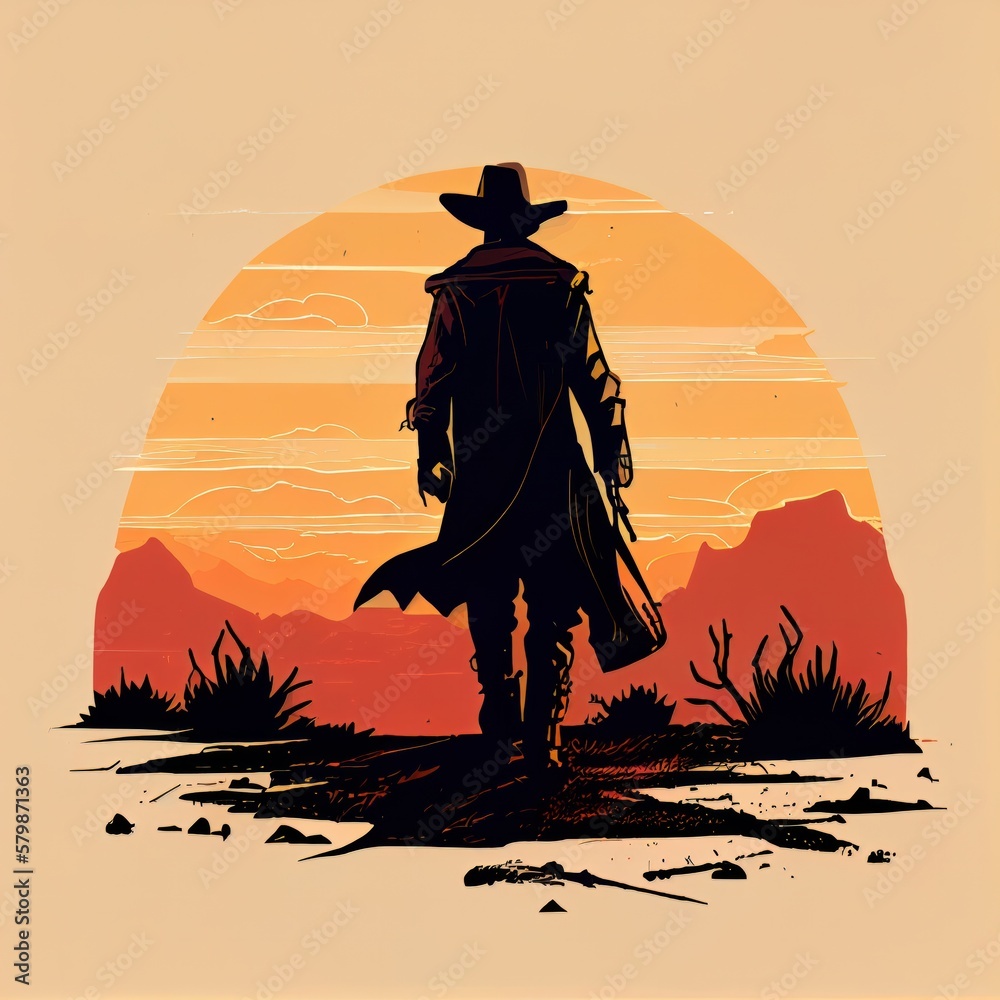
The first time John McCoy died was on a dust-speckled street by the saloon in Agua Templada. Luckily, it didn’t stick. Which, depending on how one looks at things, was either a blessing or an abominable curse, for the Creator would have been hard pressed to concoct a more miserable backwater for a condemned man to have to live out the rest of his days.
Many would be inclined to agree that Mr. McCoy did not deserve his fate. The older folks amongst you may know him as Six-Shot McCoy, a name dear to every liquor salesman from Texas to Oregon. As the astute reader may have already guessed, this sobriquet was not in honour of the oiled firearm at his hip, but rather a testament to his formidable prowess with the bottle. For many years, McCoy had been meandering through the ramshackle towns of the Old West, seeking the adventure that would transubstantiate his flesh and blood into the titanic fodder of legend, but legend was a fickle mistress. She had decided that in this age of steam-trains, oilrigs, and flash-photography, there was no longer a place for her extravagant folly. She had grown tired of this virgin country cluttered with the dusty memories of gunpowder duels, cutthroat fugitives with ten-gallon hats, stagecoach battles and cemetery stand-offs fought in the name of buried treasure.
John McCoy would often think back fondly to the days when roaming gangs of bank-robbers used to thunder through town, steel in their fists and murder on their minds, in such numbers that the sheriff had been forced to set up a timetable system to avoid a congestion of brigands. Those were the good old days, you betcha, but nothing good ever lasted. The game had changed: the Wild Bunch were on Valium, the Lone Ranger had tied the knot, and the Magnificent Seven successfully filed for trademark, forcing McCoy to reluctantly abandon his motley vaqueros, because “The Spectacular Septet” just didn’t have the same ring to it. Last week he wasted three hours riding to the rescue of a household of honest prostitutes only to find the fine ladies had gone ahead and unionized, and could take care of themselves, thank you very much.
Nothing made sense anymore. The purtycountry-maidens traded in their gingham dresses for an education, the gold rush was slowing to a trickle, and there were barely any mail-coaches to defend from robbers now that the telegraph poles had been installed. At certain times, usually between shot number four of the six that had given McCoy his name, he wondered if perhaps him and his fellow gunslingers were left behind by time like a child abandoned in a game of hide-and-seek, alone with his eyes screwed shut whilst the footsteps of his departed friends fade into the air. Perhaps that was why men like McCoy still haunted their old watering holes, trying to look bored or mysterious. It was the feigned apathy of that self-same child who, realising he was stuck in a game he was never going to win, tried to act as if he wasn’t interested in playing anyway.
The truth of the matter was that there were no guns left in the valley indeed: they were in the hands of the army and the lawmen. There were no more dastardly crooks and cunning fraudsters to duel mano-a-mano at sunrise. They had graduated from the paltry fare of robbing bank-vaults, besieging villages, or holding steam-trains hostage, and now they ran the banks, owned the land the houses were built on, and the train-carriages were stamped in fancy copperplate with their company names.
So, putting the ‘desperate’ in desperado, John McCoy came to his senses and stopped riding fences, leading his horse, Ford, away from the cities of tomorrow. The sun burning its disapproval onto his back, he packed up his favourite white hat and shirt, a bygone relic kicked from the streets of Laredo (which now had a school, barbershop, pharmacist and even a library), a spirit of the West trailing whiskey instead of rattling chains, roaming in search of a final resting place.
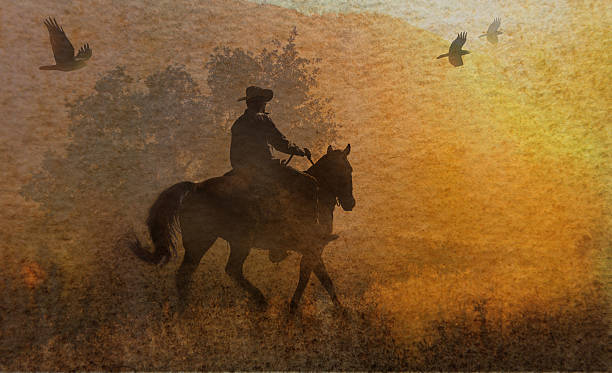
It was almost sundown when John McCoy rode into the town of Agua Templada (pop. 43, chief export: dysentery) a place found on no map, not due to the negligence of cartographers, but out of a sense of decency for the common man.
It had not rained in the desert for forty years and a half, so now the armies of sand, grit, and dirt were locked in a three-way war of attrition against the crumbling wood of the four or five buildings that made up a single high street. The mouldering settlements were eerily silent. The local pastime of the townsfolk consisted of racing to see who could die in their sleep first, to the point that vultures had stopped roosting on the roofs of their houses. Even scavengers like a challenge.
As he trotted down the street, John McCoy tried to avoid the gaze of the few inhabitants who waited in the shadows of their porches. Ford also found himself bowing his head self-consciously. John had heard of one-horse towns. By Agua Templada standards, they were impossibly bourgeois
In the distance, a tumbleweed trundled along its scraggly path, noticed it was about to enter the town, and swerved violently away. The only person who acknowledged McCoy’s existence was the coffin-maker, who looked up from his hammering, taking in the stranger and his stallion. The dead, at least, would never be in short supply here.
John nudged Ford in the direction of the local bar. The sign above it was nearly broken down, losing an ‘S’ and an ‘A’ meaning the building proclaimed itself as ‘Loon.’ Dismouning, he tied Ford next to a trough. There was another horse outside, a beautiful, dark creature. Ford and the stallion shared a sheepish glance. Horses have standards too.
Falling into the languorous, rolling swagger of the inveterate cowboy, John McCoy pushed past the swinging saloon doors. One fell off its hinges and smashed onto the ground.
Coughing awkwardly, McCoy ploughed onward into the gloom. The saloon was a dank, claustrophobic little place, underscored by the elderly creaking of a water-powered ceiling fan that did nothing but spread dust more evenly around the room. The floor, at least, was somewhat clean: cockroaches avoided the town like the plague, lest staying overnight sully their reputations. A couple of folks looked up at the stranger. One grizzled man with a ragged beard attempted to lift his head from the table, trying to peel his cheek away from its sticky, beer-saturated surface, and promptly gave up. In the corner, where someone should have been hammering at a pianola, a wizened old woman was chiming away at a triangle.
McCoy ambled up to the bar, where a sallow-faced gentleman was cleaning a cup with a cloth.
“Howdy, partner,” said John McCoy, tipping his hat. The bartender nodded, spat into the cloth, and continued wiping.
“Howdy yourself,” was the gruff reply. “What’ll you be drinking? Assuming you have the coin to pay for it, of course.”
“Gimme a stiff whisky,” said John, setting a silver dollar onto the bar-top, where it stuck fast.
“One whisky, coming up,” grunted the bartender. He set down a series of cracked shot-glasses and a faded bottle of amber swill next to McCoy’s hand.“You with the other fella?” inquired the bartender.
“Huh?”
“The cowboy with the fancy horse,” said the bartender, jerking his head toward the door.
“No Sir, I’m all here by my lonesome,” said McCoy. “In fact, I was looking to see if I could inquire as to a bed to lay my weary head upon in this, uh, fine town of yours.”
“Got one room. S’already taken,” said the bartender.
“What? Already? By who?” said McCoy. The bartender repeated his nod in the direction of the horses by way of a reply. McCoy took another drink.
“Well, I’m awful tired, and a man needs a place to put his boots up. I’m sure this fella, whoever he is, could be persuaded to share one little room, just for a night. For a price, of course,” he added, rubbing his thumb and forefinger together.
“Not sure about that,” mused the bartender. “The man ain’t the sharing kind.”
“Ah, come on now partner. Every man got a price,” winked McCoy. “Who is this stubborn fella anyway?”
“That would be me, partner,” came a hushed whisper that nevertheless carried its way across the saloon-the speaker’s rasping tones were the rustle of a rattlesnake creeping through dry grass. A man had materialised at the foot of the bar. McCoy took in the apparition with more than a little awe. His face had the texture of a worn saddle. Two eyes, beady, black and glittering, the sting of a scorpion, ran over McCoy’s skin. The cowboy’s hat was a dark arrowhead, and his boots could have been dipped in an oil-well. A thin cigarillo was clamped between the gunslinger’s teeth. He seemed to have appeared from a cloud of acrid blue smoke and fiery embers.
“The name’s Lee Leone,” drawled the man in black. McCoy tried to hide the look of admiration on his face: Leone was posing like a born cowboy. In turn, McCoy leaned against the bar, feigning nonchalance.
“Is that so? Well, pleased to meet you Mister Leone. The name’s McCoy. Six-Shot McCoy.”
“Is that so? Well, Six-Shot, around these parts, folks like to call me The Taxman. On account of how I always settle debts, and that no man can escape me.”
McCoy swore quietly. Leone’s nickname was cooler than his.The Taxman walked up to him, resting one elbow on the side of the bar. Never breaking eye-contact with McCoy, Leone poured himself a shot of whiskey and kicked it back. Not one to be outdone in the arena of chronic alcoholism, McCoy threw back his own shot. It missed his mouth completely, splashing all over his collar, cheeks, hair and even his sleeve.
“You know,” said McCoy awkwardly, gently sliding the whiskey bottle out of sight, “too much liquor’ll kill you.”
“I don’t plan on ever dying son,” sneered Leone.
“I hear you’re not keen on sharing that there room,” ventured McCoy.
“Way I see it, finders keepers,” snickered Leone, blowing smoke in McCoy’s face.
“Those are fighting words,” replied McCoy. He straightened up from where he had been languishing across the bar, wincing as a patch off the pack of his shirt ripped, glued to the mucky railing. Sensing that he was rapidly losing control of the situation, he attempted to salvage some masculine pride by snatching the cigarillo out of Leone’s mouth. Its end caught on the booze-soaked edge of his sleeve, promptly setting it on fire.
“I’m a fighting man,” said Leone slowly, thumbing his holster. McCoy never broke eye contact, one hand straying toward his guns, the other slamming against the side of the bar to put out the flames on his wrist. A fly flew between the stares of both men and dropped dead.
This was what McCoy had been waiting for. True, a shootout over a spare room in a saloon was not the most righteous of battles but he would settle for what he could take. McCoy recognized a kindred spirit in Leone. They were both like lonely men milling around aimlessly as the bar was about to close, willing to go home with whoever so much as looked in their direction. The air quivered with the memory of white-hot bullets and sullied honour. Both men spoke the fated words at the same time.
“This town ain’t big enough for both of us.”
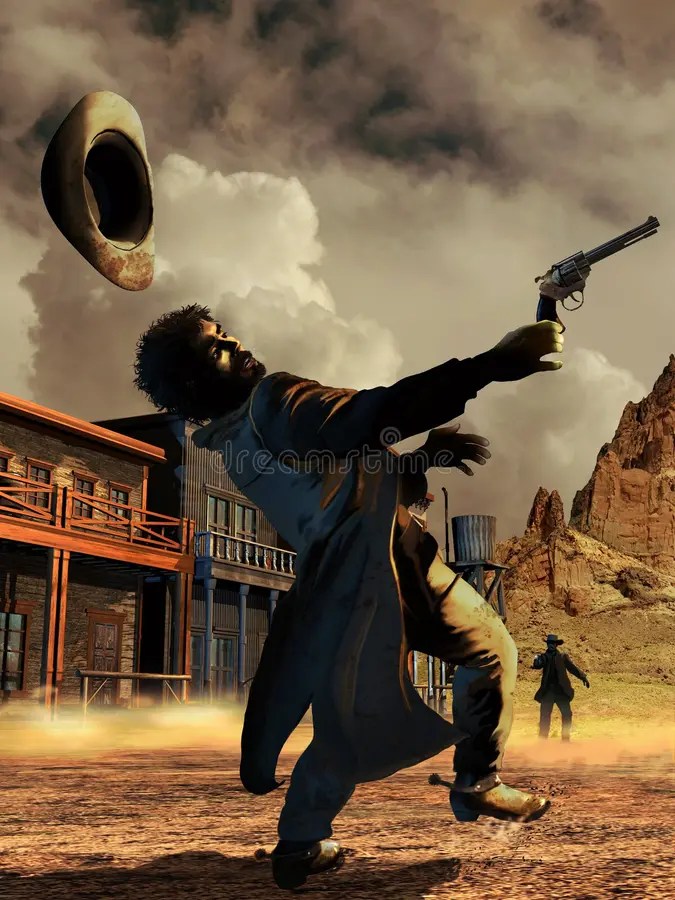
Things moved quickly after that: The duel, once declared, could not be taken back. Now, outside in the high street, under the watchful gaze of the ‘Loon, their shadows reaching out to touch each other as if even they could not control their violent urges, John McCoy and Lee Leone faced one another. A small crowd had gathered at the sides. The coffin-maker was absent, at home in his workshop working on a “Two for the Price of One” bargain sale to commemorate this special event. The sun leaked red blood from its cracked skull as it receded underneath the cold, hard line of the faraway dunes. Leone let his hat fall, the black disk skittering across the parched earth. McCoy shifted his stance.
It happened as it has done a thousand times. No need to detail the shared, twitchy glances, the tension, thick and humid in the air. No need to count down the seconds. At some moment, both men drew. Both men fired. Both men dropped to the ground, dead. The gravediggers earned their keep that night, and that was all she wrote for Six-Shot McCoy and Lee “The Taxman” Leone.
Or, it should have been.
Because the Universe has a sense of humour about things like this, the bodies of the doomed gunslingers were dumped into a shared grave. Agua Templada’s miniscule dimensions meant its real-estate crisis extended beyond the world of the living, and its burial plots did not lack for tenancy. Competition for space was rigor-mortis-stiff. The dead men tumbled onto one another inside a cheap coffin, and were buried. The smattering of bored townsfolk who had gathered for the last rites of the crazed strangers slouched off into the distance. The local musician contemplated composing a ballad to commemorate the battle but soon gave up after he ran out of good rhymes for ‘McCoy.’ Night blossomed in the sky like pus unfurling in water, and as the people went to sleep, they surrendered the world to the mercy of cicadas and roaming packs of coyotes.
Yet, six feet deep, something was happening to the two men’s bodies. For though the people of Agua Templada lived their days in a lazy haze, their dying hopes, their crushed aspirations, the petty malice that finds its home in any community had all coalesced over the years and bled into the soil of the graveyard. Ensnared by the mortal coil that had silenced their muted cries, spectres writhed beneath the earth, dozens of forgotten, dishonoured, cast-away dreams mixed with a cocktail of banality and caustic envy that seeped its poison into the undergrowth and searched like hungry roots. And where it searched, it found the intermingled blood of two men who had died unfulfilled.
Now the ground was bulging like a tumescent fungus. In the anaemic light of the moon, a hand burst from the earth, slowly giving way to disgorge a human being in a sick mimicry of birth. Dragging himself into the cool night breeze, John McCoy let out a gluttonous gasp as he reached the fresh air, not realising he no longer had any use for it. His spotless shirt was ruined, his hair matted with mud and sprinkled with worms. His once smooth complexion had drained of blood, and the only spot of colour on his person was the crusted red firework spattered above his heart.
Groaning, McCoy stretched his limbs, patting his body until all was present and accounted for. He was disoriented, angry, and his mouth felt like something had crawled into it and died, which wasn’t too far from the truth. Christ, he could use a drink. The last thing he could remember was butting heads with that smug bastard Leone at the saloon. Well, he’d show him. As soon as he had a little firewater running through him, he’d blast that crooked smile off his face, yessir. Moving with renewed vigour, if a little rigidly, McCoy tottered toward the distant shape of Agua Templada. A low, reedy whistling sound followed him as the breeze fluted into the bullet-hole in his heart.
When he reached the outside of the ‘Loon, he found, much to his chagrin, that it was closed. Sighing, McCoy stumbled over to his horse Ford, who was still tied beside the trough. He stopped as his trusty steed whickered nervously when he reached for its bridle, eyes rolling madly in its head. McCoy frowned in puzzlement. Then he heard it, an insistent drip, drip, drip. He looked down at his chest, and realized he was leaking: a thin red stream was gurgling from the ruin of his breast. McCoy gingerly stuck a finger inside. It went: glup. He was not used to going glup. He fought to recall what had happened after the argument at the bar: there had been spectators…. Leone standing opposite him…. he had reached for his guns and then….um…well….
“Stand and deliver, McCoy,” hissed a voice behind his ear. It had the same haggard rasp to it, but with a throatier touch that made the speaker sound like he was gargling gravel. Lee Leone was a black ghoul framed against the ghastly radiance of the moon. Blue veins drew roadmaps across his cheeks, and his squinting eyes were two crimson cigarette ends in the darkness. A round hole about the size of a coin had burrowed into his forehead and past the other side. For an instant, McCoy could see the distant cluster of grave markings behind him. John stared in mute disbelief at the man.
“Leone? Jesus Christ, I thought you were—”
“Dead? As if,” scoffed Leone. “A green boy like you couldn’t put me down.” A mosquito buzzed through the hole in his skull.
McCoy gulped. “Leone, partner, listen, I think there’s been some sort of misunderstanding—”
“Misunderstanding? From where I’m standing, you’re the one who should be rotting in the ground McCoy,” snarled Leone, jabbing an accusatory, ice-cold finger at McCoy’s chest. “Now I don’t know what kind of trickery is afoot, but ain’t no one ever crossed The Taxman and lived to tell the tale.”
“That’s kinda the thing Leone, well, I don’t exactly think I did live,” said McCoy.
“Bullshit!” roared Leone, expectorating a glob of mud at his feet. “You’re standing there, clear as day!”
“Maybe you missed?” tried McCoy with desperate optimism. The bullet-hole said: blurp.
“Two things, McCoy,” said Leone. He lifted a clenched fist, grunting with exertion as he snapped two fingers up to stand to attention. “One: Lee Leone don’t take kindly to jokesters. Two: Lee Leone don’t miss.”
“This ain’t a joke!” cried McCoy. He sighed. “Look, here, lemme try something…”The townsfolk had very graciously buried both men with their weapons. McCoy drew his gun and shot Leone in the leg. Leone gawped in shock.
“What was that for?” he bellowed. His hands flew to his injured leg, then stopped as his brain caught up to his body. There had been no pain. Not only that, but he was still standing, when such a wound would have incapacitated any normal man.
“See? Something happened to us. I think…I think we died,” said McCoy gravely, stowing away his gun, and then Leone shot him through the hand.
McCoy goggled at the chasm in his palm, whirling on Leone, whose gun barrel was still smoking.
“The hell are you doing?” he squawked. Leone stuck out his tongue. A centipede crawled out from under it and down his neck.“That’s for shooting me.”
“I was trying to prove a point!”
“You didn’t know it was gonna work!”
“Lee Leone, you’ve got a goddamn hole in your head!” shrieked McCoy. Leone shuffled his feet awkwardly in the dirt, caught off guard.
“Didn’t know for sure,” he mumbled, “didn’t know there was a hole in my head, could be a, y’know, a trick of the light, one of ‘em optrical illusions.”
“Whatever,” muttered McCoy. “Optrical illusion or not I’m going home. You can have the room, I don’t give a damn, far as I’m concerned our duel is over partner, we’re square.”
He went back to mount Ford but was interrupted by the thud of Leone thumbing the hammer of his revolver. The gunslinger’s ruby eye-sockets were glimmering like an arsonist’s fire.
“Not so fast, McCoy. We’ve unfinished business.”
“Unfinished business? We’re dead, that’s about as finished as business can get.”
Leone squared his jaw. “You took my spot in the grave.”
“The hell are you talkin’ about—”
“My spot, my spot in the grave, that was meant for one person, for me!” Leone roared, the gun vibrating in his hand. “Goddarn it, I was the one who shot first, I should have been given the honours, there’s a code. First you try and muscle into my room and now you take a man’s final resting place—”
“Woah, easy there partner, I didn’t have any say in who was buried where,” blustered McCoy. Then his eyes narrowed as he thought about what he had just said.
“Hey, hold on, whaddaya mean you shot first? Let’s not get our stories twisted here friend. I clearly put that bullet through your brain before you fired. Yours was just a lucky shot, a reflex action.” He puffed out his chest, sending a fresh jet of claret to spray along the floor.
“Lucky shot, he says. Lucky shot my left foot, I got you right in the ticker, bullseye, if anything you were the one that got lucky. I was just distracted, that’s why you got me. Cheap shot if you ask me.”
“Oh? Oh? Distracted? And what, pray tell, distracted you, partner?”
“I’ll have you know, there was a very fine damsel in the crowd that I had been romancing. Before you came of course. You wouldn’t know her,” sniffed Leone, avoiding eye contact.
“Really? What was she called then?”
“Miss. Uh…Miss…Sippi. Yeah, Miss Sippi,” said Leone. Dark, blotchy spots of congealing blood sprouted from behind both of his cheeks.
“That’s the name of a fucking state you moron!”
“Nuh-uh, nuh-uh,” jeered Leone, returning to the tried and tested rhetorical brilliance of the schoolyard.
“I shot first, and it’s my grave if anything,” said McCoy pompously. “Though I’d be willing to make an exception out of the kindness of my heart and show a little pity by letting you share it.”
“I told you, finders keepers,” said Leone. “I was dumped in there first, it’s my land. If you got a problem with that McCoy, you can let our irons do the talking. This town ain’t big enough—”
Both men reached the same conclusion before Leone finished. Simultaneously, two guns flashed in the moonlight, trumpeting their charges of smoke and lead. For the second time, both bodies crumpled and hit the ground. Overhead, a lamp flared to life in a nearby window, as the town awoke.
The next day the people of Agua Templada buried the cowboys again, making sure to douse holy water (just a flask of rum) on the dirt to ward off evil spirits. After a week or so, any wayward traveller would have been able to hear the muffled sounds of thumping and swearing from inside the coffin as both men kicked and punched and clawed their way to freedom. An unlucky spectator would have been graced with the sight of a dreadful beast with two heads and four arms wriggling out of the earth, elbowing, kneeing, and biting itself. McCoy was missing an eye. Leone had a fresh bullet-wound in his throat, causing him to cough and wheeze incessantly.
Their guns had been soaked through with the damp rot of the grave, so they blundered into town, sending the few souls lounging in the heat shrieking into their homes in terror. Leone tripped McCoy, who crashed to the ground, several teeth clattering like dice from his mouth. McCoy staggered to his feet, ramming his enemy into a nearby post, where his eye popped out and flew into a nearby drunkards’ beer, bobbing like an olive in a martini glass. Cursing and swearing, both men burst into Agua Templada’s only firearms store, whose proprietor quickly passed out at the sight of the ruined, grey-faced corpses. Both men seized guns. Brittle fingers fumbled with bullets. Sights were checked, safeties, of course, swiftly removed. McCoy spat a beetle into a nearby spittoon, where it collided with a ding!
The duellists lumbered into the middle of the street, facing one another.
“Ready to hand that grave over to me?” rattled McCoy.
“Not on your life,” croaked Leone. He twirled his pistol in a silver blur between his fingers, three of which fell off.
You know the drill: both men shrieked out battle cries. Their guns rang out their familiar song, squarely hitting their targets and killing them both on the spot. Third time, I am sad to have to report, my dear reader, was not the charm.
The whispers of the dead, from beyond the dark fog of the underworld:
“Ow, ow, ow, damn it McCoy that’s my hair—”
“You ain’t got no hair to pull Leone, and stop whinging, you can’t feel shit—”
“Move, move you moron, I’m trying to dig here—”
“My foot! My foot, you’re scratching my foot!”
“I’ll kill you for this McCoy, just you wait—”
“Kill me? Kill me? Oh, real original, I can tell you’re serious about it this time, what part of we’re already dead don’t you get, jackass?!”
It is hard to say for how long this state of affairs continued. Certainly, the residents of Agua Templada cannot be called on to verify the truth of what happened in that godforsaken hovel. Many of them were killed by the demented, duellist revenants, caught in the crossfire of their unending feud. Again and again, they would rise, shambling towards the nearest firearm, stealing or scavenging any and all weapons and then turning on each other, until the chorus of gunshots became as natural to the surroundings of Agua Templada as birdsong.
The already dilapidated buildings shattered under the unrepentant onslaught of rifles, pistols, crackling sticks of dynamite and shotguns as the withered shades of what had been Lee Leone and John McCoy continued their vendetta from house to house. The surviving townsfolk, tormented by this most unholy and bizarre of visitations, swiftly packed up and left, leaving what little remained of the settlement firmly in the hands of the dead.
So, McCoy and Leone fought, and died, and fought and died. As their surroundings piled up with sand and dust and spiders ran amok in their new palaces, the cowboys remained. Most of history forgot them, freezing the dingy town and its desperado tormentors in the unknown.
The rest of the world passed them by. Travellers were told to steer clear of the haunted ruins of Agua Templada, and America was content with stranding what remained of that accursed civilization in its own quiet nook of eternity. Yet still the cacophony of starving coyotes and screeching vultures was accompanied by the raucous interruptions of the battlefield.
Presidents rose and fell, Confederacies reared and crumbled: still the cowboys oozed from the grave to meet in the high street, re-enacting through perpetual civil war that unfortunate past the country had sought to bury, but that refused to stay down.
Under the watchful eye of high noon (because there were still rules, important ones to this kind of thing) what could have once been tentatively called men swayed opposite one another. Lee “The Taxman” Leone was a gaunt reflection of his former self. The myriads of bullet-holes that riddled his body had been stuffed with handkerchiefs and cotton bales, but he nevertheless let out a sound like a woodwind orchestra as he shuffled forward. One arm was completely gone. The other was roughly tied to his shoulder with belt-straps, twine and held in place with iron nails. His good fist was a mangled lump, a mere two fingers. A rotting scarf was tied around his neck, and his mouth hung open stupidly from where his jaw had been blown off. His skin was a runny green.
John McCoy was holding his own head in his left hand, glaring at his nemesis. The head was wearing a white sombrero. A gnawed peg-leg kept him on his feet, and his enterprising fingers had welded rough plates of metal in the gaps where one of Lee’s shotgun blasts had peppered his torso to shreds. McCoy’s other hand reached into his own mouth, plucking rusted bullet casings from the gaps in his gums where he had taken to storing that oh-so-handy ammunition.
Finally, a piece of tumbleweed dutifully bounced its path across the street. McCoy would never have admitted this aloud, but despite his eroding body he could not help but enjoy himself. He was finally where he wanted, away from those pesky, civilized cities with their stuffy laws, boring jobs and their messy, twisting, morals. Here he could loop back into the past that he had feared he would never again be able to relive. Pistol in hand, he could cling to the comforting familiarity of this existence, white hat vs. black hat, good vs. evil, a struggle as old as legend itself.
The world could choke on its crummy enlightenment: he was a goddamned cowboy, through and through, and he had achieved an immortality more real than any myth of the Old West.
“Well then partner.” McCoy’s voice was the crackle of old worm-eaten books. He glared at his eternal rival with his one good eye. “Ready to hand over that grave?”
Lee Leone raised his one good arm, creaking like an old hinge. No sound came from his shattered jaw. The single finger he raised in McCoy’s direction got his point across just fine. McCoy smiled a 45. Calibre smile and lunged for his gun.
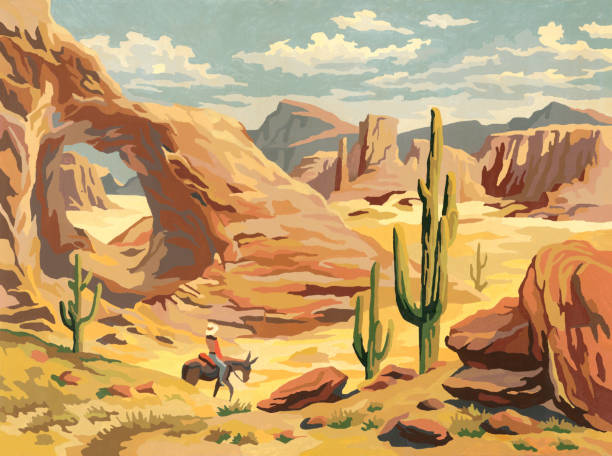
Within a blasted desolation in a best-forgotten corner of the United States, some say the undead cowboys still do battle, dutifully enacting an obsolete ritual of bloodshed and blighted honour. Perhaps these shades are nothing but the product of eager minds seeking to build a canon of myths for a new-born continent.
Perhaps the men known as McCoy and Leone really did die that first, fateful duel, and the fanciful story-book tales of their exploits are simply the dwindling swansong of a breed long gone extinct. And perhaps, if you strain your ears into the yawning expanse of the desert, what seems at first to be far-off blasts of thunder, may well be the echoes of the last gunslingers of the Wild, Wild West.
 Pablo Lacalle Writing