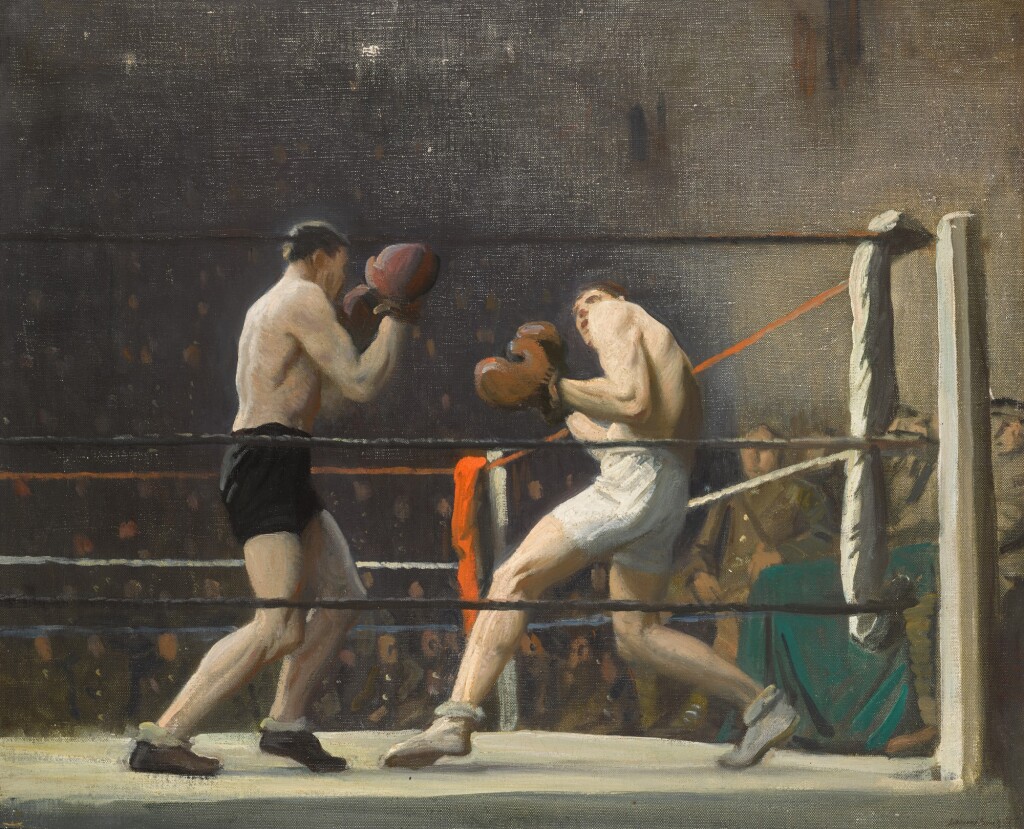
Santiago Caballero sat with his elbows resting on his thighs, staring at the cold floor locker-room floor. Nothing existed but the pair of boxing shoes that stretched out before him, impossibly big, the boots of a clown done up with black laces and corporate logos. It took him a while to register that they were his feet, that he was there, and that all of this was real.
A few photographs had been taped to the rusted inside of Santiago’s locker. Not that he had put them there. That was Edu’s doing. The largest photograph showed a young man leaning against the picket-fence-white hull of a boat. His profile was turned against the wind, brown ringlets of hair fluttering, muscled forearms ridged in sunlight as he rested against the railing. It had been taken on their trip to Seville, along the banks of the Guadalquivir. From another picture, a youth, all bony elbows and gangly legs, glowered at no one in particular from behind the confines of a dusty Andalusian boxing ring. Faded as the photograph was, the child (a teenager, sure, but a child nonetheless) spat venom from behind his eyes.
Santiago felt anger crackle in his chest and dwindle like the blackened edges of a burnt-up newspaper. He tried to tell himself that he was once again on that boat, river spray beading in his hair in tiny pearls, the sun washing his face. The days of bloody noses and split lips were over, surely, yet still the phantom echoes of abuse prodded him, barbed needles whispering maricon, puto, pluma. The day after he had broken a bully’s jaw, leaving him in the hospital to choke on his insults, Santiago had imagined that spell the end of that chapter in his life. To his dismay, he had found out that the snotty, spindly inquisitors of his boyhood had been traded out for enemies who had sharpened their malice upon a grindstone of age and experience. The promoters who had refused to book fights for him, the waiters with curling lips who served him and Edu at restaurants, the tutting abuelas with their quiet contempt whenever they held hands on the street. The contenders and champions who made sure to hiss in his ear just before their blows landed: cocksucker, fag, poof, queer, spic, fairy, fruit, faggot. Shakespeare’s English had put the language of Cervantes to shame.
Who to turn to besides Edu? His father, cold in the ground? His mother, still sheltered in her spiderweb of disappointment and rosary beads? Damn it. Some figure he must cut, huddled up waiting by that thick grey door. A schoolboy waiting for the principal’s office to swing open as herald to his punishment. Memories came to Santiago in flurries of static. Memories of screaming crowds and boxing rings transformed into marble altars. Of faded books written by an old man in love with Iberian shores who wished to conquer the sea. Those stories had passed on a dream of hard, strong men who won their legacy pound for pound with muscle and force to a young kid with wobbly brown knees and stringy arms reading in the Almeria sun.
Santiago had never forgotten Hemingway, had carried him with him across the waters of the Atlantic. Yet try as he might he could not reconcile himself with those images of chain-smoking matadors and Republican revolutionaries who kicked back whiskey and drank a salute to death as if it were an old friend waiting at a train station. Santiago, the warrior could not live in the same body as the fading soul who only kept on battling because peace would mean having to accept the quiet of living with himself. He was not sure he could deal with the prospect of autumn years spent going to bed with his self-loathing and the tattered scraps of rejection, piled at his feet by those who still only saw him as a faggot kid with boxing gloves and broken English.
Fitting then, that Santiago should find himself in this this melting pot of neither-nor, Indian soil speckled with the fingerprints of Spanish hands: Los Angeles, San Francisco, El Paso, even here, Las Vegas. McDonalds facsimiles of conquistador graveyards, mirage reflections of an ersatz home (Madrid-Iowa, Toledo-Ohio) that split Santiago into disparate chunks.
On the one hand there was The Spain-That-Was: gritty sand, baking heat, Cola-Cao breakfasts of chocolate powder and boiling water given to a kid so poor his bus to school had been a donkey: a Juan Ramón Jiménez education. The secret kisses of boys playing at men behind Arabian ruins and the agony of a closeted mind reenacting civil war with itself; angular, painful shrieks of a personal Guernica. Then, as seen in travel agency windows and bad Hollywood movies, The Spain-That-Is, ignorant mess of ‘Murican confusion spread so pervasively it had long since become fact. Squashing, mixing, mistaking Castilian with Mexican, Venezuelan, Ecuadorian, Guatemalan, the whole lot one and the same. A billboard country populated with guitar-strumming womanizers, trotted out to the tune of Toreador and gaudy, plastic castanets. The Spain that strong-armed Santiago into nightmarishly faux brand deals for sangria commercials and paella recipes until his entire purpose in life seemed nothing more than to be a sandwich-board advertisement in the skin of a fighter.
Finally, there was The Spain-That-Could-Never-Be, the product of an American mind once again, built like an origami swan by pages riddled with typewriter ammunition. It had filled Santiago’s head with smoky tabernas where men diced and drank aguardiente, and the streets were filled with stoic picadors and fiery widows. Where boxers and fighters took their blows in silence and died with dignity. Released, perhaps for good, from this anarchy of self: this limbo of unreal, impossible expectations that had turned him into a blur of performed identities and buried resentments.
He could feel his conviction waning and could not understand why. He had pictured this moment in his head a thousand times, rewinding the spool of film repeatedly; he had traced out every step of his journey so far with the meticulous attention of a cartographer setting out to the undiscovered country. That old man had ended his life with the roar of a shotgun and splattered his ichor into eternity with a burst of smoke and fire and blood. At times like this, as Santiago ran his eyes over the thin white scars that crossed his features, so alien from the willful, smiling reflections of his past, he asked himself why he should not envy a fate such as that.
Santiago was acutely aware that his body would fail him eventually; it had held on for too long, creaking bag of mucus and sinew stapled together by shards of bone and a muddled brain. It sought nothing more than freedom from the life of the bull of the corrida, sent out to bleed hot gore into the arid sands. Better to place the agency in the hands of another, pass the burden to a fellow fighter. These violent delights have violent ends, was that not the phrase?
It was one thing to kill himself, quite another to be killed. Iberian chauvinism and half-remembered Catholic dogma still lingered on him like cigarette smoke, and it could not stomach that damning, cowardly label: suicide. Santiago’s homeland was one where men fought giants regardless of the certainty of defeat and where corpses rode out to battle, swords strapped to their hands and heads held high. Pride was his bridle and the bit tore at his mouth, leaving him to march on, spitting scarlet froth from between his lips, for Santiago could imagine death was quiet but also that it could be boring, and that scared him most of all.
Wham. He had struck himself on the side of the face, jerking his head to the side with force. Planting himself firmly in place, his whole body tensed, he fought the wild urge to let loose. To mash his nose and break his teeth and splinter his jaw and shatter his chin until the noise in his head leaked out of his ears and was still, still. His eyes blurred, quivering in their sockets.
Respite came as the door swung open and Edu walked into the room, his slightly pudgy stomach tight against his shirt. His belt was buckled too firmly, through the fourth hole instead of the third. Edu stopped as he caught sight of Santiago, and Santiago winced at the flash of terror that creased Edu’s tanned and friendly features. He lowered his guard, letting his fists swing at his side.
“They’re calling for you,” said Edu gently.
“Already?”
“Already.”
“Right,” grunted Santiago. He was trying not to meet the eyes of the man before him.
“You’ll be fine,” assured Edu. It was a refrain that Santiago had heard many times. He still wasn’t sure who it was for.
“He’s a tough son of a bitch.”
“You’re tougher,” reminded Edu, gripping him by the shoulders, his fingers touching Santiago’s skin with an urgency greater and more terrible than when they made love.
“That’s the problem, Edu.” Santiago smiled wanly. “It’s the tough guys like me who have to keep going.”
“Don’t be stupid,” snapped Edu. “Not now, Santi, not just before a fight. Not ever. So, what if you keep going, I’ve gotten you this far, no?”
“You have,” admitted Santiago. Hay amores que matan. In silence Santiago reserved his greatest curse of all to love, that bastard child of resource and poverty. He could not tell Edu, could never reveal the truth, as real as a spoken secret, that as far as they had come, he could go no further on this road of phonies, fighters, and castaways. Yes, for now, a part of him still resisted, still feared, but he could go no further. Maybe – maybe dying wasn’t that bad a thing, yes, and he would step into that ring and slip quickly away, follow the path of those boyhood novels, across the river and into the trees, where he could be hurt no more.
“ And it will stay that way,” Edu said firmly. “I’m still here, Santi, remember? I don’t care how far you go, I’m still here.”
Santiago reached out towards Edu’s face, but his hand was a crimson lump, his boxing glove a grotesque paw that could only clumsily brush against the stubble of Edu’s cheek. He could not remove it from where they had sown it on, could almost imagine the tendrils of twine slipping beneath his skin, drawing tight around the bone. Flesh and leather becoming one until they would be cut away and he would be allowed to be a man again.
Edu was patting him on the back, leading him in the direction of the door. Outside, he could hear the hushed, expectant roar of the amphitheater, imagine the clusters of the waiting crowd guzzling warm, over-priced beers and tramping their feet on a floor sticky with congealed syrup, soda and spit. Santiago began to march his way down the corridor, the rest of his team falling in practiced step behind him. The cowl of his hood had been drawn up over his head, and Edu had quietly tied the belt back around Santiago’s waist from where it had loosened in the locker room.
A slogan in a jagged, lurid black font snaked its way across his broad shoulders, proclaiming the bearer of the robe as El Príncipe de las Tinieblas, a cartoon demon scowling on his back. Santiago had always hated that ridiculous slogan, and the mascot to boot. Edu had insisted that his fans loved it, and Edu was always right. Most of the time.
Marked by the devil and with his words still lingering in his mind, Santiago moved forward. The baying of the crowd was a wall now, but he breached it and the throat of the corridor opened to cough him into the arena. From either side pasty faces bore down on him, whooping, cursing. The jumbotron was reflecting a stranger in a red robe back at him. How small he looked, how thin and insubstantial that man with his heavy fists and bronze flesh was, refracted on plastic screens and lit up with burning pyrotechnics. A puppet devil in a high-school production of Hell.
All that he could focus on was the ring. Before the night was over, he knew that it would mean his death. Perhaps, in a way, it had always had, and all those years of amateur antics slugging phonies and green boys had simply been the dress rehearsal for this final tragedy. Santiago’s rival was waiting in the other corner of the ring already. His shorts were bright green, dotted with gold shamrocks. Even in his state, half-mad with adrenaline, Santiago could not repress an inward groan. He had watched his opponent’s fights back-to-back, committed his frame to memory in the fashion of a lover tracing the contours of their darling in their mind’s eye, but a part of him had almost expected something less farcical. Declan Byrne: the Irishman, holy terror to every Protestant who ever walked the Emerald Isle.
A Devil pitted against the leprechaun. Despite the gloomy pall that clung to him, Santiago began to feel light-headed, as he had before, after the kind of good laugh that made your eyes smart and your stomach hurt. Standing where he was, a black speck in the hierophant white of the ring, it dawned on him how stupid it all was, how little all of this mattered.
Once, a week before the fight, when the noise in his head had been especially loud and Edu had gone shopping, Santiago had stood at the edge of the kitchen sink, knife in hand, and hovered it over his wrist. He hadn’t really meant to do anything, just see if he…could. The tip of the blade had wavered as he imagined it carving into the skin, sawing bluntly at stringy muscles and rubbery arteries, thick crimson blood bubbling to the surface. But his hand had not moved, and it had not been easy, as easy as he would have guessed it to be, and he let the knife fall to the floor and collapsed next to it. Then he laughed and laughed without being able to stop and never spoke of it again.
It felt something like that now, only different, because now Santiago was sure knowledge that when he died, he would simply break like an action-figure, all decked out in his ruby shorts and corny slogans. Byrne was talking animatedly with his corner-man, casting fleeting glances at Santiago with watery blue eyes, his left hand reflexively hovering in place as he chattered. The man was a southpaw, a type of boxer Santiago had barely ever fought against. The announcer was taking his position with his microphone, the crowd rising to meet him as he did. By his side hovered the referee, a balding, self-serious man who looked like a waiter at a cocktail party.
Santiago blocked it all out. He knew how it all went, the posturing, the mania, even the way the announcer rolled his “R’s” like a drill-bit whirring in place, and the precise flourishes of his arms as he introduced both fighters in each corner. Santiago ambled up to the middle of the ring, watching Byrne grow bigger as he approached. The Irish man’s rather pronounced jaw was thickly set, and his eyes glittered. From his experiences with the man at press conferences and the weigh-in, Santiago had found Byrne to be unexpectedly professional. Still, he steeled himself. Kindness displayed in the open was normal, but it was in the heart of the ring that true colours were quick to show.
Byrne was right on top of him, his flaxen hair a choppy fringe over his brow. One of his front teeth was slightly crooked. Their eyes met. Byrne gave him a curt nod and extended his fist. The two boxers touched gloves, reaching out to one another like the figures on a Roman ceiling.
Before the bell rang out, Santiago cast one look back at Edu. Edu flashed him a smile of encouragement, which only wavered for an instant. He worried too much; it was one of his quirks that Santiago had always felt ashamed of disliking: he could never quite shake the suspicion that it was some kind of joke. He could not truly fathom that he was someone worth that much care.
And then they had begun, and Santiago was moving forward, guard up, tight and compact. Byrne circled him warily, firing off a few tentative jabs which ricocheted off Santiago’s thick forearms. Another jab cannoned towards his face, but Santiago batted it aside and rewarded Byrne with a short, sharp blow to his side, the Irishman skittering back instinctively. His recovery from the surprise was extraordinary, and for a second Byrne became a flash of green as he stepped in quickly, his glove slipping past Santiago’s guard. The punch hammered into Santiago’s stomach, his guts jolting as a cold, lump of lead coagulated inside his chest. The first blow had been a feint, and Byrne had followed up with a ridiculous display of speed.
Christ, the man was a monster.
A hook scythed into Santiago’s field of vision. His head rocketed to the side, cables in his neck standing in tortured relief as he tried to stabilize himself. He barely managed to swing out of the way of the next punch, firing back with one of his own that nicked the tip of Byrne’s nose, but the bastard was good, his head bobbing from side to side like a gyroscope, denying Santiago a clean hit. Again, that step-in. In an instant Byrne was on top of him, watery eyes hardened to chips of flint. Santiago raised his guard but was it even worth it, did this all even matter? Byrne’s fist sunk into his diaphragm and the air rushed out of Santiago’s lungs in one great scream.
The follow-up punch felt like it was ripping his head off. For an instant he was looking upwards at the burning circles of the stadium lights. His mouth guard had clattered to the ground. Blood was trickling down his lips.
Oh, right, he was on the ground. Blearily he saw the silhouette of the referee standing between him and the green flicker that was Byrne, the boxer stepping from foot to foot in anticipation. Through the haze of his vision, Santiago could hear the count begin, hear Edu swearing and calling to him in Spanish, and wished that he would simply fall through the mat and lie there forever, cease to be. No, no, it wasn’t good enough, not like this, not in the first round. Hating himself for it, he had begun to push himself upwards on his knuckles, tottering to his feet in a creaking, jumbled mess. The crowd was thundering, the referee standing in front of him, asking him if he could go on and somehow, he could, and he was slotting the mouthguard into place, swallowing his own blood and then he was off again.
Byrne flew at him, battering away at his guard, pushing him back. The crowd was hissing and booing, and Santiago’s shoulders were aflame, bones rattling with every impact. All he could do was dodge and crouch and deflect but the ring had shrunk since he fell and now the ropes were at his back. In a desperate bid to finish things, Santiago lunged at his opponent. He knew what would come next: Byrne had been waiting for him. The counterpunch blew Santiago’s head back in a shotgun blast, a flurry of sweat and gore that exploded from his nose and splattered onto the ring. The audience groaned as Santiago lolled from side to side and here came the follow up, slicing into his liver.
Santiago’s body froze, jittering spasmodically as his nerves crackled with electricity. This time he barely managed to avoid crashing into the floor by falling back onto the ropes. Byrne’s shadow was drawing his fist back and then the bell rang. Stumbling back into his corner, Santiago collapsed onto the stool. In a second, his team was on him, the cutman ready with the epinephrine that stung and fought back as it was daubed onto his cuts. A wet towel flicked over his face, like mist from the Guadalquivir.
His nose was leaking dark reddish goop, but it wasn’t broken, and already the flow was slowing. A water bottle was jammed near his mouth and Santiago sucked on it greedily, spitting out pink phlegm into a waiting bucket. Edu was right in his face, snapping his fingers, begging him to pay attention, he had to concentrate, he was getting slaughtered out there, he wasn’t going to last one more round fighting like this. Hands were massaging his muscles, coarse towels were wiping away his sweat, he felt like a race car being pulled apart and screwed back together in the pit. With a jolt, Edu slapped both hands around his face, their foreheads touching.
“It’s ok,” slurred Santiago. “It’s ok, I’m good, I can go.”
He felt a shiver as Edu put his lips by his ear, whispering hurriedly now. “He’s tearing you to shreds out there, but he’s not exactly spry either.”
Edu jerked his head in the direction of Byrne in his corner. The Irishman was slick with perspiration, sweat burning from his muscles, stomach heaving as he gulped down water.
“He wants to finish this quickly, but if you hold out a little longer, he’ll end up burning himself out completely. It’ll hurt like the devil but soak it up and when he falters…let him have it. Wait for however long it takes but let him have it.”
Santiago nodded groggily, more out of habit than anything.Edu gave a quick nod to the referee, who motioned for the fighters to prepare to begin once again. Before he stepped out of the ring, Edu gave Santiago’s wrist a squeeze. His kiss burned like an ice-cube pressed against a bruise.
“I’m still here,” he repeated. “Remember? I’m still here.”
The bell rang, and they started, and one round went by, then it was two, now three had passed and moved into four and somehow, Santiago still stood, but this time he could see it, could see the window of opportunity creak open. A few more minutes and he could finally rest easily, something more than a gladiator dispiritedly chasing a wooden sword. The gurgling river and whispering trees clustered, warm and safe, waiting to welcome him into eternity, to follow that old man who had traded in the happiness of mortals for the tragedy of icons on terms decided by his own hands.
Byrne was pummeling him again, eyes rolling madly with the first hints of desperation, breath roaring out like a freight train, but it no longer hurt anymore. All Santiago could focus on was the light, hot, bright and burning. The mat was the frost white of the snows on African mountains he had dreamed of but never seen. This way he would never die, they would drink to him and pour their libations on the cracked Spanish clay and maybe then something he had done would matter more than this farce of gaudy colours. With each blow he could feel his anxieties carved away, leaving only the certainty of oblivion.
And yet.
And yet, what if it wasn’t certain? What if what awaited him beyond the mortal coil was crushing, boring nothingness, what if there was no peace but instead the hollow emptiness of lying in a dark room, wondering if there was more you could have done?
Santiago felt his chest rising and falling as he began to hyperventilate, and it all came crashing down on his shoulders in shards of glass that cut him and brought back the memories of the thugs, the bullies, the champions that had mashed his face in the dirt and torn his books in half and busted his lip in the courtyard and the playground and the ring. Santiago was not winning anything, deciding anything, he was letting them win. Santiago was still there; Edu was still there. He was yelling and crying. Edu always cried, the big worrier, whenever Santia go was losing.
The worst thing of all was when Santiago realized that he hadn’t thought about whether Edu would miss him.
Byrne’s fist fell in an arc, but he had moved too eagerly. His feet tripped over one another. With a wild savagery Santiago rammed his knuckles squarely into Byrne’s face as the Irishman tried to. Santiago would not let him recover; his teeth were fangs as he gritted them and pushed past the pain. His barrage tore into Byrne, and Santiago began to dismantle him piece by piece like he had seen his father do to the family van the week it broke down. His knuckles were hooks, ripping greedy chunks from his rival’s stomach and abdomen and cheeks. The announcer was in hysterics, the crowd were on their feet, screaming. Santiago realized that he was screaming too, a guttural roar of terror and rage and he realized that just because he did not want to live did not mean he wanted to die, he did not want to die, he did not want to die.
The ropes of the ring spat Byrne back at Santiago as he careered against them, and Santiago’s fists were waiting. He felt the Irishman’s jaw give way like a soda bottle crushed under foot, paid him back in turn for the nose, then began to work on his chest, tenderizing the flesh, registering nothing but shapes and screams and the man in front of him. They later told him that the referee waited a full thirty seconds before stepping in.
He saw Byrne raise his hand in a gesture that might have been supplication, but the adrenaline was at the wheel. Santiago snapped Byrne’s head back and forth, back and forth, back and forth and then the referee was pushing him back into the corner and Byrne had slammed into the ground and when Santiago looked at him, he had no face left.
The crowd’s cheers had died down, replaced with horrified silence. Byrne was being swarmed by his team. Medics were vaulting the ropes, rushing the ring. Santiago heaved, gasping in the corner, gloves dipped in crimson, hair plastered over his skin with sweat. Edu was staring at him with appalled admiration, one hand clasped tightly over his mouth, but he was alive, alive, and Hemingway could wait.
Slumping back onto his stool, Santiago did not even hear the announcer, did not even stand. As Edu scrambled into the ring, Santiago began to weep softly, head cast downwards, shoulders slopes of stone that shook as he bawled, and laughed and bawled again.
Edu was on him, kneeling in front of him, grabbing his knee, trying to jolt him out of it. “What is it, Santi?” he asked. “You won! You’ve won, what’s wrong?” Santiago stared into the eyes of his lover, still sobbing and howling, tears streaking paths down the gore on his face, bloody stigmata dripping onto his lap.
“I’m still here,” he cried, burying his face in his hands.
“I’m still here.”
 Pablo Lacalle Writing