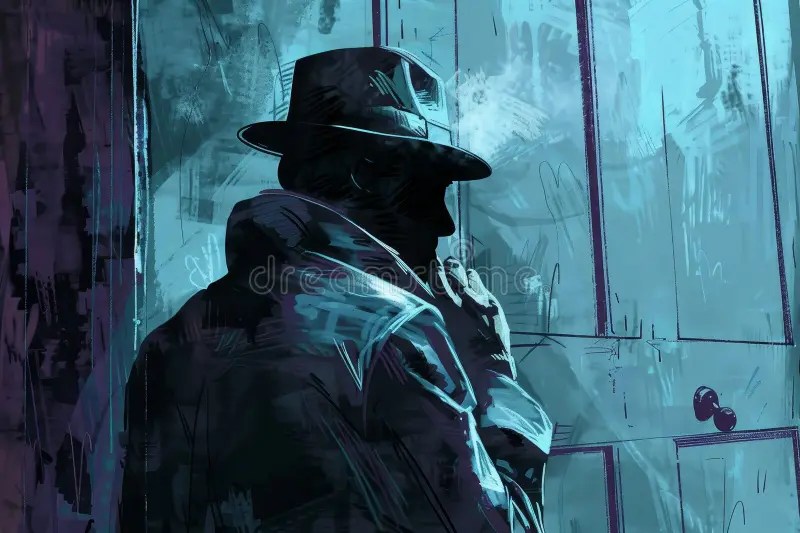
The vans travelled alone, materializing in back alleys and underneath streetlamps as if they had always been there. Gliding with lupine grace and singular purpose, they had acquired a bizarre invisibility, erased from the memories of those who stumbled across them. Some might recognize these vans or guess their purpose. Perhaps there are some, unlike me, fortunate enough not to, a mass of blissfully content idiots alien to the instruments of tyranny. Mobile charcoal coffins, they made themselves known suddenly but surely, like a rag pressed on the mouth of a sleeping victim. Their arrival seemed to herald some terrible calamity, one that had nevertheless been quietly accepted as part of the natural order, the tang of ozone before a thunderstorm.
It was six in the morning, in a place whose name does not bear mentioning, and one I would have rather not remembered, though my duty to record the slain forces my hand. It happened on a day like this, with the birds still waiting to strike up in song and the dew spreading a slick sheen on the blades of neatly cut grass quivering with each gust of wind.
One such van was parked beside the curb. It had been sitting there for quite some time and would wait for more still. It was a singularly ugly thing, wretched in its blunt simplicity. The vehicle bore no markings of any kind, clad in a coat of sable paint. Tinted windows of smoky obsidian gave the van the appearance of an enormous bug, squatting in wait, ready to leap at any moment with foaming mandibles and chitinous claws. Framed against the backdrop of white-picket fences, lace curtains and brass doorknockers that adorned the surrounding houses, it was an aberration. An intrusion on the isolation afforded only by a Party membership card.
It could have occurred at any time. It had before, in different scenes, been denied the pleasure of being lit by the light of the approaching dawn. In ramshackle Joint Habitation Apartments bursting at the seams with wailing children, their faces yellow under the cheap, flickering lamps that lined their walls. At Centrally-Approved celebrations thick with the miasma of bitter state-provided liquor and the leaden gloom of fun carried out under the prerequisite of compliance. Usually, the stage was set by some regional village out of my reach; its air punctured by the lowing of the few healthy cows still available for distribution and the shriek of the rickety junkyard scraps that passed for Ministry-Sanctioned machinery. The setting was incidental. The result, seldom different.
Inside the van, the first man stretched awkwardly, shifting in his seat, his jaw popping as he let out a death-rattle yawn. His name was not important and could never be. Another line of type out of millions, locked away in confidential archives in a government basement. Suffice to say he was a faceless blur devoid of colour, endowed with the same agency as an axe or a hammer. Rubbing his poorly shaven jaw with one hand, he blinked, eyes crusted from a lack of sleep, focusing his bleary sights on the house visible alongside the window. Looking, no doubt, for a sudden twitch of a curtain, or the tell-tale lights revealing someone was awake far before the beginning of the dictated productivity timetable. Finding nothing, he let out a breathy sigh and leaned back as far as his chair would let him.
His face, as reflected with a slight distortion in the rear-view mirror, was hardly striking. It was neither excessively ugly nor handsome, nor was it the portrait of demonic evil many would expect. Instead, it spoke of a more petty malice, not one born of scheming or savagery, but the simple, unrefined cruelty of the everyday. In his pebble-grey eyes was the look of someone who had pulled the legs from beetles just because it was easy and stamped on the shiny new toys of his childhood neighbour for being nicer than his.
The legions of passengers in the black vans that traversed the country were formed of such men. Men unaware of any meaningful change that could be achieved without a rifle or a pistol, eager to dish out punishment to those they thought deserved it and content to view themselves as excepted. His partner was asleep behind the wheel, the dull red light of the dashboard casting his features in a cherry sheen. The scarlet dagger insignia embroidered on the lapel of his jacket glistened. The collar was turned up, jutting upwards from his neck, whilst the state-issued peaked cap that came with their uniform was pulled down far over his eyes. Fitful snores could be heard from beneath the shield of clothing.
Drumming his fingers on the edge of his armrest, the first man fished inside his jacket pocket for a crumpled packet of cigarettes. Its wrinkled packaging was the trademark of a shoddy underground import, covered with angular foreign characters in a language he could not understand and would not have been allowed to learn. The tin lighter in his hand flared for a second in the semi-darkness of the van. He cranked the window open a sliver to let the smoke worm its way out. I wonder if the illegality of his actions enriched the sensation. Not that it really mattered: the crimson dagger on his uniform absolved him from upholding most common state-ordered restrictions. Those with no knives, symbolic or otherwise, were in no place to object.
The inside of the van was now thick with light blue fog. It looked like the inside of an aquarium. Mumbling, the first man turned the radio on, turned down as low as possible, and began humming along under his breath whilst his partner slept. The station he had tuned into was also banned (the concept of multiple radio stations seems laughable in the wake of the ‘Entertainment and Togetherness’ Campaign and the creation of the Smiling Faces Broadcasting Group). It played something that the presenter, most certainly speaking from a dingy offshore fishing boat fitted with a battered antenna, called ‘rock and roll’ music. The man had certainly only ever heard of it in classrooms during his academy training.
It was one of the innumerable offences he and his partner would have been made to memorize: in this case, Section 457, which penalized the distribution, ownership or performance of any music that threatened to destabilize unity, goodwill and cause disturbance. If the C.D wasn’t stamped with the cherubic grin of the Smiling Faces label of approval, if the band did not present a permit of Centrally-Approved entertainment, then in brief a black van would appear one day, and that would be all. He could never have guessed the name of the song, though if pressed to try he may have hazarded Rolling Stones based on what the radio presenter had whispered before the music started. It was very good, much better than the trite sludge pumped out through the speakers in community productivity centers. It had a dirty, punchy rhythm to it, rough around the edges, sweating sex and aggression.
The man tutted to himself. Small wonder it had been banned. His foot, however, still moved to the beat as he took another drag on his cigarette. As he listened, perhaps he wondered what the inhabitants of the house could have done, trawling through endless memorized pages of felonies and anti-productivity offences. If he did, he surely gave up once boredom set back in. There wasn’t much of a point. They had an address and an order, and nothing much aside from that was needed. If the address had been pinned up on the corkboard in his cubicle, then whoever it belonged to must have done something to deserve it, even if they themselves were not aware of it. And it they weren’t, well, wasn’t that their fault? It must have seemed quite self-explanatory to the man, as he sprinkled ash onto the side of the road. If only guilty people had their address placed on the board, then if they hadn’t done anything wrong, they wouldn’t have ended up there. It didn’t get any easier than that.
Right now, what surely weighed most heavily on his mind was the thought of being able to punch out of his shift soon, have a hot meal rather than grainy nutrition bars and lukewarm coffee. The chance to shower, even if hot water was now a thing of the past, wash away the stench of sweat, tobacco, grime, and stuffy air that had clung to him like a second skin begging to be peeled off. Could he imagine what it must be like to live inside one of those houses cradled within the suburbs? I doubt he was capable of picturing anything of substance. Men like him cannot begin to fathom an interior or exterior life outside of the van. They are reduced to visualizing vague shapes, more the ideas of things than the things themselves: happy, family, together, peace, rest……it was territory too alien for a mind stripped down and engineered into uniform boxes, stacked together to serve one purpose, and do so unflinchingly.
Suddenly, outside-movement. The door had been opened slightly, from behind which emerged a banded tabby cat. The first man watched it, a collar with a tiny bell hung around its neck. He must have been more than a little impressed: outside of the suburbs no living person had seen a live cat in years. Its existence would prove maddeningly puzzling, almost frustrating as it sashayed through the open air. The cat could leave whenever it wanted. What compelled it to stay? Was it the safety of four walls, the promise of treats passed under the table that made it give in to those benign overlords that stuck tracking chips beneath its flesh and castrated it? Did their promise of security suffice, for it to suffer being stamped with a foreign name and wear it on a plate around its throat?
For a second, did he see himself reflected in those slitted, feline eyes?
He was thankfully snapped back to his senses before his thoughts could become too dangerous. His partner was awake. He turned off the radio, and adjusted his cap. His head nodded in the direction of the house.
The van swung open.
Six in the morning. Three knocks on the front door. On the threshold, the two men in their raven-black coats. Gray guns in their holsters, the strap unbuckled.
The first man was still smoking his cigarette, his foot tapping to the beat of a phantom drum. The other man pulled out a piece of paper from his pocket and tacked it above the house number.Rows of black text bunched together spelled out: “Guilty of Deviant Expression: Anti-Utopian Conspirators.”
No answer from within. Then, muffled footsteps. The door creaked open. Dressed in undersized pyjamas, a little girl rubbed her face and blinked up at the men looming over her. She was up far too early, wanting to let the cat back inside. She was confused, addled by tiredness. She saw adults but did not understand.
The first man let out a hiss of blue smoke. His knees bent slightly. He was face to face with the child. He asked, slowly in clear, precise tones, as to not alarm her, if her mummy and daddy were still upstairs.
Still puzzled, apprehensive now, the girl scratched her head. She gave a curt nod. The first man smiled. His partner drew his pistol and shot her through the head. A spray of blood speckled the entrance. The first man wiped a ruby bead from the lapel of his uniform. A jackboot crushed the bud of his cigarette.
The girl had been holding a teddy-bear. Its fur was sprayed claret, and it was missing an eye. Upstairs, a scream. A light came on.
His partner took the stairs first. Stepping over the body, he followed. Two more gunshots. Crickets chirped outside. One final crack: the mother was trying to crawl away.
They left in a single file. The van waited at the side of the curb. His partner got in first. In the glove-compartment, a box of sanitary wipes was passed around then tossed to the back of the van, wrinkled and stained. A splutter, and the van started rocked to life. The house lights were still on.
The first man lit another cigarette as his stomach growled. His partner drove, the clicking of the turn signal counting away the minutes before the morning, underscored by his tuneless whistling. The first man turned towards his partner, looking at his watch as he did. A fleck of clotted gore was drying on its surface. The next words he spoke were recorded, as everything they did and said until then had been. Stored in devices embedded in their uniforms by their ever-vigilant Ministry for the purpose of a report that, if it were not for my efforts, would have been consigned to the dustbin of history.
It is my four hundred and fortieth year upon this Earth, and I can no longer recognize my own face. I know it in essence. I have seen the portraits, done in heavy oils, gnawed by rodents: a slanted brow, eyes narrowed to the dark gleam of an ink-dipped quill, nose curving like an osprey. No matter. The paintings of the regal man I once could have recognized are the spectre of a memory. The creatures that eat away at the crumbling paint are a grotesque parody of the worms that heaved their slippery coils across my undead flesh.
Perhaps the fourth turn of a century has changed me in ways that the bubbling venom of the leech’s curse could never have. I sit sometimes, amid the gossamer thread of cobwebs, strewn like frost, that coat these stone walls. I dream, with fantastical, wild notions about what I may look like. Possibly I am transfigured into a cracked and wrinkled nightmare, glittering feline eyes peeking out from puckered flesh streaked with bile’s yellow brushstrokes. Maybe my features have been warped into a lupine mask, flesh tight against my skull, eyes burning lamplights. And perhaps there is no change, and the haughty gaze of that man, once buried in a coffin whose lid bears the marks of claws rending the rotten wood from the inside, has not moved. Immutable. Alabaster flesh turning aside the scythe of Father Time as a coat of mail would a dagger. I would not know.
All I can do is search the expanse of my pearlescent skin, run my fingers clumsily to feel the bridge of a nose, the curve of an eye-socket, the quivering softness of lips. Awkwardly trying to construct one whole image like a blind man clutching at the walls of a cave, palms fumbling along shards of stone. The mirror that sits above my bedroom table is as much a prop as the mattress itself. Standing before it I see an empty room, a man erased. The shadow of silhouette flickers on the carpet, begging to be heard, answered only by an empty glass.
In the beginning I welcomed it.
After years of glutting myself on the living, it finally struck me….so much time to learn, better myself. I could hone my already prodigious capabilities to new lengths, be unrivalled among men in both body and mind. Think, what lengths the immortal could rise to, when unshackled from the limitations of finite life! Why, he could soar to the heights of da Vinci and Botticelli, compose symphonies to shame Handel and Vivaldi, trample on the works of Shakespeare and Marlowe, achieve feats of natural philosophy that would consign Albert Magnus to utter mediocrity! Yet only once I strove for perfection, did I truly realize what it meant to surrender one’s soul.
The paintings I produced were the scribbles of a child, ham-fisted smears of colour devoid of rhyme or reason. In an agony of confusion, I fought to breathe life into the canvas, a ludicrous task for one undead. Howling, raging, tearing at my flesh I thrashed back and forth, racking my mind to produce something, anything, but these slender fingers could only clutch the paintbrush in the fist of an ape. The gift of creation had been spirited away under my nose even as I gloated, unaware that I would never reach the true immortality of men who could feel.
Heaps of parchment filled the castle halls in a blizzard, ripped by savage paws that could only throttle a quill in impotent frustration, spotting the paper with tears of ink. I procured a violin and set it on the rack to screech and whine, until I left its gutted carcass to collect dust, and the creatures of the night made no music, no music at all.
No passion could fill this void. My brushes with love were reduced to the palest of imitations, as close to romance as the efforts of an artist gone decades without practice would be to the masterworks of his youth. A sweet creature would catch my eye, my fingers running over her skin, but to grip and pierce rather than caress. My hunger would be of an uglier kind than any spark of lust, teeth finding the neck not to nibble but to bite, clasping the body close to feel the heart pumping, quickening in fear. Her flesh draining where once it would have flushed with the same blood gushing in bitter streams down my throat. The quivering gasps of pleasure were now the jerking frenzy of a body in its death throes. As for a wife, I only ever took one, forgetting, in an instant of desperation, the nature of my curse, how brief she was compared to mine.
She stood before me. I closed my eyes. When I opened them again, she was gone, powdered bone left to be swept by the wind and carried away.
Four hundred years and more I count, though why I bother I could not truly say. It keeps the mind fresh, staves away the rot blossoming in my head. Cancerous petals bloom and mould has snuck its way between the cobbles of my abode. Mildew is adequate perfume for the days that eke their way forward with arthritic grace. The tapestries hang heavy with dust, and the grime has claimed the stained-glass windows, reduced to trinkets deprived of the sunlight that once made them gems.
My God I miss the sunlight! The torments I would endure to see my halls dappled in jade and ruby, the blood I would spill, If I had any to give, for an evening watching the surface of a lake in the summertime, strewn with winking diamonds. A kingdom, my kingdom for the warmth of a June morning on my face!
The urge, macabre, insane, often springs on me, seizes me with such force I begin to shake and grow weak. The prospect of finality, once incomprehensibly daunting, is now one I envy with the flaccid ruin I call a heart.
I yearn to pluck away at the thick curtains that shield my windows and let the burning tide flood inside in streams of molten gold.
Oh, flay me alive with your fiery whips, I care not! The tongues of Hell cannot be worse than an eternity clothed in midnight!
I would cling to memory for salvation but can only pounce at half-remembered lives, too many for one man, a dozen faces to go with a hundred names. Sometimes I am rooted to the spot as if speared by lightning: the sound of hooves and the bellowing of Boyars flourishing banners wet and heavy with gore, the cacophony of London and the stench of a river turned cesspit. Ocean spray, a ship’s rudder groaning, the scream of a dull-eyed peasant ripped open in a forest clearing, a madman with zealot’s eyes lapping blood from a bleached floor……can I really call these fragments my own?
Here I sit, and time has passed me by like a carriage overtaking a poor man by the side of road, leaving him with snatches of laughter and good cheer. The glimpse of a true life he will vainly chase as a fool dances with his shadow, always one step behind.
What existence for a man is this? Yes, the power, the elegance, the beauty of gliding through the night, shadows chased away by crimson eyes that see every quiver of a leaf, every twitch of fur on a rabbit’s hide, it is intoxicating at first. I remember the deranged glee of freedom from the mortal coil, the joy, terrifying, electric, of jeering in the face of God, my very existence the ultimate affront to His will, yet agonizing by His design.
Now the sneer fades from my lips. I scamper from the oncoming dawn, night after night, to curl in a cellar with no company save a hunger that can never be abated roiling in my stomach. The fine silks, the lace and velvet and furs that swaddled me have long-since rotted away. The candles sit cold in puddles of hard wax, for what use is light for eyes that see in darkness? My court is one of shadows, and when I dine my banquets become masques for the rats and the spiders.
The clustered hovels scattered below my keep have grown into towns. Hovering in the empty sky, the moonlight casts me in silver. Lamplight from a hundred houses is the glare of torches in the hands of the mob. I am not welcome here. I can hear the sounds, a thousand lungs drawing breath, the laughter, the whispers, the sobs. If I close my eyes, for an instant, long enough, I can pretend that giggles burst from my lips, that it is my salted tears that stain barren cheeks, that the throb of life comes from within my breast and not theirs.
Once, such delusions would not have troubled me. Once, I held men in my thrall, but the sands of time slip ever onwards, and the monster that hides in the castle becomes just that: a monster, banished to the realm of the storybook and the tall tale. The whispered memory of a thing, nightmare of bared fangs and billowing cloaks, a terror for children dispelled by pulling a blanket over a sleeping head.
Pure cowardice keeps me as I am. Even centuries later, for all my wailing, the thought of hearing the thud of the gravedigger’s soil on my casket terrifies me. Consigned to a Hell of my own devising, I flee from the Hell I know awaits me if I stride into the daytime. White flesh, a man made of candlewax…would I melt, or simply crumble?
I twitch the curtain aside, ever so slightly. Across the pine-dappled hills, the orange glow of morning begins to creep forward. Touched momentarily, the grass becomes emerald. I had almost forgotten grass.
I let my hand fall. The curtain being drawn is the sound of a coffin slamming shut.
It is my four hundred and fortieth year on this earth.
Officer Joseph Hayze of the Bureau of Acceptable Consumption had a truckful of ice delivered to his villa at the beginning of every week. For those unfamiliar with the socio-economic nuances of the Free Democratic People’s Confederate Republic of Veritas this expense may have seemed a tad excessive, but the Republic’s summers were long and dry. The slabs of ice were of the utmost importance for the Hayze house, tucked away as it was on the outskirts of the capital’s sun-scorched plains. There, a small but dedicated task force of maids were charged with dismantling the pearlescent chunks. Though he could have done it himself, Officer Hayze was content to let his staff hammer away at the glittering cubes. His hands were calloused enough already. All five fingers were studded with bubonic welts, leathery growths etched in by the grip of his pen as he sat in his office and devoured dreams.
Squirming impatiently in his favourite chair, Joseph Hayze awaited the incoming feast. His belt had been loosened in anticipation. Trolleys festooned with confiscated files, submissions and pre-Republic manuscripts awaiting review surrounded him, carted in by his staff like parade-floats. Everything was ready. A washtub of ice squatted expectantly under his desk whilst a tumbler of teeth-achingly cold liquid perspired over a coaster.
Cracking his knobbly knuckles and rolling his neck, he got to work.
A lesser man would have wavered at such a colossal task. Joseph Hayze was cut from a sturdier cloth. He boasted such a prodigious talent for identifying inferior literature that in his youth, when denied a position at the Veritas Institute of Arts and Letters, he had known that the submissions of the successful applicants were nothing but pretentious gutter-trash, without even having to read them. After the nineteenth rejection of his novel, The Chrysanthemums Weep, But Do Their Tears Sing? by Herbert and Miller Ltd, Hayze had realised that the publishers on the island, nay, the world, were nothing but myopic, elitist scoundrels out to crush the little man. Probably perverts as well. Herbert and Miller were currently choking on coal dust in one of the grimy work-camps up North. Such ideological enemies of the Republic were better suited to a pickaxe than publishing anyway. Meanwhile, thank you for asking, Chrysanthemums had just been re-released for its eleventh edition (Free Democratic People’s Confederate Republic of Veritas Press).
All this took place before the Glorious Restoration, of course. Before the Bureau, an institution whosetask, the censorship of the dreck that had infected their beloved country, was of a sanctity that made that old affair with the virgin’s son in the temple look pedestrian by comparison. Hayze spearheaded the literature and print division, a fact he rather enjoyed lording over his compatriots in charge of the more, well, popular arts. Hayze’s titanic position over the island’s starving artists conferred upon him an authority no author could match. A five-foot-six Kronos, he could reach back through time itself so that pre-Republic literary sensations were reprinted, castrated by his blade. In the present, he mostly culled fledgling portfolios offered up by writers who still hoped their dreams could flourish under the New Regime. Newborn ideas would be gobbled down by Hayze before they could rise to depose him. Sometimes he could go weeks without food as fantasies dissolved in his stomach, gastric acids eagerly obliterating the macerated dreams into a palatably orthodox mush.
Hayze clicked the cap off his pen, dignified as a Templar unsheathing his blade. The scimitar-sting of a scorpion, its tip hovered over the first manuscript. Ah. A vestige of the Dark Ages, the last surviving poetry collection from his arch-nemesis Frederick Grace, recounting his struggles with addiction. Despite his disapproval, Hayze’s belly quivered. Grace was feeding the worms in a prison graveyard now, but this miserable scrap of his stamped-out legacy would be the perfect appetizer. Sure, it might be ‘poor form’ to relish in his rival’s destruction but, well, everyone had their own vices…errore humanus est, wasn’t that the saying?
Truth be told, he felt a thrilling kinship with the degenerate’s indulgence. Hayze’s mouth flooded with saliva when he recalled the day when, newly promoted to his current position, he had taken his pen to every name affiliated with the loathsome printing houses of yore, slashing lines of ruby ink across the list. Hissing through the air, a bloody scar once more ripped across a page as Hayze branded an X over the poetry’s cover. Better luck next time, brat. He finalized the butchery of his nemesis’s legacy, just for the glee of watching red lines excoriate Grace’s helpless stanzas, tearing clean through the paper in his enthusiasm. With a snarl of triumph, Hayze dropped the shrivelled compilation into the stack marked INCINERATOR. Good riddance. The little punk’s corpse would soon be reunited with his life’s work in the ash- heap of history.
Wiping away drool, he turned to the remaining work awaiting censorship. His fingers hovered over table, perusing la carte. Grac’s oeuvre had been a scintillating warm-up, but the man was dead, and that harvest of dreams had just dried up. One manuscript would not suffice, heavens no. Hmmm… perhaps a few morsels of clandestinely printed feminist essays as an amuse bouche, to be followed by an hors d’oeuvres of avant-garde lyric and, splendid, a main course of surrealist novels. Yes, and for dessert, a bowl of potentially seditious utopian fiction, oooh, and a side of modernist theatre from an illicit student-publication too. Mercy, silver plate.
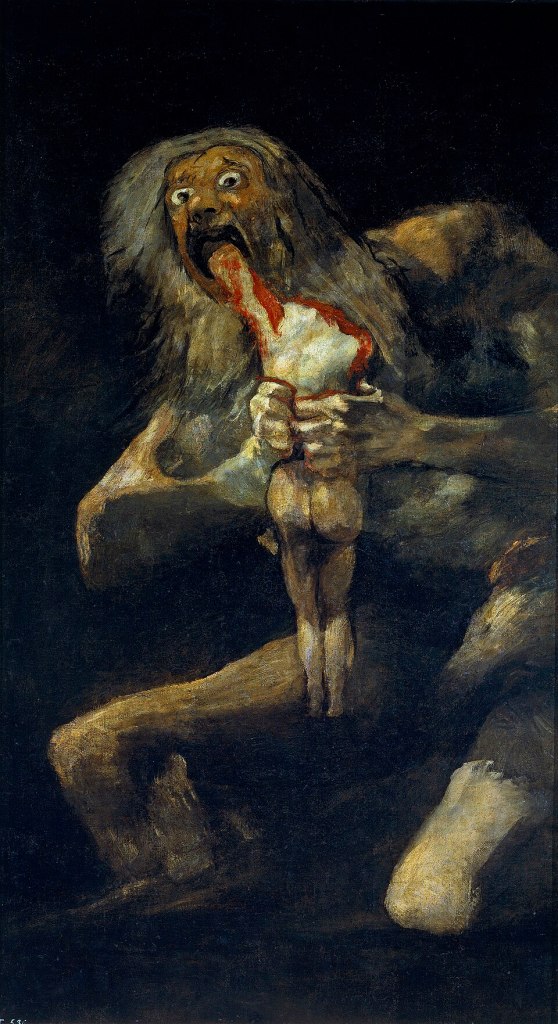
As he gobbled it all down, cutting, editing, deleting, he dismantled his meal as a man prepares shrimp. Stripping the shell, twisting the legs off (a technique perfected, aged six, on his sister’s dolls) flaying any excess appendageof ingenuity. Holding still-wriggling aspirations between greasy thumb and forefinger, he chomped and sucked, masticating with relish as ambition squirmed between his lips. Finally, Hayze bit off the head (a sight to make Goya proud) slurping up any latent juices of genius. Taking breaks between mouthfuls, he quaffed from the tumbler, lubricating his throat as it stretched to force down more and more. His toes wriggled over the ice, the soles of his feet already giving off heat. So much filth, so much wrongness, sweet-tasting, alluring. Ideas oily with impropriety, but so rich. Restaurants could keep their fatty steaks and caviar. There was no treat more luscious than other people’s dreams. Patting his stomach, Officer Hayze cast an appreciative look over the mutilated carcasses of literature, belching and licking his fingers clean of bloody spunk from another batch of neutered art. Of course, sometimes the menu would call for a chargrilled recipe: was it not Dostoyevsky (why yes, Hayze knew his classics) who had said ‘manuscripts don’t burn?’ A hypothesis the Bureau had eagerly put to the test. Many evenings the stench of gasoline followed in Hayze’s wake like an alley-cat.
He yawned. The business of dream-crushing was gruelling work, especially in the oven-baked hell of Hayze’s study. Therefore, the machine of state ensured that he would never be deprived of his refrigerated treasure chests. Hayze would have delegated such a task to his wife, Mary Elise, but she spent most of her days with her book club, The Ladies Against Indecorous Storytelling, a cohort of patriotic prudes staunchly opposed to the influence of pornographic material on Veritas’s culture. This (logically) required them to appraise every piece of underground erotica they could find. The average session of the LAIS looked like a row of STOP signs flicking through the pages of the latest scandal. Round, red faces vibrating in condemnation as steam wafted from their pastel, Easter-egg-shell dyed dresses. Mary Elise had adopted this paradoxical strategy through observation of her husband’s working process, and the presence of ice was much appreciated in these circumstances.
Ever the eager loyalist, Hayze had long ago realized that only someone expertly familiar with the traitorous garbage he was tasked with destroying could efficiently sniff it out. Thus, the Hayze office boasted the most impressive collection of subversive literature on the island. Dissatisfied with merely examining and discarding the contents of the art under trial, he had wrenched the pages from their leatherbound spines to add to his personal stockpile. His study was laminated with layer upon layer of sedition heaped so heavily upon one other that Hayze’s roof was held up by the thoughts of rebels and radicals.
Hayze sighed and thrust his feet into the plastic ice-tub. This inverse sauna stemmed the flush of rage and shame that had, in the past, threatened to spurt from his fingertips in licks of flame. Steam whistled, supernova hot, from Hayze’s ears, singeing his stiff blonde hair. Trembling, he reached for a glass and gulped down the necessary condensation to restore the revolutionary fluctuations of his biology to a conformist temperature. Peeling his soggy clothes off and wiping puckered lips with one hand, Joseph Hayze slipped into the cool silk of the robe that hung over his door like a moulted husk. A brisk knot around his midriff kept the swell of his freshly stuffed gut in place.
The little bell outside of his study rang suddenly. Hayze raised an eyebrow, shaking his dripping feet as he slithered into a pair of slippers, padding over to the door and exiting the muggy room. He was not expecting more guests. Mary Elise had retired to the boudoir earlier, escorted by two maids, after this week’s critique of The Bosomed Bride of Venice had proved too overpowering in its description of Duke Polidori’s muscled calves. Grumbling in the fashion that only a man who has purposefully chosen to overwork himself can, he shuffled down the corridor and descended the stairs, trailing droplets behind him like an incontinent child.
His expression changed from lethargy to surprise as he pattered towards the living room and saw the men waiting on the couch. Hayze’s aesthetic style was spartan enough to make even Leonidas look hedonistic, so the two figures in their khaki shirts and black brogues were encircled by a sea of white porcelain, wood panelling and grey furniture. A picture of Hayze and his wife on their wedding day was one of two pieces of decoration on the wall. It was eclipsed by a far larger portrait of Hayze in his Bureau Uniform. Appropriately dwarfed in comparison, Officers Paul Surdis and Alfred Aveugle were sharing lemonade, the latter tucking into a sundae as one of Hayze’s maids skittered away with the gutted ice-cream carton. The door to the house was open, another maid standing beside it. Hayze caught a glimpse of two black limousines in the driveway, huddled like dung-beetles against the gravel. With a curt flick he dismissed the maids, sending them retreating into the kitchen and behind the safety of a slammed door.
Aveugle didn’t notice. The smug bastard had taken the liberty of switching Hayze’s television set on. Hayze recognized one of the Bureau’s Special Access channels, the kind kept away from the public. A square-jawed actor in a tuxedo was machine-gunning a wave of goons. A woman clung to his arm, clad in a bathing-suit apparently fashioned from three-strings and a napkin. Aveugle was chuckling to himself. Mouth drooping open as the fluorescent light flickered over his slack-jawed grin, his jowls inflated like ruddy boils as he gorged. Hayze stalked into sight, slippers whispering along the glittering tiles. Surdis jerked up, head tilting. Paul managed audio and music for the Bureau. Consequently, his eyes, deemed redundant for the task of navigating the airwaves, had crinkled like baked raisins. He had compensated for this sensory deprivation by developing two whoppingly elephantine ears, fleshy butterfly wings that quivered as they picked up nearby vibrations. The overall effect gave one the impression that Officer Surdis’ head could be lifted by the handles.
‘Joe! Sorry to drop in on you so suddenly-we knew you might still be working, so we went ahead and let ourselves in. You have such a diligent staff, they helped us with, ha ha, plundering your refrigerator. I’m sure it’s all right-No harm, no foul, after all. Mis casas son vuestro casas, no?’
‘No harm at all, Paul,’ said Hayze, mentally popping Surdis’ lopsided cranium off his trembling neck. The ‘diligent staff’ would need to be decimated after this little surprise. Hayze flashed his co-workers a grin. It was as though his lips were trying to avoid being seen next to his teeth.
‘What brings you around my neck of the woods, gentlemen?’-Aveugle did not look up, corneas still stapled to the TV- so Hayze continued: ‘Do you perhaps seek some knowledge from this pantheon, wish to employ the resources of my sanctus sanctorum literaribus?’ After the humiliation of having been caught unawares, Hayze took pleasure in the vacant expression that settled over Surdis’ face. The dolt could barely string together a Spanish cliché. No wonder Latin confounded him. Yet what to expect from a man exposed daily to showtunes and (God almighty) ‘rocking roll’ music?
A flicker of resentment rippled over Surdis’ bullet-point pupils. It was not so much that the heads of the Bureau disliked each other, but that they had clawed their way to the top with the instinctual greed of children vying for the top of the playground slides. Sooner or later, they all knew, someone would have to eat a mouthful of sand.
‘Very kind of you Joe, but there’s no need. I really can’t stay long. You know how it is-no rest for the wicked. The FF debuts next Monday,’ rallied Surdis, ears trembling with pride. The FF, or Fetid Forty-Three, was Surdis’ list of the Prime Musical Offenders destined for the cell or the bullet. His roll call included overly aggressive ‘rocker’ (or whatever) musicians, jazz bands and several nursery rhyme composers. The brunt of Surdis’ vitriol had fallen on a children’s ditty titled My Mummy Has a Very Big Bottom (disgusting, borderline incestuous!). Though the list had yet to debut officially, Surdis had purposefully leaked sections to the public as part of Bureau scare-tactics. A fortnight ago, three local musicians had been found swinging from a beam.
‘I’m nearly up to one hundred points,’ said Surdis, rocking on his heels in satisfaction. ‘Can you believe it? Triple digits! I might even hit one-fifty when the FF goes official! You’ll have to work overtime to catch up Alfie,’ he snickered. Aveugle grunted. The Bureau heads ran an unofficial scoreboard: ‘breaking’ a creative into subservience racked up respectable points, incarcerations were worth double, executions triple. Getting a subversive to off themselves was the jackpot. Hayze paid Surdis’ crowing no mind. He was well ahead of his compatriots on the B.A.C leaderboard. Frederick Grace’s more recent termination had pushed him into the three-hundreds.
‘Enough about the goddamned Fetid Forty-Three,’ rumbled Aveugle. The T.V shut off as he squashed the remote, his appetite sated. Hayze recognized the tell-tale stiffening of clothes drawn taut around a heaving stomach. ‘If have to hear about your goddamn list one more time my brains are gonna burst out of my nose.’
Alfred Aveugle had changed considerably after he started running the Bureau’s Televisual and Cinematic Department. Before, he had been a wisp of a man, his voice a reedy distortion and his countenance as colourless as old greyscale film reels. Veritas’s transition to Technicolour seemed to have done wonders for his disposition: Aveugle had bloated in tandem with the budgets of the productions he oversaw. His latest flick, Onward! Onward Golden-Haired Cherubs of Justice Against the Enemies of Truth and Beauty! had nearly bankrupted the country, though this hadn’t dampened his energy in the slightest.
Hayze cleared his throat. ‘There’s no need for profanity, my friend. Maybe ease up on the booze too, it’s not even noon,’ he added, nose crinkling. Aveugle ignored him. The man reeked. Veritas heavily policed alcohol consumption, but such strictures did not apply to Bureau Officers. Hayze liked a stiff drink as much as the common man (and the common man had to settle for Citizen-approved watery cider), but Aveugle took it too far. The liquor he guzzled had fused with his biology in a bizarre alchemical process, transubstantiating red blood into imported Scotch. He twitched incessantly; Alfred Aveugle was something of a man possessed, literally filled with spirits.
Hayze made an impatient clicking noise with his tongue. ‘Well, as intriguing as all this may be, I don’t see why this pow-wow you’ve decided to organize can’t wait until Monday. If that’s the only reason you’re here…. Surdis, you’re the one who keeps nattering on about how busy you are. You’ve enjoyed some lemonade and my dessert, which about covers hospitality, so let’s wrap up this up.’
‘Ah, right, sorry Joe, it almost slipped my mind. Ordinarily we would have waited for the next Bureau meeting, handled this with the proper channels, involved everyone’-
‘No point sticking it out for that goddamn long,’ Alfred chimed in, ‘getting all five of us together is like herding goddamn cats, Oliver and Phil are with the diplomatic party visiting the goddamn frog-eaters’-
‘Be that as it may, gentlemen, if we could return to addressing the point of your visit?’
‘Sorry Joe, right you are,’ Surdis twittered. ‘Well, you see, it’s probably nothing, not even worth getting worked up about, but since you were involved so heavily in the matter, we believed you had a right to know…’
‘Involved in what? Know what? Get to the point,’ snapped Hayze, swishing his robe-sleeves with imperatorial pomposity. In the truest spirit of radio, Surdis enjoyed the sound of his own voice too much. Alfred beat him to the punch: ‘It’s about Frederick Grace.’
Hayze snorted. Nevertheless, his lumpy fingers had tightened into balls, curling in on themselves like a dead spider.
‘That hack? He’s been dead for ages. I was there when they blew his skull onto the prison-yard wall. Even the contents of his brain were dull. How is this still a problem? I trashed the last vestige of his legacy before the engines on your limos had started to cool. What’s his ghost dredging up now, another underground memorial service? More illegal reprints cropping up? Bellyaching from journalists? All that fuss for some brat, Socrates and Alcibiades was trash and we all know it! They only gave it the Nobel to discredit the Republic!’ Hayze’s clipped tones were shifting into guttural snarls, the edges of his mouth crinkling as venom lathered his tongue.
Surdis and Aveugle exchanged sneers. The reviews for Grace’s first novella had been printed overseas at the same time as the ones for Hayze’s Chrysanthemums. Hayze had ensured that all those involved in local print that so much as mentioned their two names in conjunction were either in chains or body-bags. This had not seemed to daunt his nemesis. Most shocking of all, it was only until he had met Grace face-to-face that his nefarious foe had even seemed to be aware of his existence! Him! Joseph Hayze! Yet still the miserable twerp had antagonized him, snatching the Nobel nomination out of his jaws (by cheating, no doubt, no-one that young had ever been nominated, Grace had friends everywhere, foreign spies, saboteurs, of course, what else could explain his stellar reputation outside of Veritas?) Unsurprisingly, Grace had not been allowed to accept the prize. Hayze had devised a more appropriate awards ceremony. A month later, Frederick Grace was bestowed the greatest honour Veritas could give an unconventional mind: a lump of lead through his right eye.
‘He couldn’t even come up with some decent last words,’ spat Hayze, marching over to the lemonade. ‘The final hour comes and what does he muster? Nothing! Nothing but silence, you’d think he’d have jumped at the chance to throw us a bone, one last parting shot!’ Just thinking about Grace was making sparks sneeze from his nostrils, the hair on his nape curling as his neck grew cherry-red. He threw back a hearty splash of the drink. ‘There’s your ‘soul of the age’ for you.’ He stopped as he noticed the glance that travelled between his two guests. ‘What? What is it?’
‘Those weren’t his last words.’
‘How do you mean? I was sitting in the front row whilst you were pushing paper in your office Surdis, don’t presume to lecture me.’ Surdis cringed back: Hayze’s eyes were moving manically in his head as if they had been borrowed from somebody else.
‘He left a goddamn note,’ said Aveugle, slapping down his flask with a thud. ‘It turned up yesterday, the goddamn kid had hidden it in his cell before the execution.’
‘So? That’s why you disturb me?’ Hayze bristled; his blond-locks puffed around his head like the hood of a cobra. ‘This had better be important. I’ve devoured everything he ever wrote; whatever crumbs are left will barely support me until dinner. What’s it contain? Coordinates for buried treasure? His last will and testament?’
‘Well…. no.’ Surdis sighed. ‘Look, see for yourself-come on Alfie.’
Huffing and wheezing, Aveugle extricated himself from the boa-constrictor embrace of the couch cushions. He staggered toward Hayze, handing him a ratty piece of paper, which Hayze unfolded. His eyebrow arched. No ink had been provided for Grace in his cell. The man had resorted to his own blood. An experimental writer to the end…how trite. The paper bore a simple inscription in a crabbed scrawl that had crusted over:
‘Quis Custodiet Ipsos Custodes?’
‘How cute, very intellectual,’ said Hayze. ‘This is bog-standard stuff gentlemen, a typical attempt to denounce us as hypocrites.’
‘Who watches the watchmen, right?’ said Aveugle. Hayze pursed his lips. He had just been about to school his philistine coworkers in Latin. Whatever. Aveugle had probably learned that from a movie.
‘Yes, indeed, who brings the deliverers of justice to justice, so on so forth.’ He yawned and turned the paper around. There was a second inscription. A decidedly blunter aphorism was scribbled on the back. It was uncharacteristically crude for someone like Grace, petty in a way Hayze had only encountered in the schoolyard. The sort of hollow taunt best accompanied by a raspberry and a stuck-out tongue. Grace’s blood was mashed into spiky, scratchy letters. One could almost imagine him smearing it into existence, teeth gritted, muscles standing like ropes in his neck.
WHAT GOES AROUND, COMES AROUND.
Below the words, the amateur artist had doodled a snake curled into a circle, fanged mouth closed around its own tail. An ouroboros. Grace had routinely used it as a metaphor for his addiction. Hayze couldn’t keep himself from rolling his eyes.
‘Fascinating. Some kind of threat, I suppose. A warning from beyond the grave? Do I need to start locking my bedroom door?’
‘Well, we can certainly try to inform the Intelligence Bureau,’ said Surdis. ‘It could be a sign of another subversive movement, a hint at some kind of gang looking for revenge. Wouldn’t be the first time…’
‘Frederick Grace? Part of a militant group?’ snickered Hayze. ‘The most he could muster were long-haired university students and wall-eyed bookworms.’
‘You’re pretty goddamn cavalier about it.’ Aveugle had collapsed back onto the nearest pillow. ‘Considering you’re the goddamn guy who signed his death warrant.’
‘Really gents, I appreciate the concern, I really do, but this comes with the territory! Death threats are nothing new to us Bureau men.’ He crumpled up the paper and tossed it toward the nearest wastepaper basket. It bounced off the rim and fell onto the polished floor. ‘This is nothing more than the infantile, impotent last gasp of a fraud who couldn’t accept that he was finally getting his just deserts!’ Yet even as he said it, he could feel a feverish prickle spread in a wave down his spine. The bruised face of the young man as they hauled him up against the wall jumped suddenly in Hayze’s memory. Grace’s one good eye, the other a throbbing mass of swollen flesh, courtesy of the guards, sparking even in the miserable grey of the early morning. He licked dry lips. The droplets of lemonade had evaporated. The snake, devouring itself, a gory circle carved with brittle fingers and ragged fingernails, hovered in front of his eyes for a second. He must have paled a little because Surdis and Aveugle were both looking at him strangely.
Gritting his teeth, Hayze clenched his fist behind his back. ‘I’m thankful for the consideration, and I’m sorry you wasted your time coming here. This kind of thing is the stuff of the past-the Republic moves ever forward gentlemen, ever forward! Unity and Prosperity is our motto after all.’ He tightened his robe-belt, garrotting the sash as if wishing to throttle the conversation then and there. ‘I’ll give the lads at Intelligence a call tomorrow morning if it makes you feel any better, but really, there’s nothing to this. We’re all just letting too much work and too much sun scramble our brains! Take the next couple of days off, leave the grunt work to the grunts. We’ll open the pool this weekend, I’ll tell Mary Elise to ring your wives.’
As he was saying all of this, Hayze insistently funnelled the two men out from the living room and toward the door and the driveway, where their chauffeurs were napping inside the Bureau-issue limousines. His head was starting to smart. Surdis’ insincere chirps of thanks and Aveugle’s basso profanity-laden goodbyes were not helping. Goddamn it indeed, he just wanted to lie down. Not in the living room, he’d tell the maid to sweep up that disgusting note as soon as possible (he could fire her tomorrow) then order some lemon-ice to cool him down. Was he coming down with a fever? Nonsense, overwork, just as he’d told his comrades, overwork was the key. He’d send for some more ice first thing in the morning.
—
Early next day, despite a night spent thrashing restlessly above the covers, Joseph Hayze felt like a man renewed. The pounding in his temple had packed up its pain into a bindle and left for greener pastures, no-longer exacerbated by having to suffer his idiot co-workers. Whistling tunelessly to himself, Hayze went about preparing his study. The relevant files were shuffled onto his desk. A new ice-tub, pot of coffee, glass of water, and a carafe of port had been topped up. His fountain pen, polished to a righteous gleam, stood to attention in its inkwell like a blade thrust through an anvil.
Hayze massaged his midriff self-consciously. At this rate, he would have to drop by a tailor. When he stood perpendicular to the bathroom mirror, he looked like a lowercase ‘b.’ Today he would ease up a bit, limit himself to a few choice snacks. He wasn’t champing at the bit to exhaust himself either. A calloused bump on his first knuckle dug at the corner of his eye. The pesky thing was twitching sporadically like an oyster speckled by a lemon. Before he sat down, Hayze placed the needle of his record-player onto the vinyl disk nestled within the case beside his desk. It had been a birthday gift from Surdis, who, as much as it pained Hayze to admit, could often have a pretty good ear for this sort of thing. Georges Bizet’s Carmen. A peccadillo: the Veritas Opera house no longer played anything from Bizet to Puccini and was currently repurposed as a landfill.
Hayze started by reading through the first document of the day: a lyrical anthology by a rural poetess. It was decent stuff, filled with praise for the glories of peasants doing their part for the homeland and such. Hayze’s eyes narrowed. The anthology was thematically connected via continued reference to the poetess’s one true love, which was all fine and good, except she had refused to specify the subject’s gender…fingers touch the hollow ‘neath your breast/and find no missing rib… how easily a wolf pulled on the sheep’s clothing!
Hayze writhed in his seat as a swell of warmth blossomed on his forehead. Indecent, most indecent. His tongue flickered over his lips like a windscreen wiper, feeling the hot prickle intensify. What a toothsome choice to begin with…he felt a twist of the same sickly guilt that used to overpower him when he snuck chocolate from the cupboard as a kid for ‘breakfast.’ The sharp shock of ice at his heels brought him back to his senses. A pity, but no huge loss. The entire forbidden romance throughline would have to be obliterated but the work could be printed as a quaint collection of banal, nationalistic nature poems. Hayze plucked the offending pages from their binding for his personal storage and tacked a note to the file: INTELLIGENCE BUREAU-PERSONAL LIFE OF CITIZEN SHOULD BE FURTHER INVESTIGATED.
He yawned, jaw stretching on its hinges, flicking through the sheafs of sapphic pining. His eye spasmed, his cheeks glowing. The tepid fumbling between Hayze and his own spouse in the bedroom paled in comparison to this…passion. Raindrops of saliva coated the page as Hayze’s belly rumbled. The music swelled in the background. Except-hold on-that was odd. Hayze paused.
The record was playing the Habanera-if you could call it playing. Hayze could not quite explain it accurately, but it was as if large and frequent gaps had been punched into the music. Hayze got up, lifted the needle, and let it play again. The song resumed, but again, only choice snatches of words reached Hayze’s ears: l’oisea, l’amour, tout. It was not that the song was garbled or skipping ahead. Entire lyrics had been replaced with a kind of non-noise, as if cotton wool was being clamped over his ears. He inserted a finger, cleared out some earwax, smeared it onto the underside of his desk. Still no change.
Hayze started the record up again, mouthing along, translating in his head: ‘Love is a rebellious bird/That nobody can tame (….) Love is a gypsy’s child/It has never, ever known law….’ Where warbling vocals should have rung out, clear as crystal, there was only that pervasive nothingness. It was a feeling rather like having one’s head thrust momentarily under water.
Some kind of prank? Impossible-Surdis’ present had worked perfectly up until today. Ever the inquisitor, Hayze probed at the silenced lyrics. There was something about their specific absence that nagged at him, like a tongue flickering back again and again to the hole where a tooth should be. Rebellious bird…. untamed…gypsy’s child…. never known law…. a nervous chuckle escaped Hayze. They were deviant lyrics, anathema to Republic ideology. A different sent of words sprang abruptly to mind, leaping out at him with the speed and sudden violence of a mugger:
WHAT GOES AROUND COMES AROUND.
He slammed the lid of the record-player down so hard the table shook. Ridiculous! Ridiculous, absolute insanity! He was letting Frederick Grace’s miserable final threat get to him, playing right into that fraudster’s hands. His vision warped, a shadow blossoming momentarily over his field of view. A spiral vortex, a whirlpool twisted in on itself. He bumped painfully against his desk, blinking furiously. A dusty croak rustled from his throat. A drink, he needed a drink, a cool drink. Hayze reached for the carafe of port and poured himself a glass. He raised it. His eyes bulged.
One moment the glass had been about to touch his lips. The next second, it was back on the desk, the volume of liquid slightly diminished. Hayze stared. It was as if the middle of the three successive actions, lift drink-enjoy drink-put drink down, had been cut from…from reality itself. The port glass was emptier. Surely this meant that Hayze had drunk some, but it was as if it had never happened. It was a trick he had seen time and time again after Aveugle’s department finished trimming a movie: characters were allowed to pour or hold a bottle, but the minute they went in for a taste-cut-the footage would jump forward jerkily, eating up that precious second of inappropriate behaviour.
A sick feeling mounting steadily in his stomach, Hayze scrabbled at his desk drawer, pulling out a mouldering cigar. He hadn’t smoked the things in ages, but just to be sure…where were the matches, matches, come on, matches-there! It took Hayze four tries to light a match, and two to clamp the cigar between his teeth. He moved the weak orange flame toward the cheroot. He blinked. The cigar was no longer in his mouth, but between his fingers. A cloud of blue smoke languished in the air. Hayze yelped and dropped the tobacco. It skittered across the carpet. His stomach heaved, and with a moan he leaned over his waste-paper basket to retch. He blinked. The contents of the bin were a strange, fuzzy distortion. Not that Joseph Hayze had ever been especially interested in examining his own vomit, but now he only registered an odd, greyish gap where the indecorous spectacle should have been.
He moaned, clutching his abdomen. The first tentative bites of hunger were starting to gnaw at him. Hayze jumped to his feet, steadying himself on the edge of the desk, eyes roaming manically around the contents of his office. A low, canine whining had begun to whistle from between his jaws. The whole room was an unfocused blur. The pages and pages of banned literature were illegible. No matter how hard Hayze concentrated all he could pick out were choice, individual harmless pieces, but the greater whole was impenetrable. Angry, thick tar-black bars followed Hayze’s line of sight relentlessly, settling over the titles of manuscripts, the forewords of poems, deleting the innards of pamphlets and monographs. Hayze tore through a blizzard of pages but nothing, nothing. Sable worms infested every inch of paper, entire masterworks he had sequestered from the public supernaturally prohibited.
A cry of outrage punched through his teeth. His precious storehouse, his pantry of dreams! Impossible, all of this was impossible…. he had been drugged, spiked, hypnotized, bombarded by radio-waves from an enemy satellite…cursed. Hayze shivered violently, clamping his hands around his chest. The dreaded heat he sought to temper daily was leeching out of him in shimmering waves, his puffy, scorched flesh settling into a cheesy white. A fishhook pulled up in his gut. Hayze rubbed at his eyes until white fireworks burst in spotty chunks inside his skull. When he opened them, red and raw, nothing had changed. The one thing he could see clearly, was Frederick Grace’s face, his bloody lips forming one last, painful smile.
A paralyzing wave of suspicion crackled down Hayze’s spine. Hyperventilating, he grabbed his personal copy of Chrysanthemums from the top drawer of his desk. He spread it open like an autopsy, so fast that the pages tore. His fingers shook as glacial shivers set in, mouth opening and closing uselessly, a baby bird begging for scraps, as he sought in vain the deplorable warmth of a dream, just one, a granule of taboo, an iota of immorality, ANYTHING, JUST ANYTHING.
Joseph Hayze began to laugh mirthlessly, a guttural kh-kh-kh. He could read every word of his own novel without a hitch.
The next few days were the closest Hayze had ever come to experiencing hell. Through trial and error, he had discovered the sheer scale of his horrifying affliction. If he turned on the radio to any channel other than the ones prescribed by the Republic, if he played any vinyl apart from those sanctioned by the Bureau, he would be greeted by the now hideously familiar absence of sound, murderously smothering all deviant expression. Art was out of the question as well. Naked bodies, blood, weapons, any suggestion of violence, even abstract or Dadaist works would be wiped out by the ever-present black bars.
That morning Hayze had cut himself with his razor only for grey, colourless blood to pump out in a thin trickle. Where it stained the porcelain, the gore was rapidly replaced with a black rectangle. Before, he would have sworn, but language had not been overlooked by the omnipotent wrath of Grace’s curse. If he tried to utter any mildly off-colour word all that emerged from his lips was a high-pitched beep like the whine of a dead radio station. The most unpleasant shock of all had been when he stripped off to take a shower. He washed four or five times a day now, his blistered back ravaged by the scalding heat of the water. It didn’t matter. The cold endured, surviving a woollen avalanche of scarves and jumpers. He found himself blundering through the empty corridors of his villa, a ghost trailing mittens and mufflers instead of chains, a wake of feverish slime stretching behind him.
Observing his nude body in the mirror above his sink, he almost passed out, vivisected by the bare lightbulb of the bathroom. Hayze flesh was a soft-boiled, chalky and pale, laced with purple veins that wriggled like nightcrawlers. The skin had constricted around his bones, the vacuum-seal of starvation transforming his skeleton into a mess of protruding ribs and collarbones. Hayze’s stomach had deflated, limp and withered, a newspaper on wet pavement. Where his penis should have been, there was now a black bar. He avoided Mary Elise as much as possible. He was certain that if they were ever to make love it would simply…skip ahead. They were sleeping in two separate beds now, despite sharing the same room.
Hayze collapsed onto the floor, crumpling into himself like a candy-wrapper. Should he welcome unconsciousness? To sleep, perchance to…God no. Please no. The worst were the dreams. His flaccid belly mustered a weak moan. No matter how many plates of food he gobbled down, it was not enough, his meals tasteless, frozen hunks in his mouth. Hayze closed his eyes. He could try and visualize the buffet of inventiveness he was used to feasting on, his mouth leaking as his yowling appetite recalled succulent towers of creativity waiting to be picked clean. Yet after a career of snatching them out of the hands of aspiring artists, Hayze had been left with nothing. The trove of hoarded brilliance he once slept on like a firedrake of legend had been spirited away by an invisible thief in the night. Morpheus had come to collect his credit. With bleeping interest. Hayze’s nights were a midnight-screening of colourless static. He would wake up in an icebox, sheets stiff with frosted perspiration.
After some time, Hayze managed to get to his feet, dragging himself back to his study. His nakedness did not bother him: Grace’s final wish probably ensured that any potential voyeur would be spared such lewd sights. The brass plaque above his door was dented from where a fist had crashed against the emblazoned shield of the Bureau of Acceptable Consumption. Hayze’s knobbly knuckles bore the black-bar scars of that particular tantrum.
Even at this stage, he couldn’t bring himself to inform any of his Republic superiors. He had tried to dial the Intelligence Bureau Headquarters, screaming down the phone about sabotage, spies, assassins, but the receiver had only gurgled out muddled incoherence. Whatever the Bureau had replied had also been omitted from existence. He hadn’t dared call again. Veritas’s stooges could sight a weak link in the chain of authority with an efficiency that made hawks look like moles. A padded cell would be his reward, if he was lucky. A cigarette and a blindfold if not. No, he had to accept the truth, difficult as it was to believe.
His entire life had been censored.
A day later, the phone rang off the hook. It was Alfred Aveugle. They needed to talk-now. Or at least that’s what it had sounded like through a morse-code cacophony of bleeps and beeps. Hayze met him once more in the living room, hand covering his brow. He sported dark circles under each eye and a furred parka formed a camel’s-hump over Hayze’s back. He was massaging his lumpy hand incessantly, a nervous tic developed as a response to the shivers. It had taken him almost five-minutes to undo the locks installed on the front-door by his amateurish craftsmanship.
Some small solace could be found in realizing that as haggard as he must have appeared, Aveugle looked worse, huddled opposite him on the couch, curled up like a wilted piece of chewing-gum stuck to a lamppost. Alfred’s suit had collapsed over his frame. He’d lost weight, and fast. He no longer stank so pungently of alcohol either. His tongue ran repeatedly over his lips. Alfred was twitching, his face bobbing from side to side in a motion Hayze had become intimately familiar with. Hayze reached over for the T.V remote and switched on his set. It fizzed to life, showing a squat black square swinging a black bar at hordes of goblins, gouts of fuzzy, colourless blood flying all over the screen. Instantly, Alfred’s head snapped in the direction of the glowing screen, mouth slobbering open. He fell, actually fell to his knees in front of the set, pawing at the light and gibbering. Hayze had seen starving dogs leap on a bone with less desperation. With a wail of disappointment, Aveugle jerked back from the T.V, blinking furiously. Hayze clicked to the next Bureau Access channel, sighing as a rectangle gyrated sensuously around a metal pole. Aveugle moaned, slumping away from the T.V. He crawled back onto the couch, the squeak of his body hauling itself up the upholstery undercut by the growl from his stomach. Hayze turned the television off.
‘You as well, huh,’ said Hayze. He was too tired to even relish the pathetic display. Aveugle looked like he was on the verge of tears. His entire being was spasming, loose skin shifting like blancmange as he jittered. Add a wet sponge and a gag and he could have been riding the lightning in a Veritas execution chamber.
‘You’re bleeping right me as well, the whole bleeping lot of us are like this, it’s a bleeping bleep-show,’ he moaned, his words punctuated by the garbled drone that effaced his profanity. ‘What is it, Joe? Some experimental foreign weapon? A drug from some rebel-group? What the beep is happening to us?’ Operating on instinct, Aveugle’s hand darted to his flask. Hayze saw reality jump ahead, and then the flask was back on his belt, a trickle of whiskey on his chin the only indication that anything had happened. Aveugle let out a strangled groan.
‘Look at it this way,’ said Hayze, kicking the coffee table with loathing. ‘It’s one way of ditching a bad habit.’
‘That’s not bleeping funny Joe.’
‘What else can we do, Alfred?’
‘We…we can go to Intelligence; they’ll be able to root out the culprit.’
‘The culprit is dead, Alfred. Unless you want to be cut up by Republic sawbones, I suggest you keep this to yourself.’
‘The culprit? The culprit? You mean you know who’s behind this?’
‘Come on Alfred, haven’t you put it together? It was you and Surdis who told me about it first. WHAT GOES AROUND, COMES AROUND, remember?’
‘You-you don’t possibly think that was serious, Joe. It was words on a page.’
‘Alfred, my bleeping c—ck is a black bar,’ snarled Hayze, his fingernails clawing chunks at his armrest. ‘We passed just words on a page a long time ago. Where is Surdis anyway? It was you and that Dumbo that dragged this to my doorstep in the first place. The least he could do is show his face.’
‘Surdis…Surdis cracked first Joe. I mean, it was his job to control music, and all he was getting was…. nothing. It was like waking up one morning and realizing you were deaf. They carted him away to a bleeping rehabilitation centre yesterday. His ears…. like bleeping slugs after you pour salt over them Joe…He kept screaming that he couldn’t hear anything. Just nothing. Nothing all the time.’
‘We’re down to four.’
‘Not for long,’ added Aveugle, a dark look clouding his face.
‘Well, I don’t know about you Alfred, but I trust I can hold out longer than a guy like Paul Surdis,’ said Hayze. He didn’t even believe his own boast.
‘That’s not what I meant, Joe. We have more than…this to worry about.’
‘What the bleep are you on about?’
‘Right. You haven’t kept up with the news lately, you’ve been walled up in here. They’re changing things around Joe, a shift in management. The central parliament’s been split into factions.’
‘Meaning….?’
‘Meaning our lot, the Old Guard, are on its way out, ready to join the bleepingT. Rex. It’s only a matter of time-they’ve got a bunch of kids lining up for our jobs. They’re saying it’s time for some fresh blood, time to pack the veterans away. We’re fossilized they said.’
‘You can’t be serious.’
‘Dead serious. Beep…we’ll be tilling fields by the end of the week. If we’re lucky. There’re rumours of a purge. Surdis breaking down will probably make them pounce sooner. Blood in the bleeping water.’
A snake, stretching its pink mouth wide, fangs piercing, its body enveloping, round and round, a mandala, a wheel, branded itself in Hayze’s skull like the burn of a cigarette lighter. The air outside was rippling with heat like laundry hung out to dry, but it might as well have been a blizzard. This wasn’t the feverish chill of his affliction, the absence of warmth. It seeped past frayed nerves and goose-prickled skin, transcended aching bones and chattering teeth until it shrivelled the soul.
For the first time in his life, he felt truly cold.
‘So…that’s it then?’
Alfred pulled something out of his pocket and passed it to Hayze. It was a photograph of the five Bureau heads in their office, ramrod straight and glowering proudly in their starched ceremonial uniforms. No, the four Bureau heads. Surdis was missing, as if the celluloid had reached out and devoured him whole, slipping over the image of a man and replacing it with a gaping, empty space.
What must it have felt like? Did it feel like anything? Maybe it was rough and painful, the brutal scrape of a child’s eraser on a pencil-drawing. Maybe it was just…quiet, like a body pushed beneath the water at midnight, swallowed up by waves of ink. Already, Surdis’ face was smudging in Hayze’s memory, his black hair (black? Or maybe a dark brown?) and blue (no, that couldn’t be right, they were pale green) eyes slipping away. It was like trying to think of an entirely new colour.
It was not that Surdis had ceased to exist. No, it was like he had never even existed in the first place. Like ideas before they were pulled from the heads and hearts of men and made real. Hayze stared at the picture for a while. Stared at his miniature self, imagining that doll’s frame crumbling on the heap of dreams he had spent so long cultivating. It was a while before he spoke. When he did, it seemed to come from a recording, played in too large a room, and from too far off.
‘What’s it like for you, Alfred?’
‘Huh?’
‘I get black bars. All over the place. How about you?’
‘Oh. Oh uh…for me? It’s usually a sign, more like letters. Like someone shoved a billboard in your face.’
‘Really. What’s it say?’
Fat tears were pouring down Aveugle’s face. They filled the air with the burning tang of liquor, Alfred’s alcoholic lifeblood oozing out of him like venom squeezed from a toad. Bitter tracks of amber bled down sagging jowls as his lips quivered.
‘Restricted: Requires Accompanying Parent.’
Hayze began to laugh, in earnest this time. It sounded like the snap of a mind when it breaks.
—
Officer Joseph Hayze, formerly of the Bureau for Acceptable Consumption, was found dead inside his study on the eve of the transition of power from Chairman Victor Haldeman to the leader of the Bold New Tomorrow faction, James Stalwart. When his routine delivery of ice arrived at his summer home, they found Hayze’s wife, Mary Elise, sitting on the couch enjoying a cold drink and a novel entitled The Rugged Khan of The Great Steppe’s Harem. A blank picture frame loomed over her, next to a photograph of a lone bride. Mrs. Hayze did not seem especially interested in the proceedings. She informed the delivery men that her husband must be upstairs.
Usually, the maids would have taken over from them, but the house was eerily silent. The only sound was the low humming of Mrs. Hayze and the murmur of pages turning. They trudged upstairs. One man shivered. Another sneezed. It was getting chilly as they advanced upwards. State of the art air-conditioning probably. Government men got all the best perks. The first courier left a film of his own skin on the doorknob, yelping as he tore his hand away from the metal. It took four tries from one of the burlier employees to kick the door open. When it finally collapsed in an explosion of icy shards, a wave of cold rushed out into the corridor, escaping like a beaten dog let off its leash.
The couriers advanced tentatively into the gloom, moving in unison, pressing up against one another as if expecting something to leap from the shadows, lions, tigers, bears, oh my. Their footsteps crunched on the frost-bitten carpet. Silver vapour from the steam of their mouths drifted in the air. One of the deliverymen blinked hurriedly, a crust of white icing forming on his eyelashes. Paper crackled in mounds across the floor, like trampling on the skin of moths.
There was a shape in Hayze’s chair. For an instant, it had seemed to be part of the furniture itself, some bizarre, experimental form of interior design that was all rectangular protrusions mixed with sloping curves. A bulbous oval popped like a pustule from the headrest. On closer inspection, it was revealed to be a human corpse, straight-backed. A low whistle of admiration escaped one of the couriers. Even in death, the body was working, the very picture of diligence.
One hand had fused into a claw around the armrest, fingers swollen into blue-black maggots burrowing into the wood. The other had imprisoned a pen in a brittle vice, stalactites of frozen ink hanging in ruby daggers from its nib, hovering over a page covered in scribbles. A more intrepid soul amongst the deliverymen approached tentatively, grimacing: the corpse was terribly emaciated, snowflakes piling up in miniature hillocks within the trench of its stomach.
He snuck a look at the thing’s face. Joseph Hayze’s eyes were stuck open, two protruding marbles rammed into his eroded sockets. Glassy mascara shot down his face from where his tears had hardened into splinters. Twin icicles jutted from his nostrils, giving the death-mask a morbid resemblance to a walrus. His mouth was open, lips purple, tongue a rigor-mortis stiff slab bristling with preserved droplets of drool. A perpetual yawn, sucking hungrily at the air.
The courier risked a glance at the contents scattered on the desk, catching sight of sheafs of documents. Even through the frost, his curious eyes could pick out a few sentences. He fell back hurriedly. Rebellious, disruptive language, seditious sentences, anathema to the Glorious Republic! His compatriots had also picked up on this as they took in the grotesque office, drawing together into a loyalist huddle. This was the lair of a traitor! Probably a pervert too.
The note that Hayze had written before his passing was reported and subsequently seized by the appropriate new Bureau authorities. The paper was swiftly surrounded, threatened at rifle-point and then escorted outside of the office at arms-length, clamped between tongs and shoved in a plastic bag to avoid its contents infecting the unwary. The deliverymen were later arrested and shot, just in case. The note made its way up the chain-of-command until it was deposited before President Stalwart. It read as follows:
During my last moments I write these words so that those who live on in my stead can know the truth of my story, my sins, and my confession.
In the many years that I have served our Glorious Republic, I fought for truth, for righteousness, for deliverance. I have not found it. All that I have inherited is the hunger, the hunger for a sincerity and an honesty that the polished parades and bleached halls of this island have obliterated. It is all gone, gone, wiped clean, lost. It will be erased, rewritten and obliterated forever, again and again, but with the strength of my pen and the power of my words I set down this declaration so that my conclusion may herald the beginning of change.
Let the following tear down the usurper Stalwart, may it set the skeletons the Bureau has hid in the closet free, so that their rattling deafens you! I do not seek redemption, only for my truth to clang in your ears!
May you heed it with more dread than I did! May it lay bare that which I have hidden from those more deserving than I!
Let my life’s work reveal what a career of lies never could:
You will not remember me, for in truth we never met. The first time you came to my attention was on my bedroom floor. I was seven years old, kicking my feet in lazy trails in the air, reading a grubby comic-book. I soon grew bored and started flicking between the nearby bookshelves in search of something to gnaw away the sluggish evening hours. There our paths crossed. A glossy picture-book tumbled, without pomp or circumstance, at my feet, your name looping on the cover in a gilded scrawl.
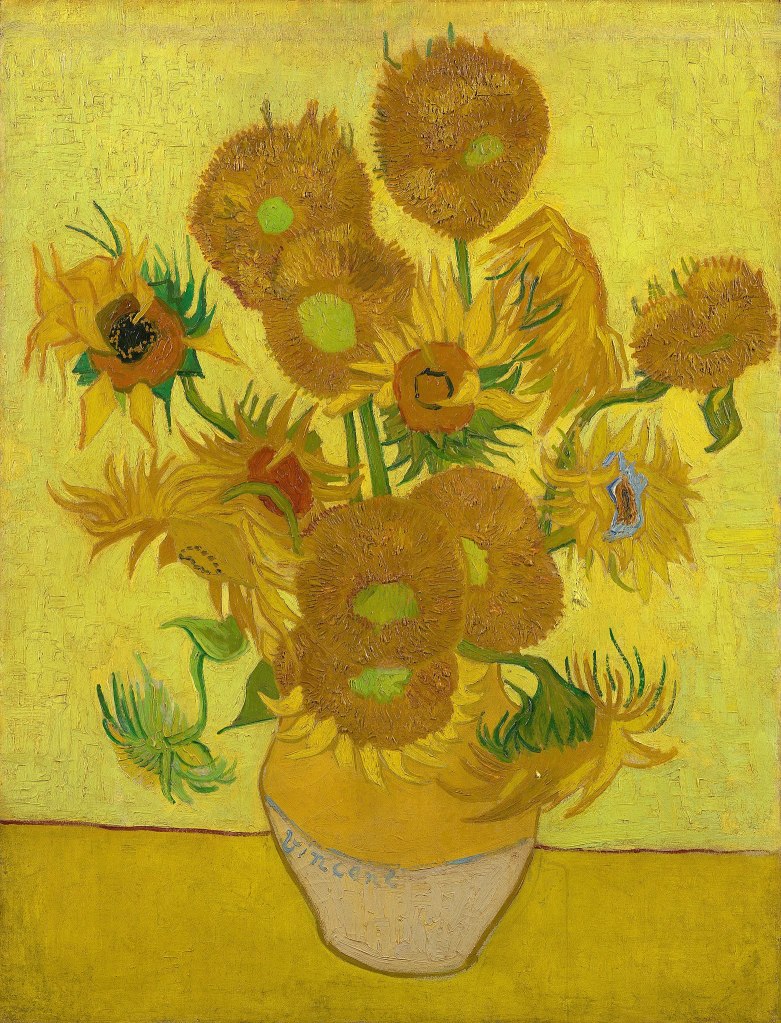
What a curious sight. Your scarecrow frame, flaring with rust-red hair, a hat of battered straw perched on a head framed by hills of rolling gold. On every page, sunflowers, through which strolled that gangly stranger, brushes tucked under an arm. A cotton-candy tale of an eccentric, impish fellow tottering around rustic towns and gas-lit bistros to draw his pretty pictures. A dabbler of strange arts capable of transforming a rigid canvas into an explosion of sensation. Hey presto: the master illusionist guiding streams of colour to dance like puppets to the beat of human hearts.
The second time you stumbled into my life was on a door at my grandmother’s house; a ramshackle little cottage tucked away in a Spanish town so insignificant it’s a wonder it managed to earn its way onto any map. There, within the room where my brothers and I would spend our nights, hung a poster of a single wicker chair, a gnarled pipe discarded atop it.
It stuns me to think how an image so simple could speak in a voice that bellowed. What warmth, what brilliance in a common piece of furniture, that nevertheless begged a thousand questions to a thousand unfinished stories. Was it your favourite chair? How many days did you sit atop it, wicker frame buckling under your weight, as you puffed tobacco, teeth gnawing away at the root? Maybe nursing thoughts of returning to your studio, to do whatever artists do in secret. The mind of a child saw you concocting bright potions in whorls of oil and water. Something out of The Sword in The Stone, all moons, stars and jets of rainbow smoke, scratching at your beard pensively as the alchemy of painting turned a potted plant into a burning sun.
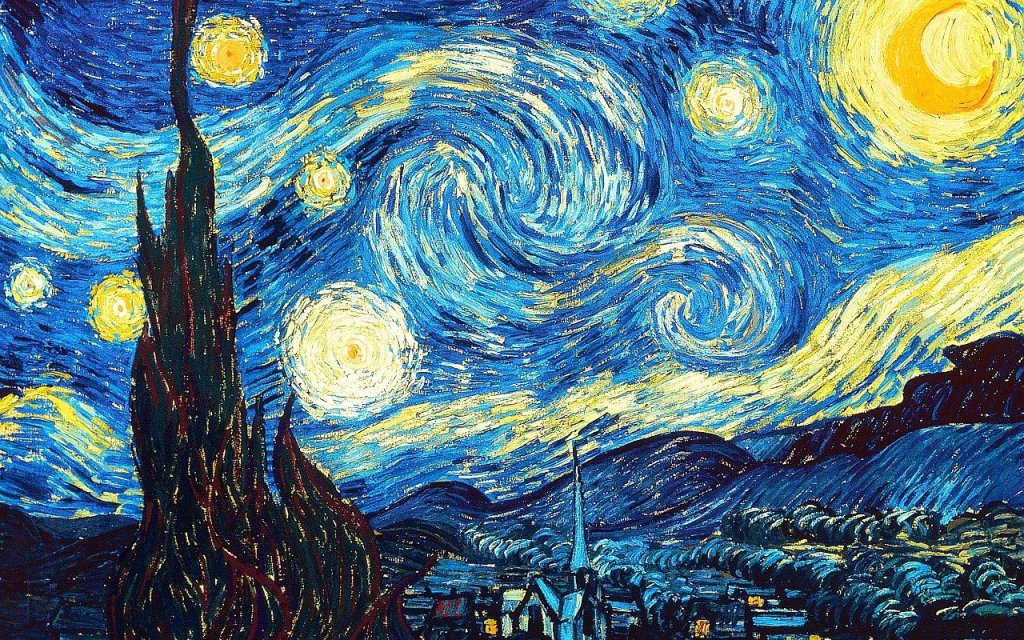
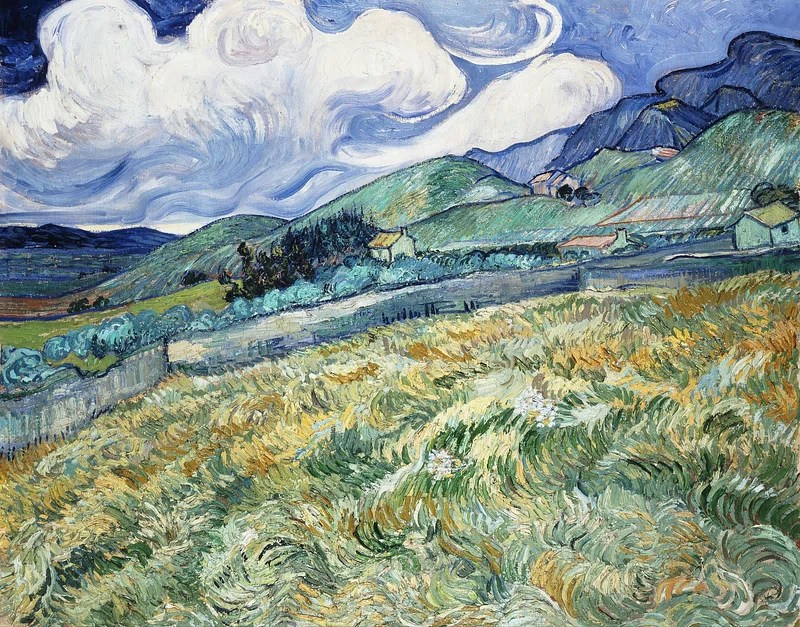
As night fell, the gap beneath my bed vomited up hosts of scarlet-eyed fiends itching to grasp the chicken-bone ankles of a frightened child. I would stare at that little chair, etched now in the silver of midnight, and turn my thoughts away from nightmares. Away, towards that lanky stranger, his ghost imprinted on a makeshift throne. How hard not to think of that image from the picture-book. The trees, sable towers rising to dip into a sky churning with azure waves, dotted with crackling orbs. A vision that stripped the gloom from the world to varnish it with a fresh coat of the sublime. Was that how you gazed at our Earth? How boring my surroundings were in comparison. Stiff and stilted, devoid of the light fantastic that coursed through your fingers and spun a sunrise into a kaleidoscope.
Oh, Vincent, if I had only known then, I would have cursed myself as I daydreamed of your placid life! I learned of your suffering with a heavy heart. They became impossible to ignore: the screaming evenings of a year’s exile in the bleached halls of a mental ward, the bitter smoke of gunfire ravaging your stomach. We take death to reach a star, you said. When I look back, it makes no sense. I do not think you could have meant such a thing. An exile to the wintry shards of a distant star is nothing compared to the rough, hot arms of a brother who gave enough love to serve both of you. I should know. I am lucky enough to have two brothers, where you only had one.
Who hasn’t seen your portrait? A head swaddled in greasy bandages, hollow cheeks carved up with bones like a razor’s edges. Those eyes, Vincent. I could not believe those bullet holes once coated their bristles in sunlight. I heard the story of how you wrenched your ear from your head so many times that it seemed more like an old fairy-tale, than the mark of a man tore his soul from the bone in bloodied strips.
I won’t dare to claim to have suffered as you suffered, but trust me Vincent, that I know what it is like to sit and weep as eternity’s gates stretch out into the distance. I have felt fear’s knife make mincemeat of my guts, the terror of standing on a weathered rock amid a raging sea, thinking yourself alone and unloved. Clinging only to the hope that hurling yourself into the brine might finally silence the crashing waves. Yet Vincent, I have envied you, for what could a novice hope to understand of a man who said more with one colour, than I ever could with all my streams of purple prose?The scribbles of a boy still puzzling out what it means to be a man might mean little to you. But nevertheless Vincent, know you are not alone. Never were alone. I have carried you with me ever since that first evening your image caught my eye.
You live on, as I listen to an ocean lullaby, sitting on the beach thinking of the sapphire tongues of starry nights.
I glimpsed you when I glanced out the car window, barley flashing by in fiery sheets. You strolled behind me over bridges arched above the Seine as boats floated underneath to the lazy song of a wheezing accordion.
I saw you, as I leaned against a stone with my dog panting at my feet, watching birds dance their swooping courtships over Spanish plains. And, you will not remember, but you joined me on the railings in Bilbao, to look into a river studded with gemstone lights and realize that we would find a way, somehow.
You were there Vincent, in the Toledo sky as the day bled in the pink and orange pangs of unrequited love. You were there, sitting by the road as a bus trundled past La Mancha, straw hat pulled down low as you slept. Standard-bearer for the impossible dream, tilting at windmills with a lance carved from the wood of a paintbrush. And you were there, legs crossed, watching me sleep, all those nights ago.
I am, by nature, a dreamer and an idiot-it is funny how often the two go hand in hand. So, as my eyelids shut again, permit me one last fantasy, Vincent. It is the least that I can do. I have weathered the storms that battered me, kept afloat by the spark that died with men like you. So, let me use it, If I can, to build you a final resting place in remembrance. A eulogy to innocence of a kid who hoped for magic, where there had only been a man. A child’s dream, perfect and preserved in a clear glass marble.
Before I sleep, I imagine a plot of land in France. Corn sways in the wind, yellow stalks arranged in blonde cascades. Swallows chirp to themselves, thatched beneath green firs. A cottage sits in the middle of the cornfield. On the porch, cradled in a creaking rocking-chair, sleeps an old man. His hair is cotton-white instead of russet, his beard soft and downy. Oil-stained fingers are weathered and lined now, folded over a stomach which bears no bloodstained mark of a pistol shot. Just a few flecks of paint, maybe the smudges of a midday meal. A pipe sends blue wisps of smoke to mingle with the tawny sky. No gory bandage marks the old man’s cheeks. His face, ripened with age, is tanned by the suns of Tahiti, from a visit to a dear friend.
There is a small table on the porch. On it, a glass of wine and an open bottle, half-finished. Theo stopped by for drink this morning and came with a surprise. A small gift, a silly thing really. Beside the wine sits a Dutch vase, freshly filled with water. Its contents stand to attention as they follow the dusk. Sunflowers, of course.
The old man twitches in his sleep, snores. On his lips, a smile.
Deliver us, oh Lord, from the fury of the Northmen.
Feel the snow drift between the pine-needles, silken on the spear-thicket green. It brushes against weathered cheeks, moths with frosted wings that crumble into sweet-tasting tears of winter. They say the Fenris wolf was bound with twine, woven from impossible things. The breath of a fish; the spit of a bird; the tread of a cat.
The roots of a mountain – can you hear them?
They have faded. Swallowed up by the clatter of iron, the roar of the smith’s sparks scattering from the forge, the tolling bells from cattle moving in rivers of hoof and horn. Men squat by their doors and play dice. Their speech has grown gruel thin. It is full of the counting of silver and stinks of dreams left as an offering to mold.
Stop. Can you hear them?
They run under your feet. Mark the creeping lines as you trace the pale green that whispers beneath the skin. Feel the rhythm: boots stamping in the cold, steel hammering at flint. The fire quickens and draws in, out, hungry for the wind. The roots have seeped into the bones of the earth, echoes of bards’ tongues, mead-rich, which spoke of subtle things.
Close your eyes and imagine nothing. The frost is a girdle of blue iron, needling the flesh. Understand: there never was nothing. The world was birthed from the void, whilst the stars were hailstones, the hard black eyes of a withered man. Life was quickened with Surt’s ragged panting as he crafted a sword from the white ore of creation.
Know it to be true. Have you not breathed down the neck of your beloved, and felt their heart race? Have you not snatched that breath, left them a shell of hollow clay? One can only destroy what was made. At the last twilight, that blade birthed from the sun’s rage will scour this middle-earth. I once heard a story that sounded the same from the men who carry God on their tongues in a wafer of bread. They are eager for the flames.
The breath of this world has grown ragged. Wheezing, rasping, a grandmother on her deathbed, soul hanging in the air as pale mist. The old songs lose their strength. Quivering on sinews, strings of gut and cord, calling still. A mother stumbles through the forest, yelling for her boy. The night swallows up her grief and grows fat. They found the child’s body carved into a block of ice in the morning. His lungs were black where midnight claimed him. He died a swordless death and will endure an eternity without warmth, the prize of half-rotted Hela. I told this to the shaven man. He drinks the blood of a carpenter and a king from a wooden cup that smells of grapes.
He laughed. No. Hel is for the wicked. The boy is in a better place now.
The mother’s screams are echoed by the fathom-deep wail of the water. Can you see it? The waves spitting seafoam as Jörmungandr writhes. The hordes of ocean fury, swift as gulls, break on the shore. Once, I rode on the back of a dragon, cloaked in rings of iron. We flew across mountains of black glass that raged in concert with the wind. I stopped by the docks in my old age. All the dragons were gone– in their place, wooden barrels with painted heads. The work of a sorcerer. The shaven man speaks of a soothsayer who turned a rod into a snake. Such changes are possible. Now, a sea-serpent becomes a case of timber, bobbing in the harbor. It has been long since I gazed upon that water, since I walked along its beaches.
Three winters past, a mighty ruler came to the shore. His robes of crimson faded as the salt sucked at the dye. He wore the sun, hammered out into a band around his head. Sitting upon a wooden chair, he said:
Stop, Ocean, for your king commands you.
Nothing stopped. And he was happy.
Did you see him?
The snow is thicker here. It cushions the hooves of horses. Their breath is steam, feeble in the air like a promise of first love. The brothers with the dirt-brown robes have cut down the rows of ash and elm, the weathered faces of spirits long forgotten. A horn rings out. Warriors returning? No. The groan of a great oak crashing to the forest floor. They build strange new homes out of their husks and place a man inside.
Have you seen the statues on the walls? Smooth, rose things. Sanded down to the grain. There is love there, when you touch them. I looked into the face of my newborn and felt a comfort like this. I did not find it in the eyes of my father.
There is pain here. The barbed touch of a strange crown spiked with thorns. It is different from the jutting stone, sword-tips that form the Aesir. The one-eyed Allfather. The Thunderer. Fertile Frigg, swift-footed Ullr. Wolf gods; raven gods; goat gods. They will die someday, at the last battle. Why? The slain that drink beneath the golden shields of the Hall of Heroes, they fight, they fall, they live again. In my youth, a spear took me through the leg. A healer poured boiling wine and maggots on me, to be renewed. The wound wept; my blood was wine.
Ah. I think I understand.
I do not think I want to come back. My fighting days are done. The winter is in me, even when the thaw comes. The wet aches in my bones. My leg drags; I stumble. I fear the bed-death. Only the wicked go to Hel, he said. Have I been wicked?
My son killed his first man four moons ago, for stealing sheep. I buried the body. I am no stranger to slaughter-dealing. My son is different now; I no longer know him. I studied the corpse he made. It shall lie in the dark loam and become a feast. The grubs will gorge and mate. Their eggs hatch, mayfly lives, die, born again, die, return. Is this Valhalla? The roof and walls of its mead-hall thatched with yellow ribs and rotting guts, an empty flesh-chest. Inside, the worms are ravenous. They will devour each other with no end, until the Doom of the World. It is all they will ever do or ever will be.
It is damp. It is cold. No woman heats my bed anymore. She died; the sickness took her. I wake up sobbing clear pus.
Where is the fire that can warm me again? Where is the face of my father?
The man on the walls is hurt. They have wrought some grievous wound on him.
A while ago, as we stood outside the terrace of a bar in Madrid, a friend asked me suddenly: out of all of God’s creatures who ever lived or walked this earth, which do you pity most? My answer, spoken over an overpriced cocktail, ice-cubes melting in the dry Spanish night, was a Russian mongrel terrier. Her name was Laika, and I was not lying. Scoff at me all you like (he certainly did) but I will not budge. My heart goes out to the sad creature plucked from the streets of Moscow and sent to a cold grave in a steel coffin, tracing lazy circles around the globe.
I have seen the postcards, cartoons, the granulated photographs. A little white-and-brown face, ears bent at the tips like the folded corners of a book’s pages. Her head, cocked with an air of playful inquisitiveness, mouth hanging open, moments before she was sent to die, alone and scared. Barely clinging to the memory of the human touch she had dreamed of, in fitful snatches, as she rooted through greasy dustbins on Muscovite streets speckled with frost.
How proud she looked, unsung canine hero that paved the way for us shambling apes to plant our flagpoles on lunar sand and tighten a girdle around the cosmos.
What a sin for us to live with, that we watched as man’s best friend lay belly-up before our path to please us, then pressed our boots upon her furry stomach to step towards the heavens. Yet even then, she would have still trotted at our heels, tail vibrating, wet nose nudging at our thighs. Staring with round, black marbles, portals to love, unconditional and infinite, that we do not know how to understand, or how to give.
No number of statues cast in bronze and emblazoned with trite slogans can do you justice. For all its shining pallor as it strikes the sun, metal does not have a heart as bright as the one (barely the size of a hand) that beat within your breast as solitary days with nothing but hunger for company gave way to a world of engineers, doctors and cosmonauts fussing over your every move. Showering you with precious names, so unlike the curses and kicks a street-dog would learn. Mutt and beast became Kudryavka, meaning ‘little curly,’ for your snail-shell tail, Zhuchka: ‘little bug’, squashed by human indifference. So many new friends! A world of play and touch as alien to you as the distant suns where you would pass your final moments. As rough and calloused hands stroked your fur, I wonder if you felt safe for once. If you stored beneath your fragile, shaggy chest, a kernel of affection to keep you warm.
A scientist took you to his home, to be with his children, as the clock shaved away the minutes before your life was snuffed out. Scampering to and fro, barking with excitement to the squeals and giggles of little ones that showered you with kisses, rolling on the floor and squirming, legs kicking in satisfaction as stubby fingers scratched away your itches. Curling up, nose pressed against the scent of a family and a home, rocked to sleep by the slow rise and fall of a human’s lap as he breathed.
A brief memory of what should have been, before the terror of tight, sharp metal confines and the bellowing of rocket fuel. The engines, screeching whirlwind of pure fear, overpowering every animal instinct with their heaving, juddering, rattling steel. Belching out their bitter kerosene, hurtling you away from the figures you had worshipped with the tenderness of paw-prints scratching at a trouser-leg, into the lifeless waste.
I can see your breath fogging the grimy windows of your shuttle, as you saw what no other being before you ever had. Could you have possibly understood that the sapphire marble, speckled with shards of green, was not a tennis ball lying out of reach for you to gnaw at?
I set the scene: by the light of the sun, within a silver capsule floating before the threshold of eternity, a four-legged friend watches. In her inkwell eyes she holds galaxies. She waits for when she will be let out of this tight, wintry box. Fitfully, her tail drums a beat against the iron walls, impatient for when she will return to hugs and praise and food. She sounds off one or two barks, calling out names known only to her. The answer is a mindless hum from the shuttle. Her pleas fade into echoes, choked in the satin sheets of space.
With a low, whine of confusion, she slumps on the floor, a tired sigh puffing from her coal-black button nose.
For the first time in aeons, the crackling quasars and solar winds are underscored by soft yelps and twitches as she chases sticks in her sleep. The dance of meteorites and stardust stops for a second, interrupted by the lapping of a pink tongue washing fur. The street-mutt does not know it. Could not know it.
She is the loneliest creature in the Universe.
In a better world, she would not have perished. I smile to myself as I daydream of the surface of the moon, a wreck bearing the faded letters CCCP nestled in a lunar crater. There, a little figure in a clunky spacesuit, glass dome on her head already misted over as she pants, sprints and jumps. She strides, mammoth leaps free from the confines of gravity, tongue flapping as she runs after the rabbit of Chang’e. The rings of Saturn are marked with pawprints as she chases her tail in an endless circle, and she sniffs the dusty trails of comets that remind her of the snow back home.
Call it childish fantasies, mock their lack of substance. Better to dream of this, than think on the last moments of the world’s finest canine cosmonaut as she struggled to breathe. Her vision blackening as precious air ran out, the shuttle collapsing, shrieking like a fallen angel, plummeting back to Earth. Turning cherry-red then blinding white in the hellish furnace of re-entry, five measly kilograms of life scorched to ash, scattered to dot the rapids of the Milky Way. The wreck of the shuttle dissolving into a dart of light, until it is but another flaming trace in the sky to make a wish upon.
When I hear the howls of your compatriots as they turn their snouts to the sky, I think they sing a song for you, Laika. A yowling cry in honour of the stray that sailed the winds of space. Their eulogy will keep you company, the way we never could.
I step away from my desk as I write this, and leave my computer screen to pulsate, beckoning back to finish this tale. A pinned-up picture of my West Highland Terrier catches my eye, her face straining to break out of the photograph and onto my chest in a wet, snuffling heap. She would lick away my tears, salty treats brushed away by a sandpaper tongue. Laika, no-one was there to wipe away yours.
It is 10:30 in the evening and night has snuck up on me outside the streets of Edinburgh. I look outside my window, ignoring the neon logo of a convenience store and the orange fuzz of streetlamps. Above Arthur’s Seat, a golden streak arcs across the heavens.
In my mind’s eye, a shooting star becomes a dog, running into the waiting arms of her master.
Welcome to the official writing blog of Pablo Lacalle Castillo! Whether it be gruesome, blood-drenched horror, chrome-enamelled sci-fi, fantasy (with both swords and sorcery accounted for) or even some good, old fashioned dramatic fiction, I aim to have something for any and all aspiring readers.
Take the plunge, come on in-adventure is just a click away!